
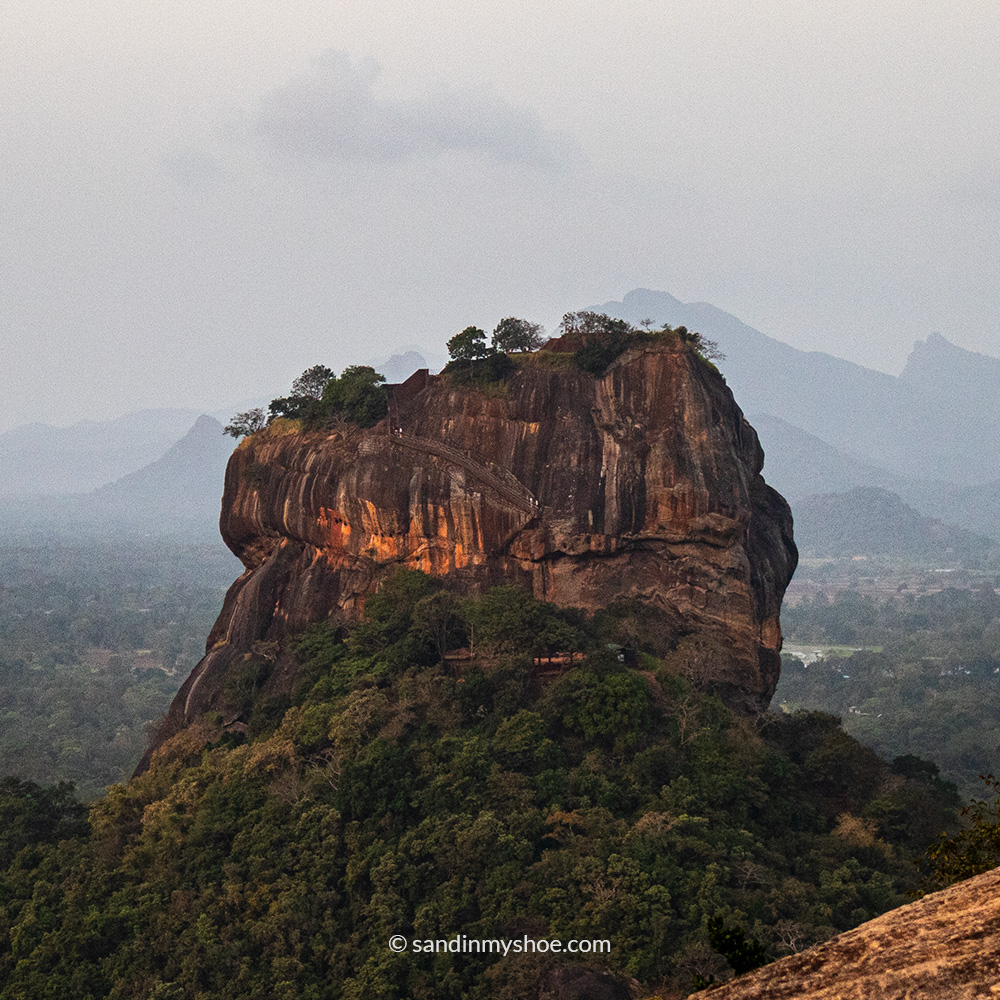
He feared retaliation and remained on Sigiriya Lion Rock for nearly two decades before his brother finally defeated him. In that time, he commissioned urban planning and hydraulic engineering so advanced for the 5th century that the Lion Rock is now a UNESCO World Heritage Site largely because of it.
The name Sigiriya comes from Sinhagiri, meaning Lion Rock. The site earned this name because the main entrance to the upper palace was built in the form of a gigantic lion.
Short Video My Experience at Sirigiya Lion Rock, Sri Lanka
Quick Glance: What to Know
Opening Hours: Lion Rock is open everyday from 7:00 AM to 5:30 PM, but ticket office operates on a slightly different schedule: from 5:30 AM to 5:00 PM.
Best Time to Climb: Sunrise hike at 7:00 AM has the coolest weather, and the golden hour for great pictures. Another good time before sunset, around 4:00-4:30 PM for another golden hour time.
Cost: $35 USD for non-SAARC adult citizens — full entrance fee details.
Worth It: Yes, absolute. For those with a lower travel budget, consider opting for Pidurangala, a nearby hilltop that gives you a spectacular view of the Lion Rock, especially during sunrise.
Total Time to Spend: I spent 3 hours and a half in total, and it didn’t feel either rushed or too long.
Time Needed to Hike One Way: You can climb it in about 30 minutes, but realistically it takes 45-minutes to 1 hour. The narrow staircases get crowded, and everyone moves at their own pace.
How to Book: If you’re already in Sigiriya, simply head to Lion Rock and buy your ticket at the official ticket office. If you prefer a guided tour, you can join a 3-hour walking tour of Lion Rock, or choose a combined tour that includes both Lion Rock and a Safari in Minneriya National Park on the same day.
Planning a day trip from Colombo, Negombo or Kandy? Check out these highly rated tours.
Climb Sigiriya Lion Rock or Admire It From Pidurangala — Why Not Both
Many travelers struggle to decide whether to climb Sigiriya Lion Rock itself or be satisfied by hiking up Pidurangala at sunrise to admire the glowing rock in the golden light of dawn. The reason for this conundrum is because it’s almost 100 times more expensive for western tourists to climb the Lion Rock than it is for locals. Travelers feel scammed, and that was also my first feeling when heard about the price differences.
However, after visiting Pidurangala at sunrise and seeing Lion Rock glowing in the distance, it gave me a blooded tooth — that Swedish sense of wanting more. It’s an old expression, probably dating back the Viking times. And when I thought about the price difference, it made sense: many foreign visitors can afford the higher fee, while charging locals the same amount would make the site inaccessible. With local tickets costing just $0.35 USD, the upkeep of the entire archaeological landscape would likely suffer if everyone paid the same low rate
As long as the money is going to the upkeep of the sights, and development of Sri Lanka in general, I’m happy with it.
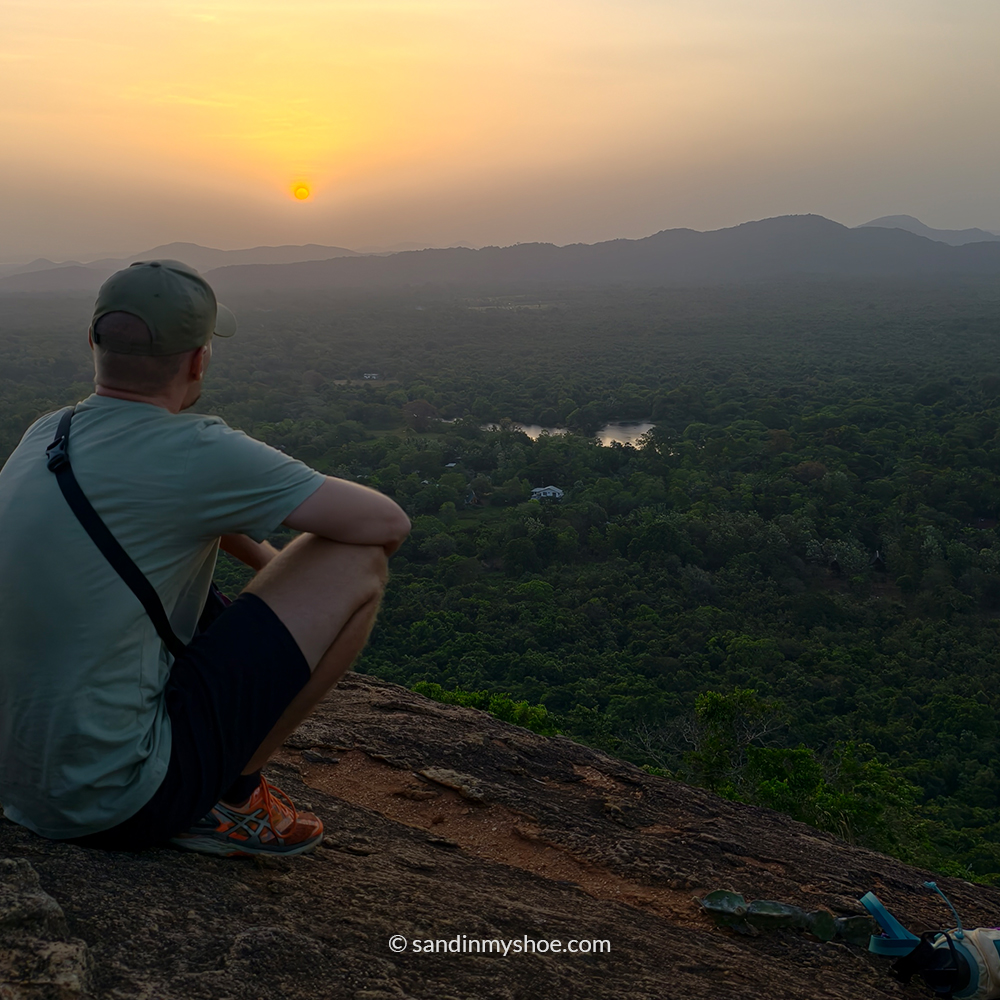
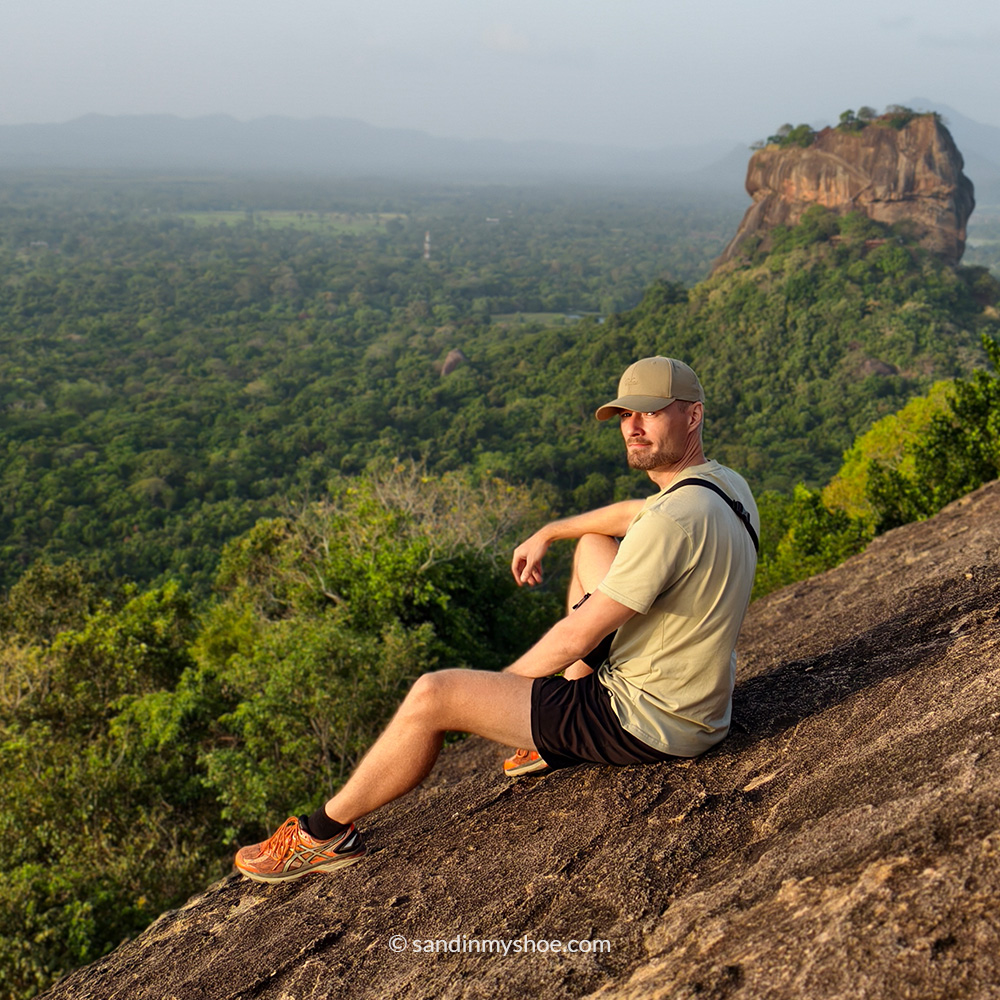
But if you are traveling with a lower budget, the views from Pidurangala are spectacular. From the top, you’ll get a stunning view of Sigiriya Lion Rock for only $6 USD, compared with the $35 USD entrance fee to climb Lion Rock itself. Go for sunrise to catch that warm golden-hour light —just be warned that it might tempt you to visit Lion Rock afterwards, the same way it did for me.
A quick heads-up, I was expecting just a handful of people during the sunrise at Pidurangala, but there were at least 50 people. It’s clearly a popular spot, yet it didn’t ruin the experience in any way as there’s plenty of space for people to spread out across the top.
The best way to visit both Lion Rock and Pidurangala is to start with a sunrise hike up Pidurangala to see the Lion Rock from a distance. Afterward, grab breakfast and continue on to Lion Rock. If you feel tired, take a nap and save Lion Rock for the afternoon instead, and enjoy it at sunset.
Curious about where to stay in Sigiriya? Have a look at my other post: Sigiriya Town Travel Guide. In that guide, I cover where to stay, eat, drink, and what else you can do in Sigiriya and the surrounding area, so you won’t miss out on anything.
Is it Worth Visiting the Lion Rock
Before arriving to Sri Lanka, I had already been traveling for eight months and seen a lot of incredible places. What I’m about to say, might sounds spoiled, but after a while, if a place doesn’t offer something new, it starts to blur together with similar sights in my memory. For example, many temples around Southeast Asia eventually merge into one great temple in my mind unless they have something unique to offer.
I initially treated Lion Rock the same way — just another temple-ish sight — and I wasn’t keen on spending $35 USD for something that in the end would just blur together with else I’ve seen. My plan was to admire it from Pidurangala and leave it at that. But as I mentioned earlier, the sunrise view from Pidurangala gave me a taste for more, and I ended up visiting Lion Rock the next day, but still with the mind of a sceptic.
And honestly, being in Sigiriya and not visiting Sigiriya Lion Rock gave me a bit of FOMO too.
Boy, was I wrong—Sigirya Lion Rock truly is the pride and joy of Sri Lanka.
My Experience Climbing Lion Rock in Sigiriya
The day before, I had planned to visit the Lion Rock for sunset, but mistimed it badly and didn’t want to rush the experience, so I pushed it for the following morning.
I woke up early, and had breakfast in my guesthouse called Cozy Cottage in Habarana, a village next to Sigiriya (which cost me only $10 USD per night), and then set off toward Lion Rock on my tuk-tuk. I was still a little shaken from meeting a wild elephant on the road the previous night while driving in the dark. But this time the sun had already been up for a couple of hours, so I figured I was in the clear. I did, however, come across a domesticated elephant with a man riding it.
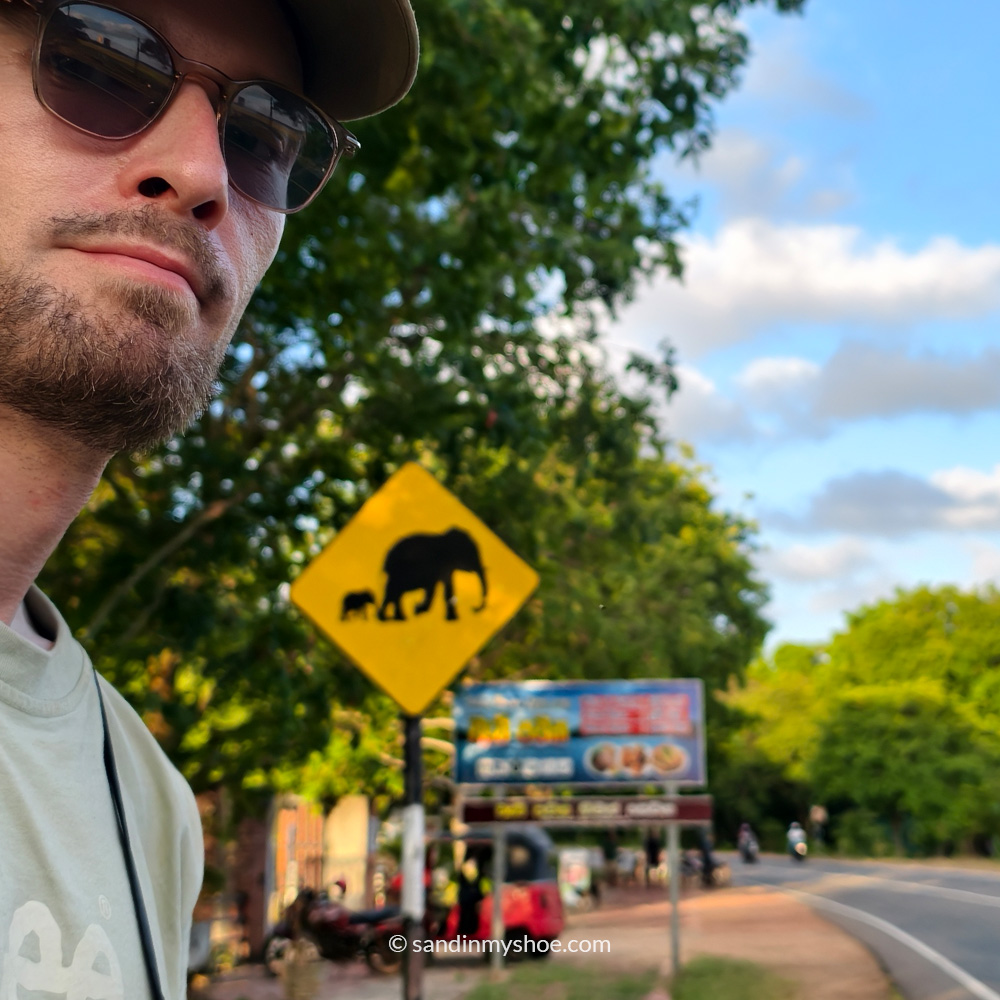
Note: The areas around Sigiriya have quite a lot of wild elephants. I saw the warning signs and heard locals mention it, but I assumed the danger was exaggerated. It’s not — definitely not. If you choose to drive after dark, be extra cautious
After half an hour of driving my tuk‑tuk, I found myself at the foot of Lion Rock and paid the $35 USD entrance fee. Outside the ticket office, several independent guides were waiting for customers. Prices started at $20 USD, but seemed negotiable, but since I was traveling solo and couldn’t check any reviews or ratings, I decided to skip the guide.
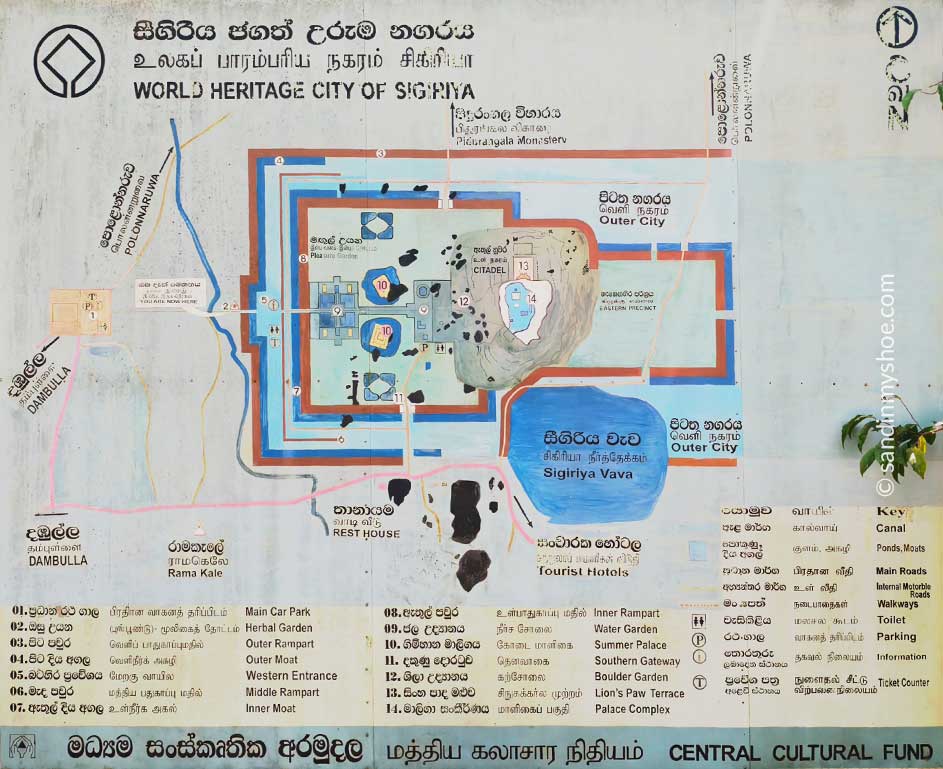
At the entrance of Sigirya Lion Rock, I learned the recommend order of the visit:
1. Start with the museum to get the backstory of this UNECSO Heritage Site.
2. Then walk around the area surrounding the rock for a warm-up.
3. Finally begin the actual climb to the top for fantastic views and ruins of past glory.
4. On the way down, there’s a cave with surprisingly well-preserved ancient frescoes.
The Museum — Learn the Story of The Rock
The museum itself is essential — you’ll learn the story behind Lion Rock and your visit instantly becomes more interesting. Otherwise, it’s just piles of rock on top another rock that offers a 360 degree view of more rocks.
The story begins in the late 5th century CE, when the son of King Dhatusena seized the throne of Anuradhapura from his father and took power, while his brother fled to India. The son, now King Kashyapa I, feared retaliation and needed a defensible base. He moved his capital to Sigiriya and began transforming the rock not only into a royal military fortress, but also into a pleasure palace.
Over the years, Sigiriya developed into a complex of palaces, water gardens, and extensive defensive structures. After nearly two decades, his brother returned with an army, defeated King Kashyapa I, and moved the capital back to Anuradhapura.
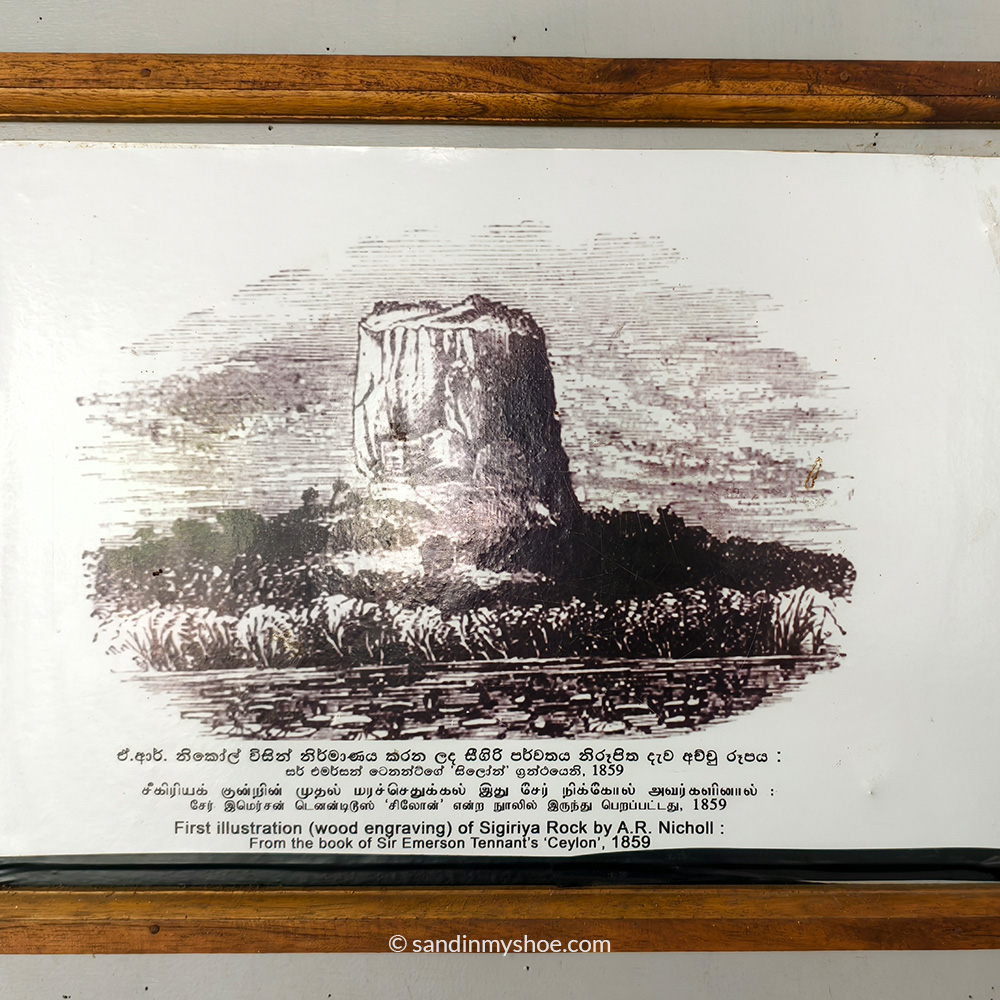
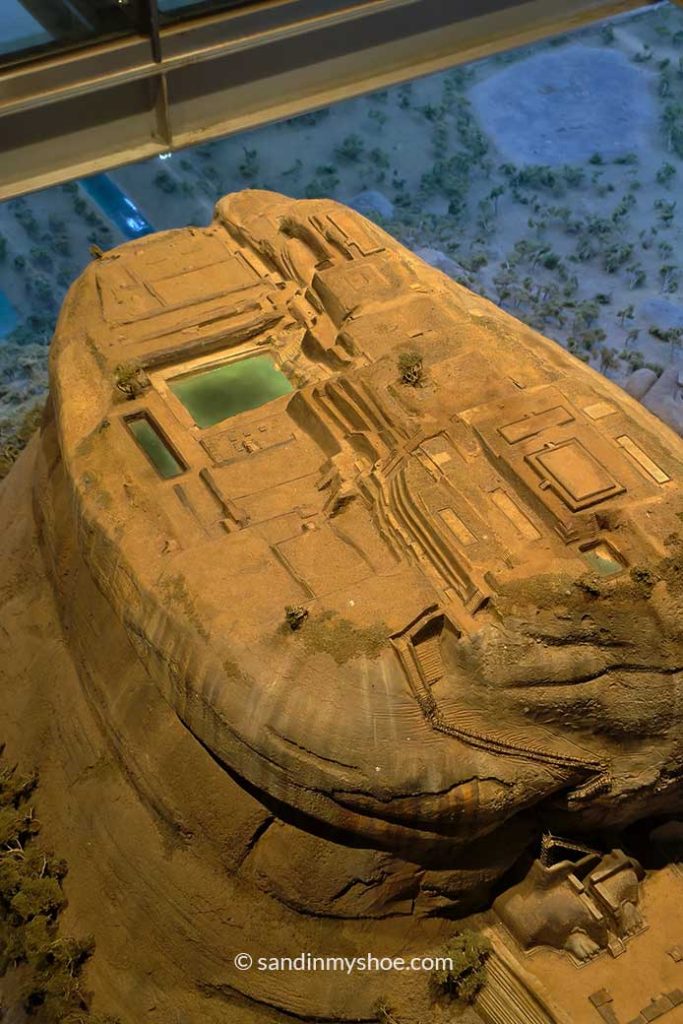
Besides the story, the museum also has a 3D model of the rock and its surroundings, which is great for getting an overview. You’ll also find the earliest colonial drawing of Sigiriya, along with copies of the artwork from inside Lion Rock — depictions of women with generously shaped figures. The originals are strictly forbidden to photograph, as there’s a real concern that careless use of flash could damage the ancient paintings.
Seen through a modern lens, Sigiriya Lion Rock was bit like the ancient version of the playboy mansion, and the cave paintings were essentially the Playboy Magazine of that time. See the images in the Cave Paintings section.
The Surrounding Area of Sigiriya
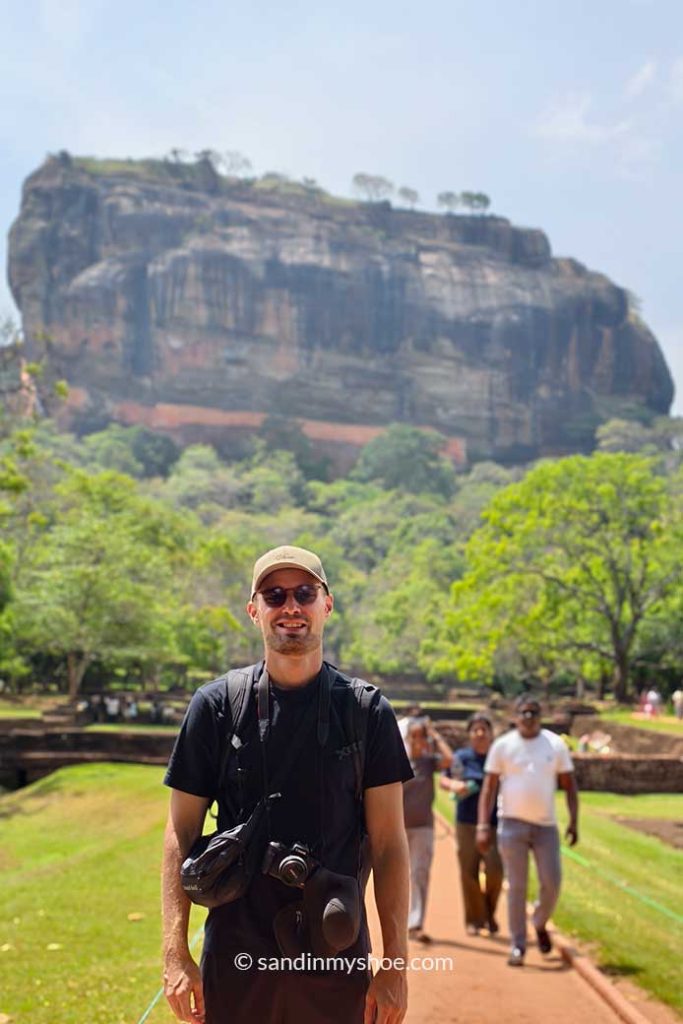
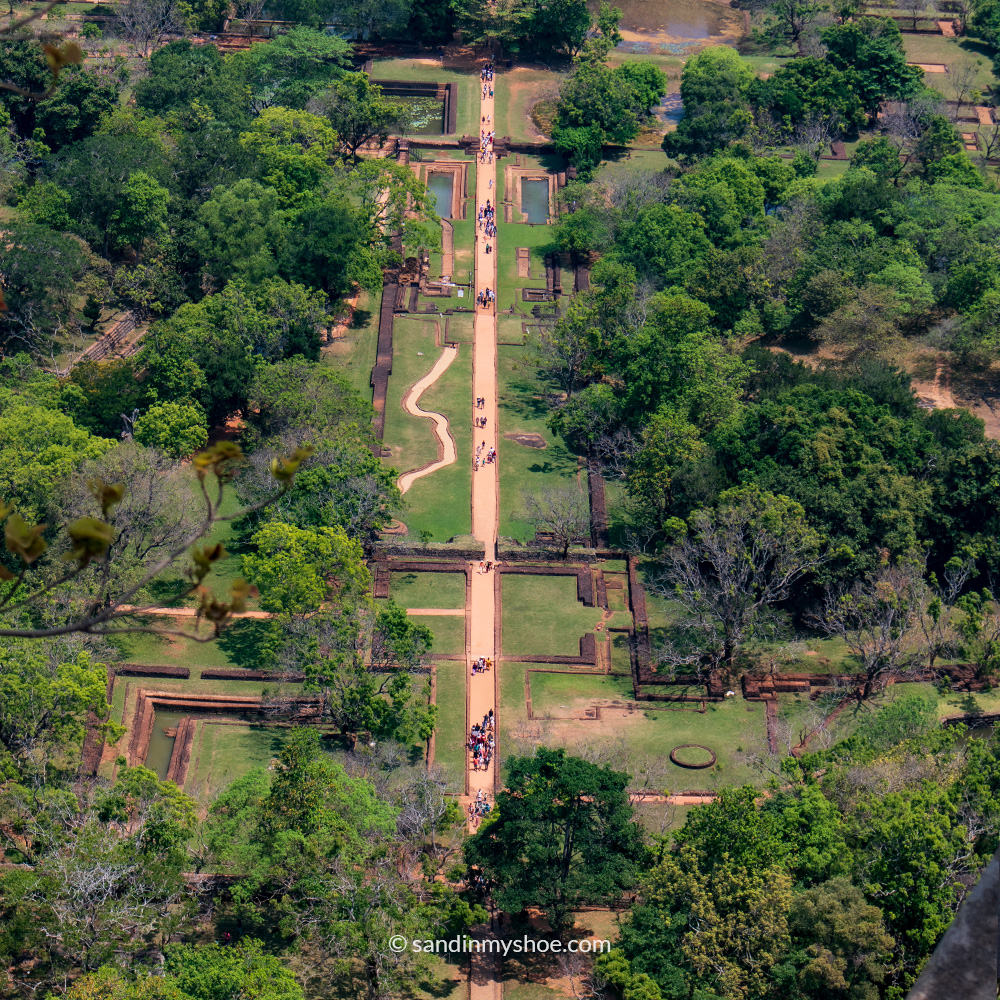
After getting schooled in the museum, I restocked my water and started walking around the surrounding area. The first part of the walk takes you through the water gardens, past ancient structures designed to manage and store water, and then to the ruins of what used to be the summer palace.
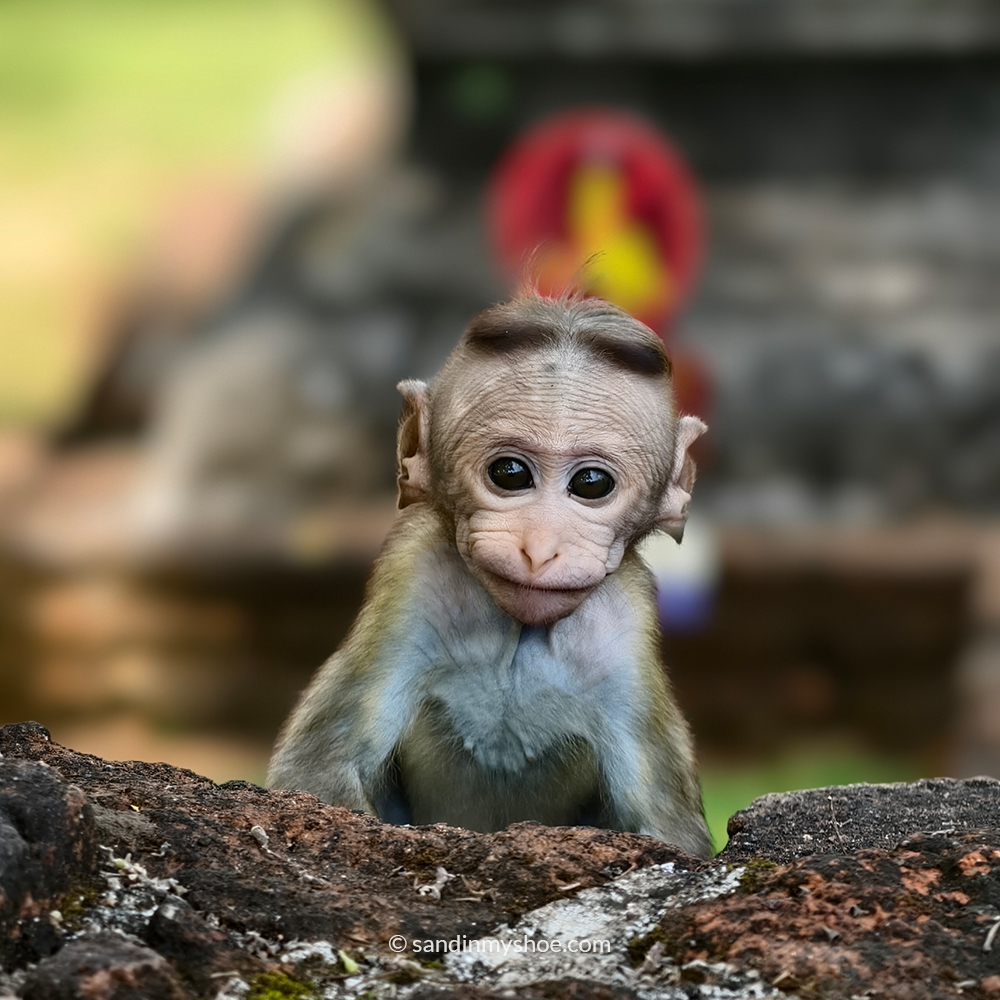
There are plenty of monkeys around here, waiting for tourists who are careless with their snacks — from tiny newborns curious about their surroundings to fully grown adults who’ve mastered the art of snatching an ice cream in the scorching heat. They look cute, but they can get a bit feisty, so it’s best not to feed them or make direct eye contact. I discovered I could get fairly close if I looked at them through my camera lens instead of directly with my eyes, but it’s still wise to keep your distance. You really don’t want to get bitten; that would likely mean a rushed trip to the hospital out of concern for rabies or other diseases.
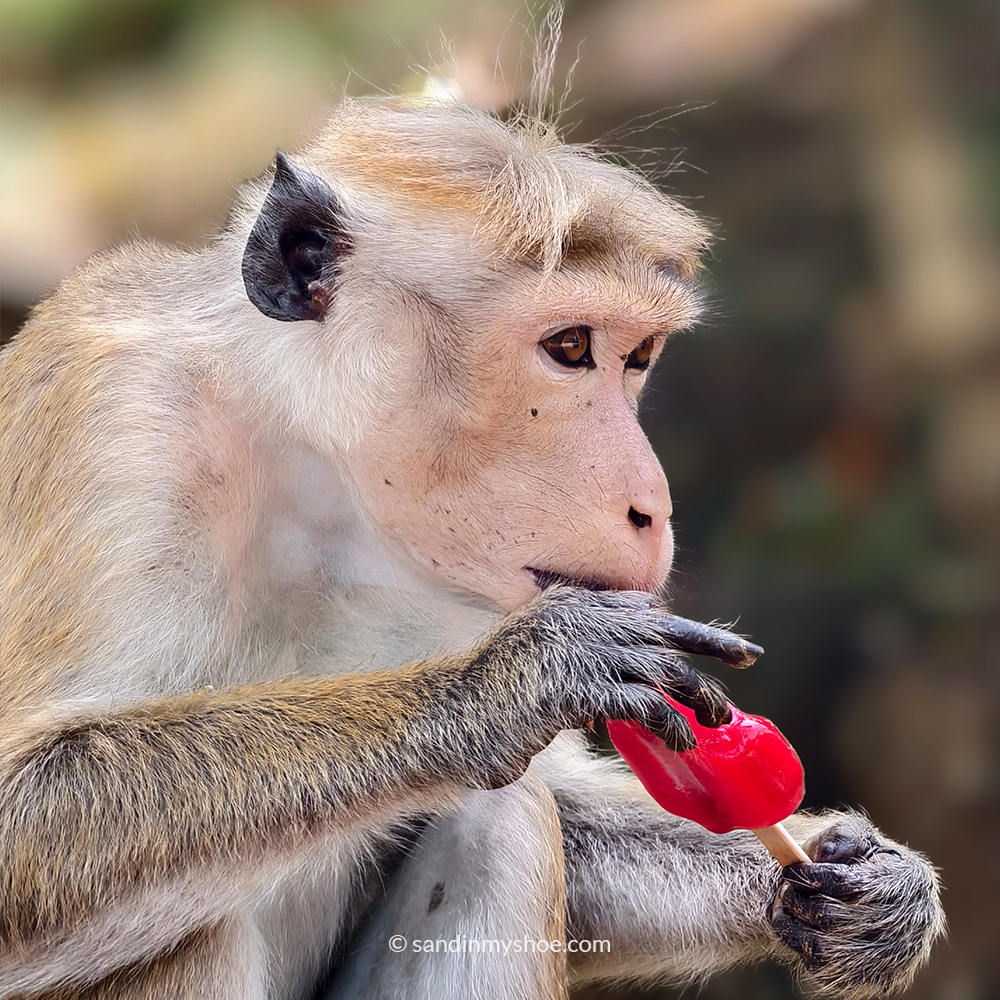
One of the monkeys had managed to grab a strawberry‑flavoured ice cream from a fellow tourist — the same ice cream that had become one of my favourites while traveling here. Outrageously cheap at 20 Sri Lankan rupees ($0.07 USD) and incredibly refreshing. The monkey was so focused on the ice cream that I could photograph it for a long time without it being bothered in the slightest.
The Climb of Sigiriya Lion Rock
Starting the climb, I quickly noticed the warning signs about wasps. I’d never seen that before — they actually encourage tourists to stay quiet because of the wasps or is it a tactic to keep people from being too loud? Honestly if they attack loud people, why don’t more world sights have wasps, so we can all enjoy the views without the noisy groups.
Soon, after a couple of set of stairs, the origin of the name becomes clear: the start of the hike is marked by two massive lion paws carved into the rock. In the past, the lion was far more complete, including a head and upperbody, but those sections have collapsed centuries ago.

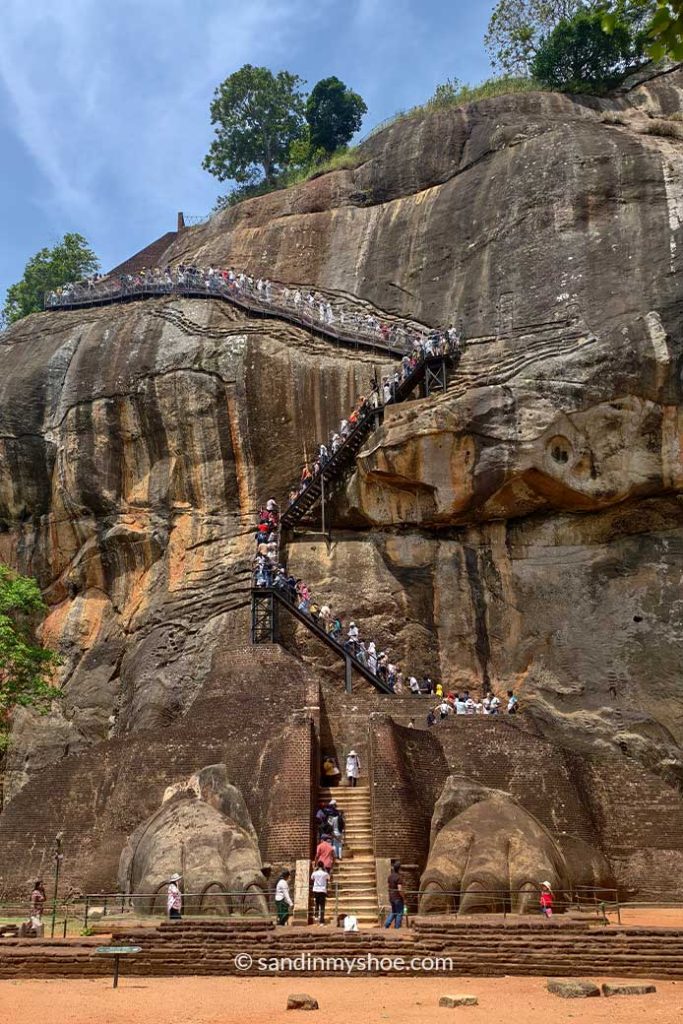
The toughest part of the hike was to stay patient behind slow people on the narrow staircases—which I ended up mastering. There were people from all ages, and since many parts of the staircase had only room for one person per direction, the pace naturally slowed down.
It took roughly from 45 minutes to an hour to reach the top, and I didn’t actually mind the slower tempo— it gave me more time to enjoy the climb and take in the scenery.
The Top of Lion Rock
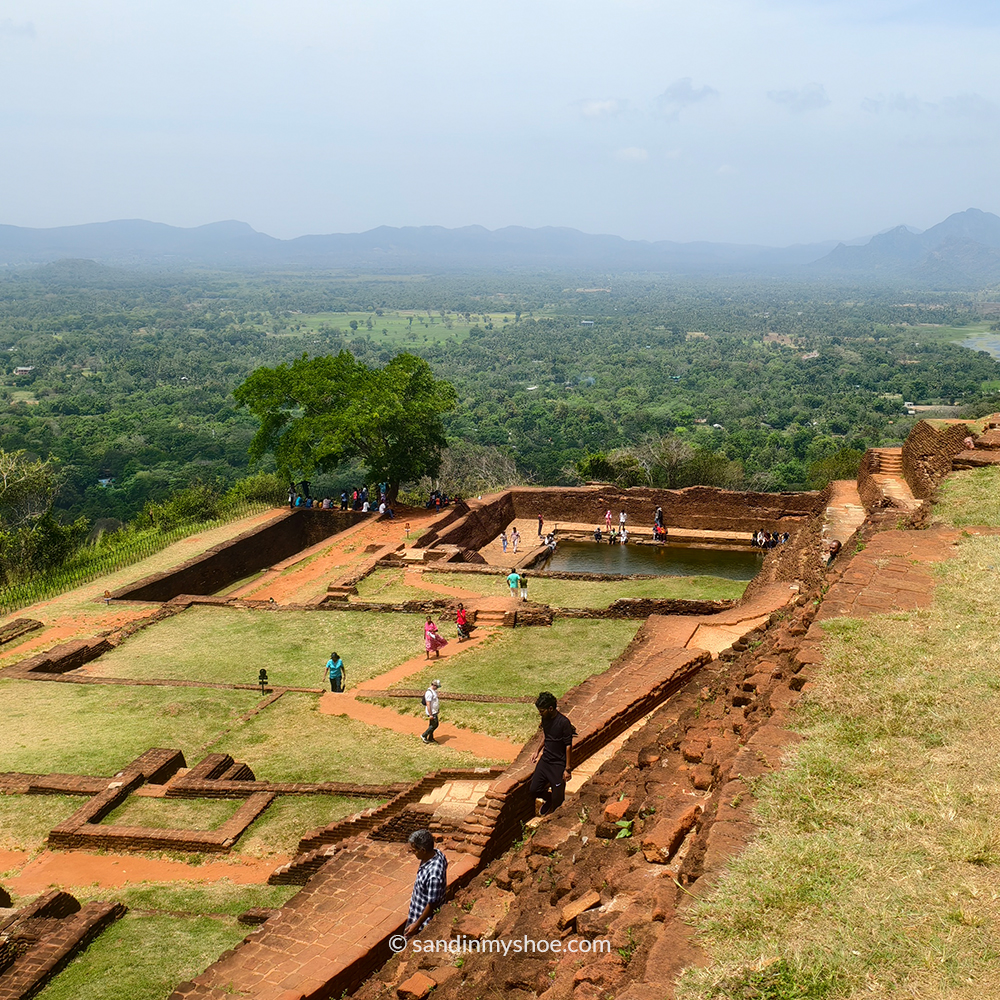
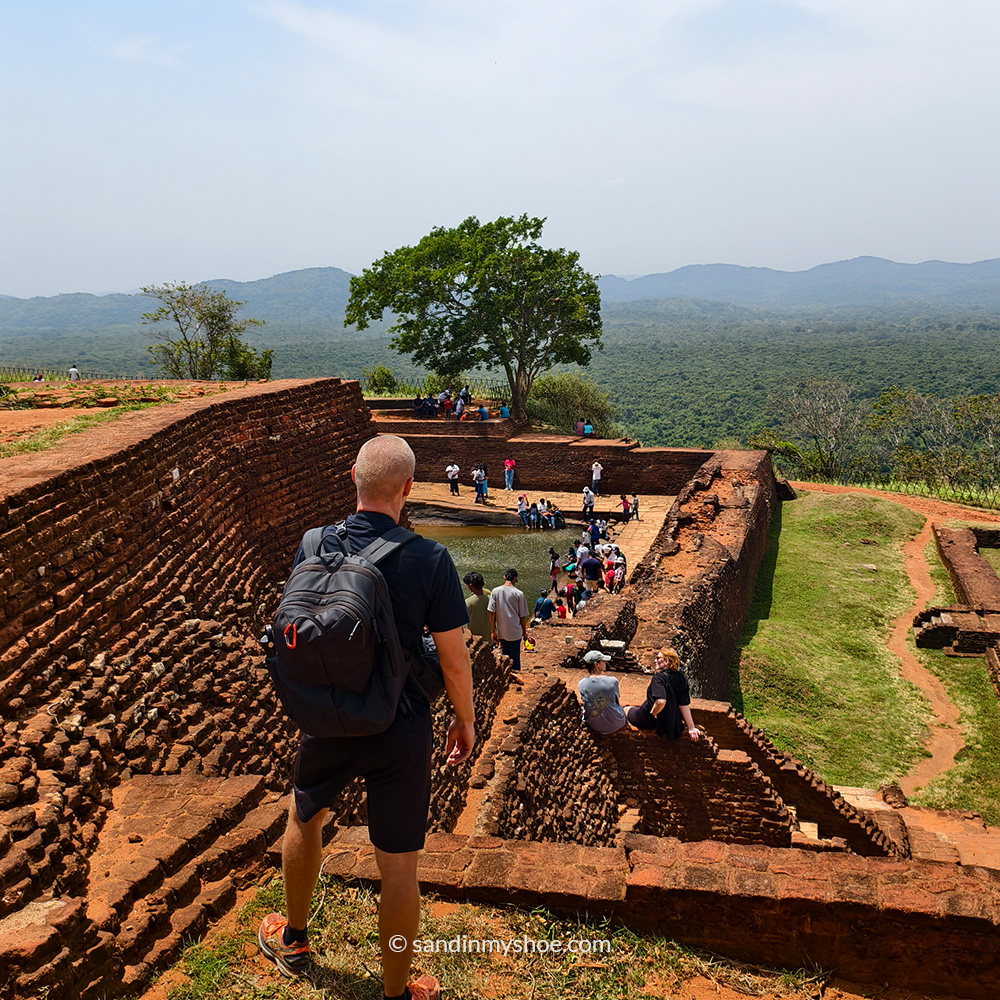
Arriving at the top gave me a breathtaking 360‑degree view of the surroundings. There are plenty of ruins up here, so it’s not always obvious what you’re looking at — or what you’re looking down at — unless you check the reference map or join a guide. The entire summit is essentially the remains of the ancient palace complex.
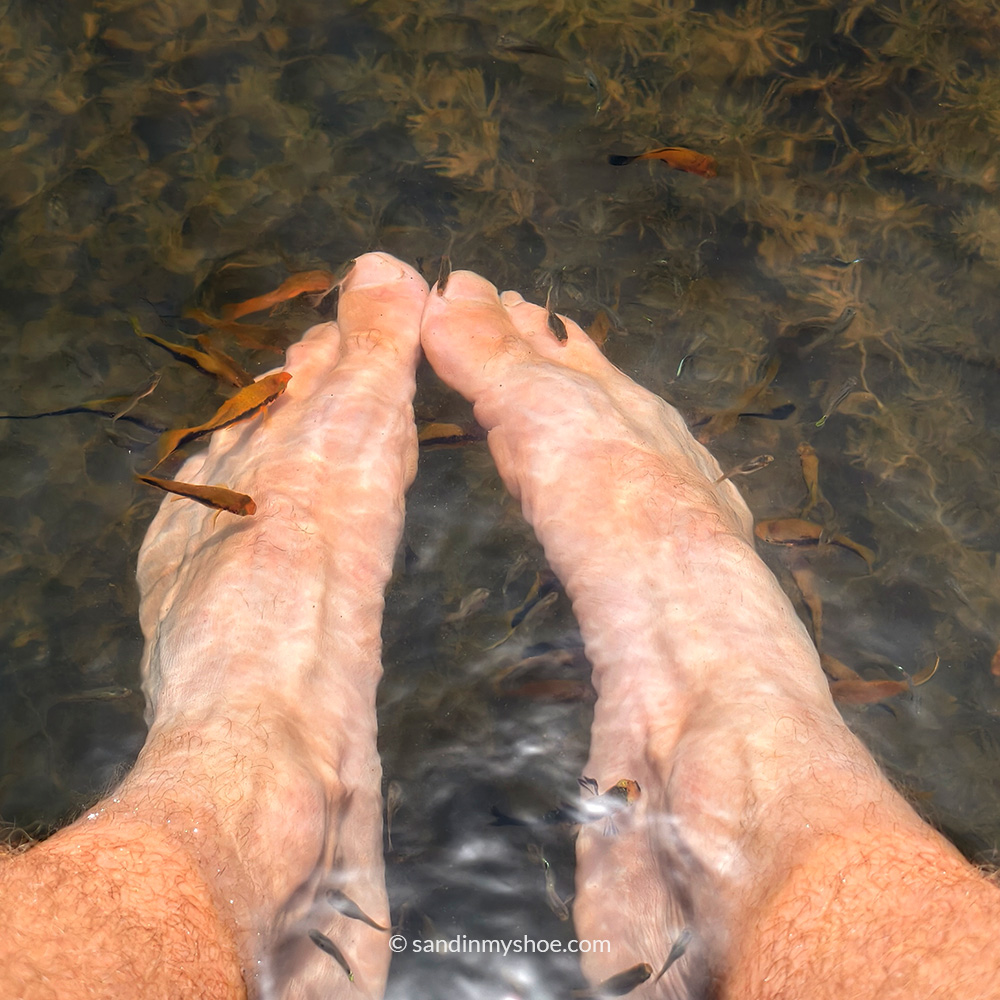
There’s even a water garden at the top, complete with fish. Some locals were using it as a fish spa, letting the fish nibble at their feet, and they invited me to join them for a chat. Not a bad setting for a foot cleaning — a thousand‑year‑old fortress with spectacular views.
Here, I met some tourists from Bangladesh, and we ended up helping each other take photos — a nice little travel‑moment exchange.
After spending about an hour on the top taking in the views and the surroundings, I started the climb down toward the cave paintings.
The Cave Paintings
It’s impossible to miss this section, since the only way down leads straight through the cave — which I actually liked, because it guarantees you won’t miss one of the highlights. It’s not a big cave, it’s more like a French-balcony version of a cave, still the air was noticeably cooler, and the real frescoes surprisingly vivid for something painted about 1,500 years ago.
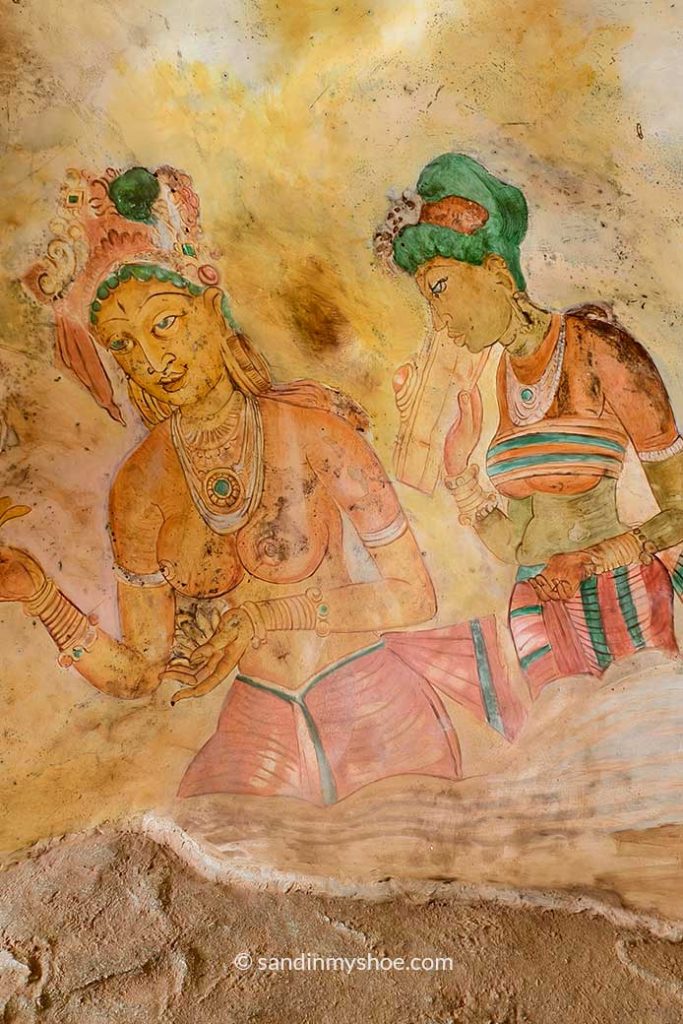
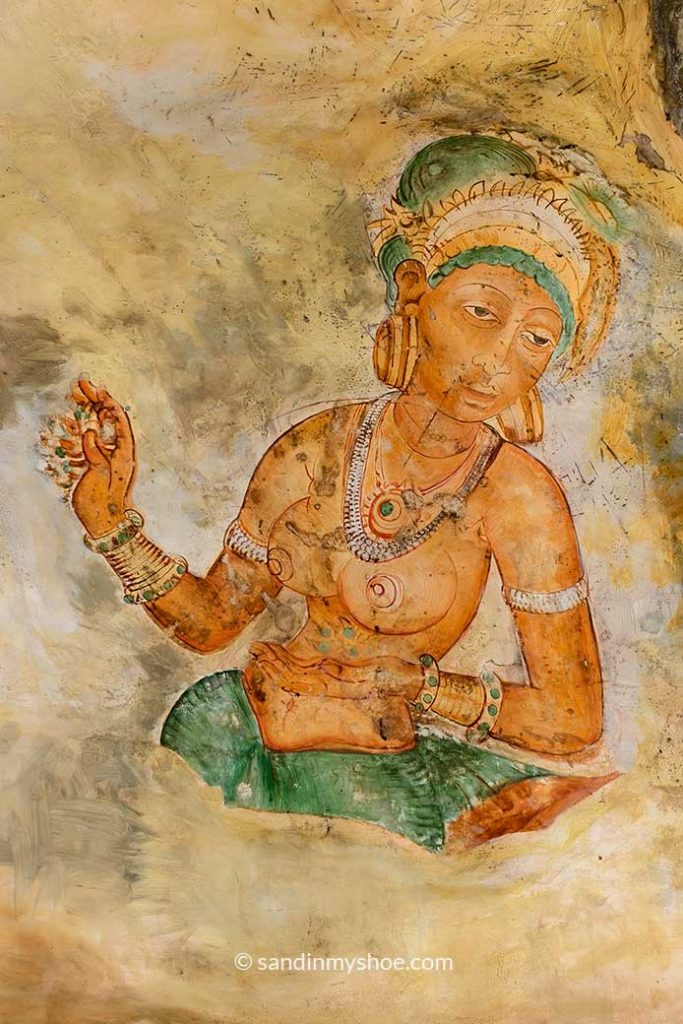
Apparently no one really knows who the women are — servers, dancers, lovers, or celestial figures — but the “lovers” theory feels the most fitting, considering King Kashyapa I’s reputation as a playboy and the way the women are depicted.
Note: Photography of the actual frescoes are strictly forbidden, even without flash. The ones above are photos taking in the museum.
Planning Your Climb
You don’t need much preparation to climb Lion Rock, but good timing, smart packing, and knowing whether to get a guide at the gate or book one beforehand can really improve the experience.
Best Time To Climb Lion Rock
Most visitors aim for sunrise or sunset hikes, when the temperatures are cooler and the soft golden-hour light is perfect for photography.
- Sunrise Hike: Lion Rock opens at 07:00 AM and sunrise usually begins a little earlier. Arrive around 6.00-6.30 AM so you’ll have a ticket ready by opening time, even if there’s a long queue.
- Sunset Hike: Another great option is a late-afternoon climb, starting around 3:30PM. Consider bringing some snacks and drinks so you can enjoy a small picnic at the summit as the sun dips behind the horizon.
Ticket Prices for Lion Rock in Sri Lanka
These ticket price include access to both the Sigiriya Lion’s Rock and the Sigiriya Museum. Prices vary by nationality: locals pay the least, neighboring countries pay more, and visitors from the rest of the world pay the highest—nearly 100 times the local rate.
Non-SAARC Countries
- Adults (12 years and above): $35 USD
- Children (6 to 12 years): $20 USD
- Infants and Toddlers (below 6 years): Free of charge
SAARC* Countries
- Adults and Children (6 years and above): $20 USD
- Infants and Toddlers (below 6 years): Free of charge
For Sri Lankan Nationals
- Adults: LKR 120 ($0.4 USD)
- Children: LKR 60 ($0.2 USD)
*SAARC countries include Afghanistan, Bangladesh, Bhutan, India, Maldives, Nepal and Pakistan.
What to Pack for a Comfortable Climb
You don’t need to bring that much with you, just make sure you have:
- Comfortable and breathable clothing
- Sneakers, but you’ll be fine with sandals or slippers as well if you are careful
- Big bottle of water
- A cap or hat to protect your head from the sun
- Sunscreen
- Camera
Beware of Monkeys and Wasps
I already mentioned the monkeys and wasps, but they deserve their own note. There are plenty of monkeys around the grounds, and it’s best not to get too close — you really don’t want to end up rushing to a hospital because of a bite, as they can carry diseases.
There are also a lot of wasps, with big warning signs in several areas. According to the signs, they’re either attracted to or annoyed by loud noise — I’m not sure which — but I wasn’t bothered by them at all since I wasn’t talking that much as I was traveling solo. Still, the warnings are there for a reason, and they clearly reflect past incidents. So probably the best not to yell too much, just the right amount to keep those wasps on their toes.
Best Photo Spots Around Sigiriya
The best photo spot is from Pidurangala at sunrise or sunset, hands down — nothing beats that panoramic view of Lion Rock glowing in soft light. The second best is from the water gardens shortly after you enter the site, where the water gardens frame the Rock, and the third one is a bit further out, you get the view of Lion Rock together with a pond.
How to Choose a Guide for the Sigiriya Lion Rock
There are plenty of guides waiting at the entrance, but it’s hard to know in advance who’s good and who’s not — most of them don’t have much of an online presence. If you prefer something more reliable, I’d recommend booking a guide through platforms like Klook or GetYourGuide, where you can check past reviews and choose someone with a solid track record.
Popular and Highly Rated Tours from Sigiriya Town
Daytrip from Colombo, Negombo or Kandy
Planning a day trip from Colombo, Negombo or Kandy and don’t want to base yourself in Sigiriya? Check out these highly rated tours.
Popular and Highly Rated Daytrips
Getting to Sigiriya Lion Rock
If you are basing yourself in Sigiriya Town, the easiest way is to flag down a tuk-tuk, and ask the driver to take you to the entrance. It’s quick and convenient, but be aware that some drivers overcharge around popular touristy sights like Lion Rock. If you prefer a bit of warm-up before the climb, consider renting a bicycle from your accommodation or a nearby shop and pedalling your way there instead.
The location of Sigiriya Lion Rock
The Easy Summary
In a nutshell: climb Lion Rock — it’s the most iconic sight in Sri Lanka, and absolutely worth it. But before you do, hike Pidurangala at sunrise to see Lion Rock from a distance first.
Wear sneakers and light, breathable clothes, bring plenty of water, a hat, and sunscreen. Arriving early gives you cooler temperatures and the best light. If you want a guide, booking through a reputable platform like GetYourGuide helps ensure quality. And if you’re short on time and planning to visit a safari as well, consider a combined tour that includes both Lion Rock and a Minneriya Safari — it’s one of the best places to see large elephant gatherings.
Any questions? Feel free to ask in the comments.


No comments yet, be the first one!
I appreciate hearing from you. If you have any suggestions, questions, or feedback, please leave a comment below. Your input helps ensure the information stays relevant and up to date for everyone.
Thank you for sharing your thoughts!