

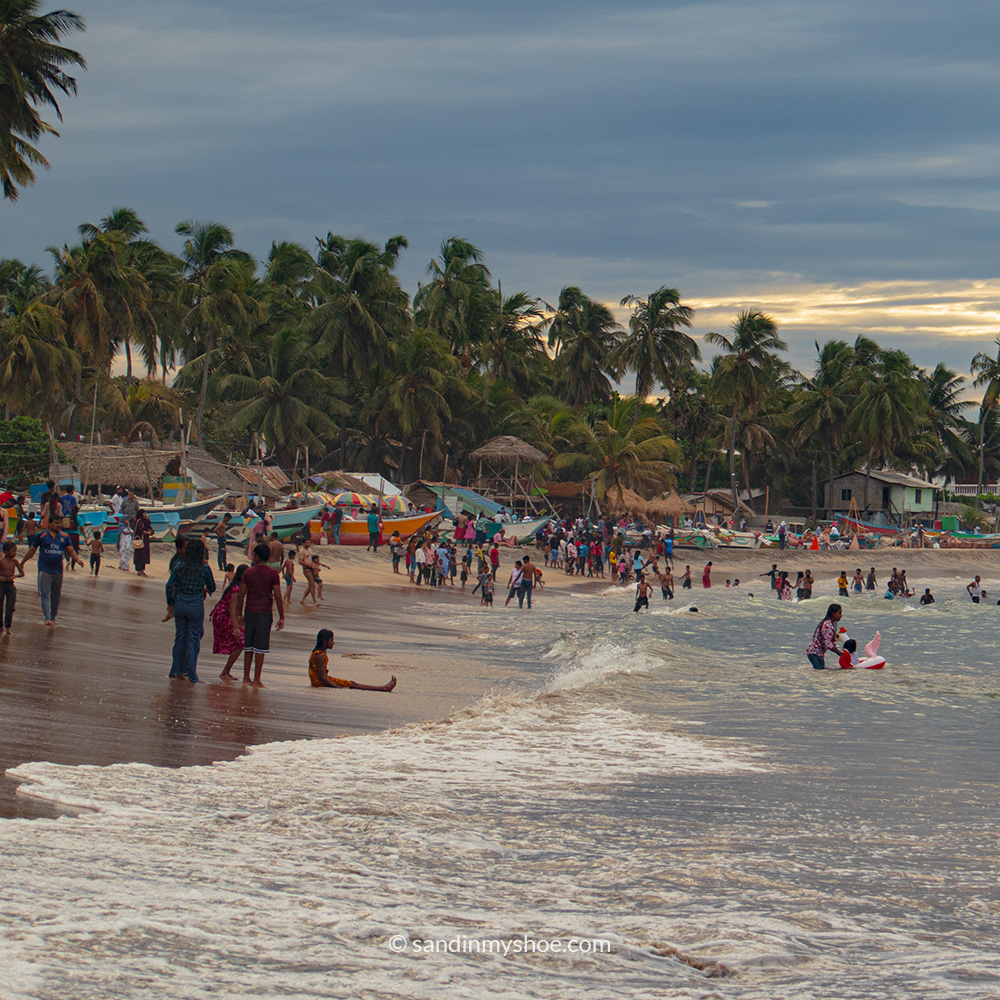
I visited Arugam Bay in June, and the waves were perfect for a beginner surfer like myself. The weather was pleasant overall. Locals told me that June was actually the real start of the season that year, because May had still been very rainy — a month that often brings mixed conditions before things settle into the dry season.
⭐ Best Places to Stay in Arugam Bay ⭐
Still thinking about where to stay in Arugam Bay? Check out these options for accommodation.
- Sandy Beach Hotel – Most Bang For Buck Place.
Book with Agoda.com or Booking.com - Jetwing Surf & Safari – The best 5‑star Resort Stay.
Book with Agoda.com or Booking.com - Ocean Vibes – Probably The Best Beach Shack.
Book with Agoda.com or Booking.com
The town itself is still developing: a bit raw around the edges and definitely missing the chain cafés you’ll find in more polished beach towns, which is actually part of its charm. At one point, a local even approached me at the gas station while I was fueling my tuk-tuk and asked if I wanted to go into business with him to open a hostel. Despite its underdeveloped fell, prices in Arugam Bay are higher than you might expect for this part of Asia, so its worth budgeting accordingly.
When to Visit Arugam Bay
Arugam Bay is highly seasonal because of the Maha monsoon, which brings heavy rain to Sri Lanka’s east and north coasts from October to January. February to April can still see occasional showers, but conditions steadily improve from May onwards. The main season runs from May to September, with June, July and August being offering the best conditions for surfing.
 31°C
23°C
31°C
23°C
 32°C
23°C
32°C
24°C
32°C
25°C
32°C
23°C
32°C
24°C
32°C
25°C
 32°C
26°C
31°C
26°C
32°C
26°C
32°C
26°C
32°C
26°C
32°C
26°C
32°C
26°C
31°C
24°C
32°C
26°C
31°C
26°C
32°C
26°C
32°C
26°C
32°C
26°C
32°C
26°C
32°C
26°C
31°C
24°C
Is it Worth Visiting Arugam Bay
For me, it was absolutely worth visiting because I wanted to surf, and the waves were great for a beginner. There are plenty of different surf spots for all levels, so if surfing is part of your plan, Arugam Bay is definitely worth the trip.
But if you’re mainly looking to relax on the beach, it can still be enjoyable, but set your expectations: the waves can be quite big, so swimming isn’t always tranquil, especially between June and August, and the beaches aren’t as picture‑perfect as those in the Philippines or Thailand. That said, they are still far better than what I’m used to back home in Sweden, so if you’re coming from a country without world-class beaches, you’ll likely to be satisfied.

How to Visit Arugam Bay
Arugam Bay sits on the far eastern coast of Sri Lanka, about 400 km from Colombo. The journey takes around seven hours by bus, and a bit less if you travel by car or private van.
You can reach Arugam Bay from most major cities. Platforms like 12Go.asia list many departures, but not all routes in Sri Lanka are shown online. If you don’t find your connection there, simply head to the local bus station—tickets are usually easy to buy on the spot.
If you’re traveling as a group, consider renting a car. It gives you full flexibility to explore Sri Lanka at your own pace, especially if you plan to visit places like Ella, Yala, or the east coast beaches. Easiest and the safest way to rent a car is by Discovercars.com.
There’s no train line directly to Arugam Bay. The closest stations are Ella, Badulla, and Batticaloa. From any of these, you’ll continue the final stretch by bus or taxi.

 book bus & van with 12go
Consider booking your travels through my links — it supports the site at no extra cost to you.
Is Arugam Bay Expensive
Arugam Bay can feel surprisingly pricey. A basic private room usually starts at around $30 USD, and costs rise quickly if you want something more comfortable.
Eating out adds up too: expect to pay around $8 USD for a burger, $10 USD for a cocktail, $3 USD for a beer, and $3 USD for an Americano. Stick to the tourist strip and your daily budget can climb fast.
Foreign products are especially expensive. A bag of candy that costs $1 USD in Europe can easily be $4–5 USD here. If you’ve got a sweet tooth like me, bring your own stash — your wallet will thank you. The same goes for chocolate.
How to Do Arugam Bay on a Budget
If you’re trying to keep costs down, the smartest move is to stay in the neighbouring town of Pottuvil. It’s far cheaper, more local, and only a short ride from the surf and beaches of Arugam Bay.
A few practical tips:
- Eat in Pottuvil, not in Arugam Bay. Local restaurants are a fraction of the price.
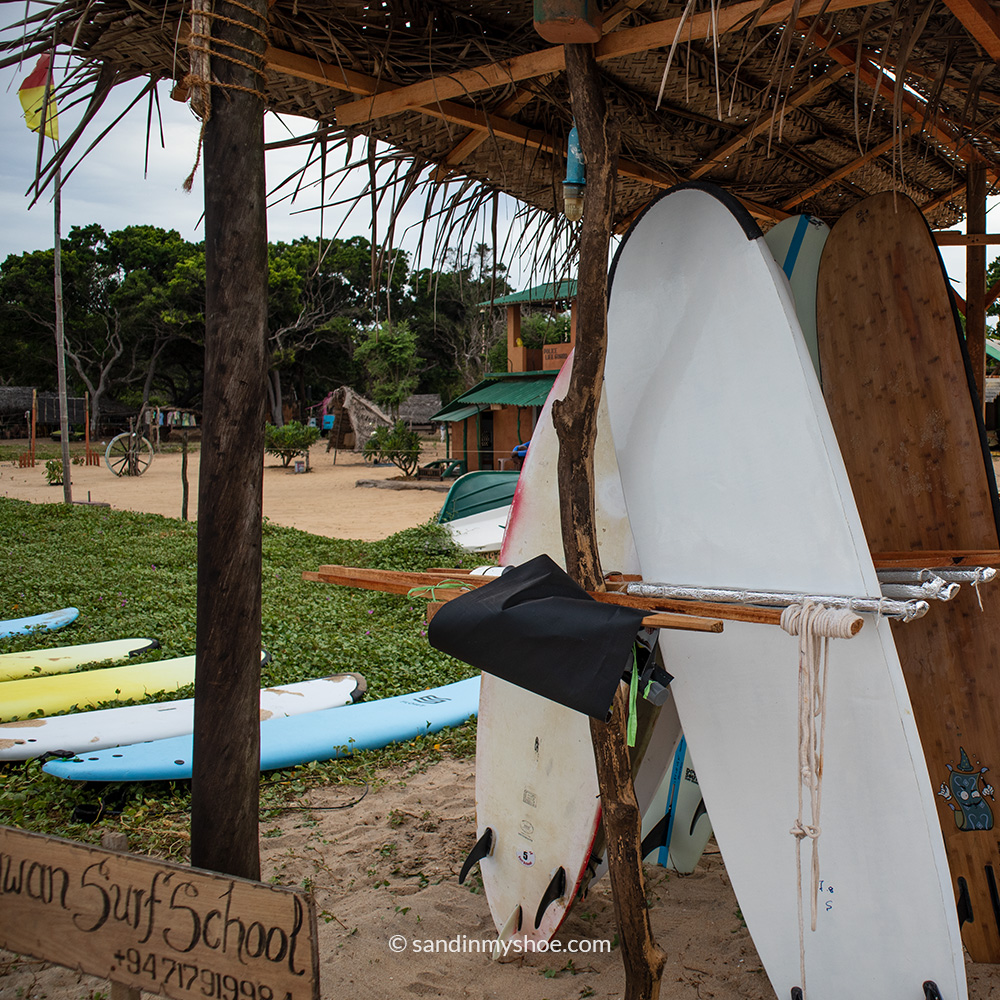
- Have your own transport—a tuk‑tuk or motorbike gives you freedom and saves you from relying on tuk‑tuk drivers for every trip. Read my tuk-tuk guide for Sri Lanka.
- Visit Arugam Bay for the beaches and surf, then retreat to Pottuvil for meals and accommodation.
By doing this, you can comfortably spend $25–30 USD per day, instead of the $50–70 USD you’re likely to burn through if you stay in a private room and eat in Arugam Bay itself.
Things to Do in Arugam Bay
Surf the Warm Indian Waves
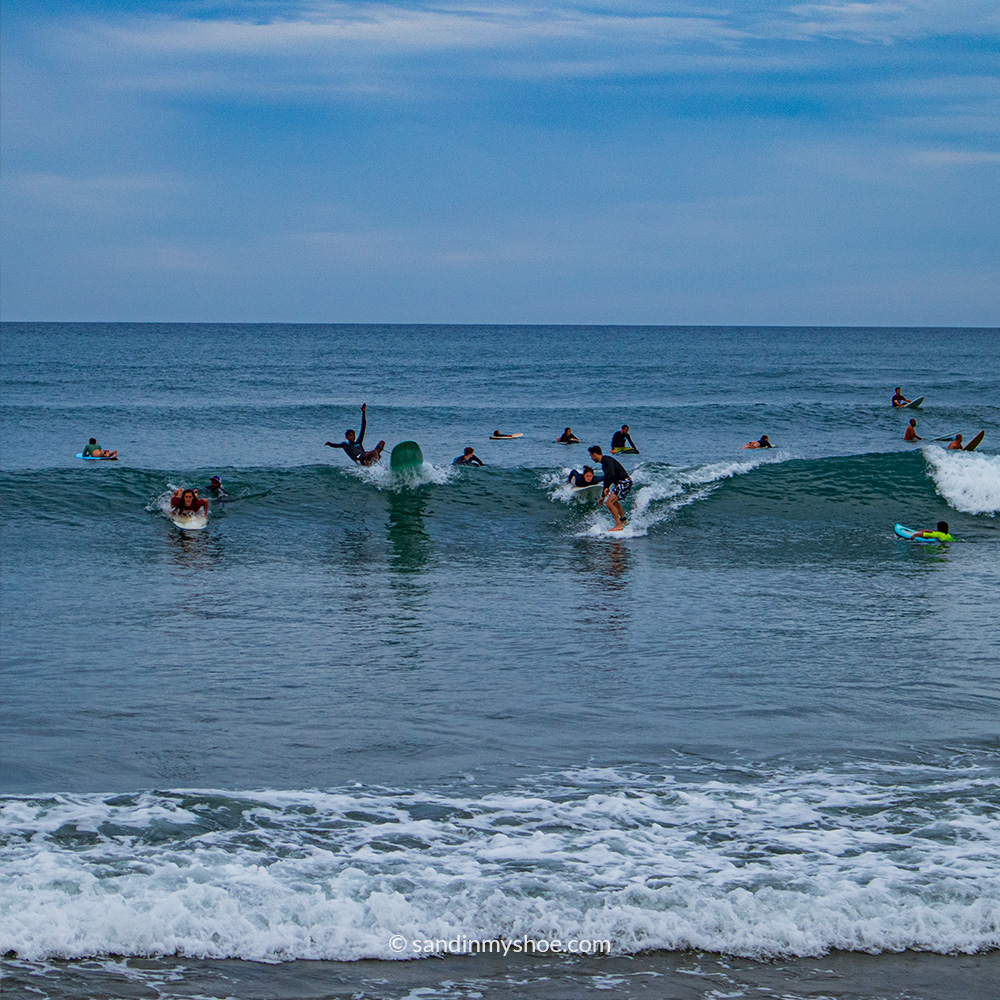
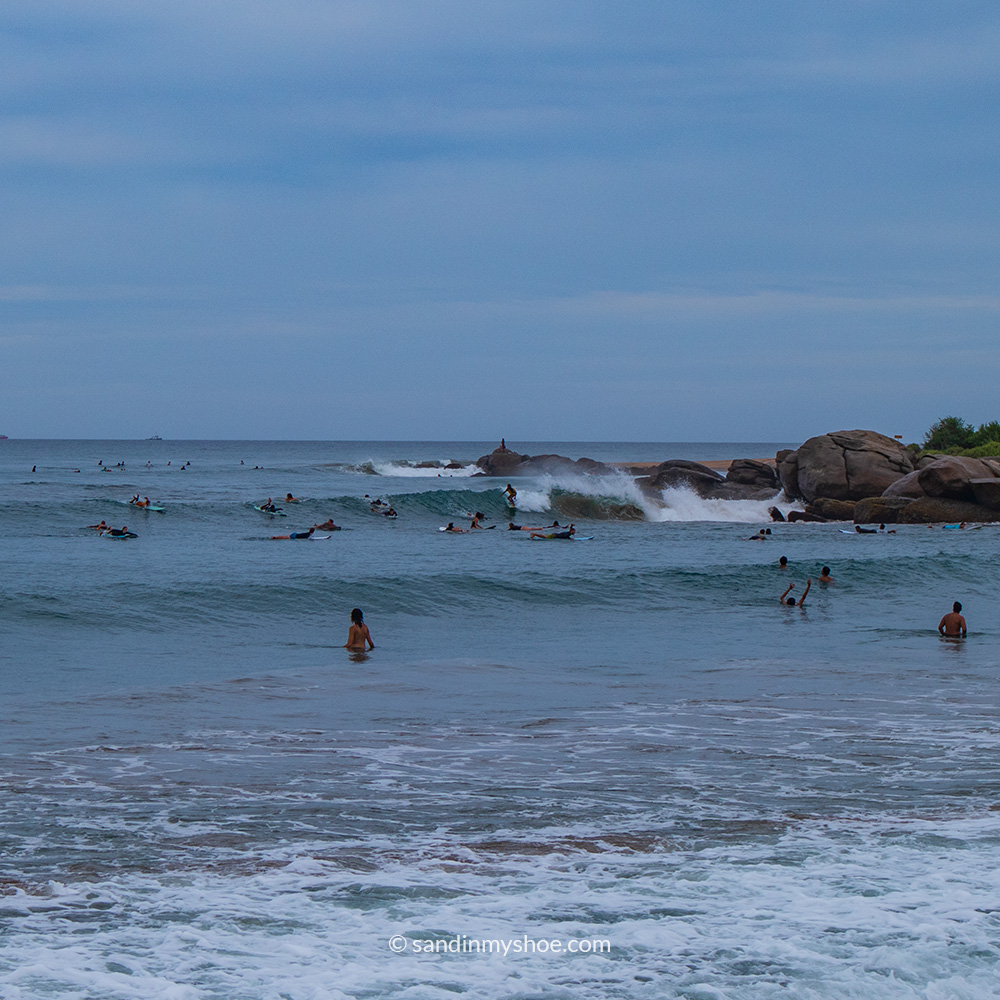
The main reason to visit Arugam Bay is to surf its warm Indian waves. You won’t need a wetsuit as the ocean stays warm throughout the year. Just a rashguard to protect your skin from the sun or plenty of waterproof sunscreen.
The area has become popular thanks to its consistent waves throughout the season and the fact that most of the surf points have forgiving sand-bottoms breaks, making it an ideal place to learn or level up. There are surf spots for all levels, from total beginner to professionals.
Here’s how the main breaks are generally described by local and visiting surfers:
Beginner Spots
- Baby Point – Soft, slow, forgiving.
- Elephant Rock – Gentle takeoff, playful walls.
- Panama – Mellow, uncrowded, easy-going.
Intermediate Spots
- Whiskey Point – Consistent, friendly rights with some push.
- Peanut Farm – Fun A‑frame + right point; manageable on mid‑swell.
- Lighthouse – More exposed but still approachable on smaller days.
Advanced Spots
- Main Point – Long, fast right‑hander; crowded and technical.
- Pottuvil Point – Long, powerful walls; requires confidence.
- Okanda – Remote, heavier, and best for experienced surfers.
If you’re a beginner, it’s worth joining a surf camp or at least taking a couple of lessons — surfing is much harder than it looks. I spent my time at Baby Point and Peanut Farm, and even on the mellow days, having some guidance made a big difference.
Dwell On the Beaches
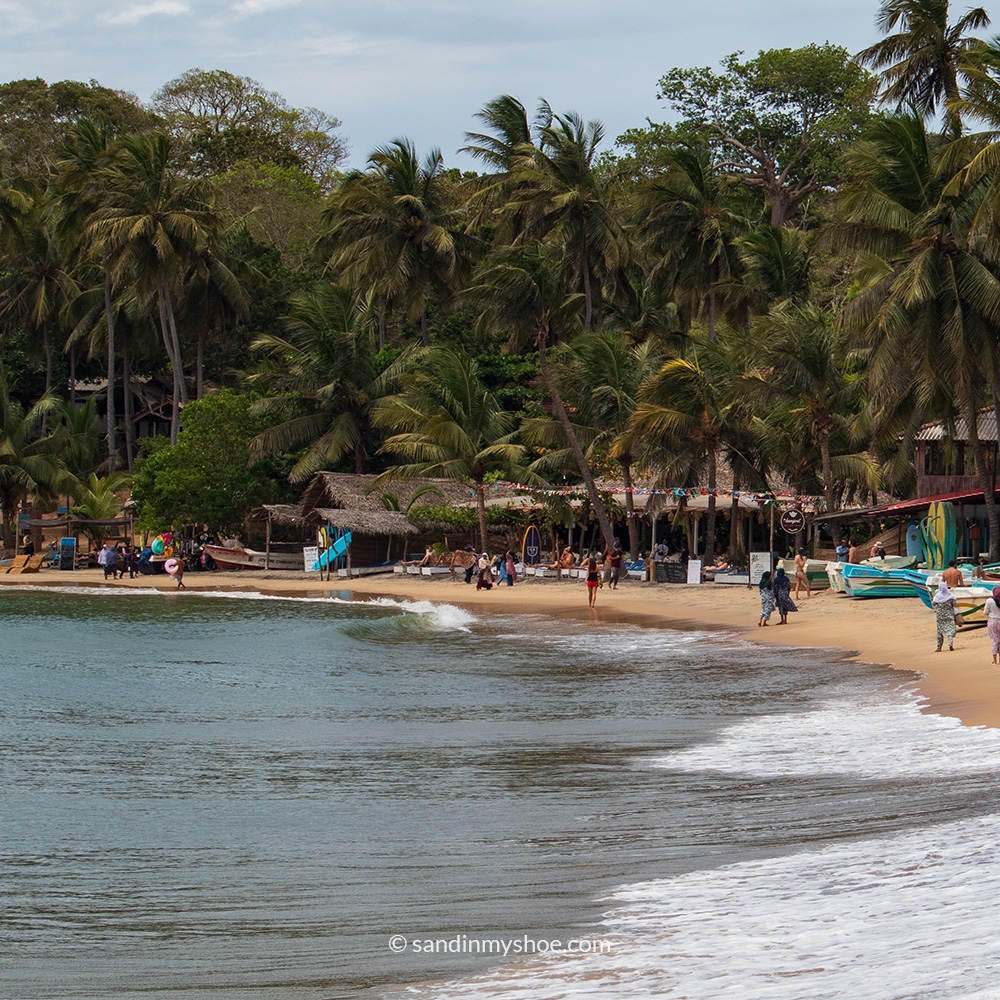
The second‑best thing to do in Arugam Bay — after surfing — is simply to dwell on the beach and enjoy the sun. There are a handful of great spots, each with its own vibe. My personal favourites were Arugam Bay Beach and Peanut Farm Beach.
- Whisky Point Beach Located north of Arugam Bay, just above the village of Pottuvil. It’s less crowded and more relaxed than the main beach, making it a good choice if you want a quieter stretch of sand without going too far.
- Arugam Bay Beach The main beach sits right next to the village and is perfect for sunbathing and swimming. You’ve got cafés and restaurants lining the shore, so it’s easy to spend the whole day here without needing to leave.
- Peanut Farm Beach A tucked‑away beach south of Arugam Bay — quiet, wide, and usually almost empty. There are no cafés or facilities, which is part of the appeal. Bring snacks and drinks with you. It’s the ideal spot if you want a peaceful escape from the busier main beach.
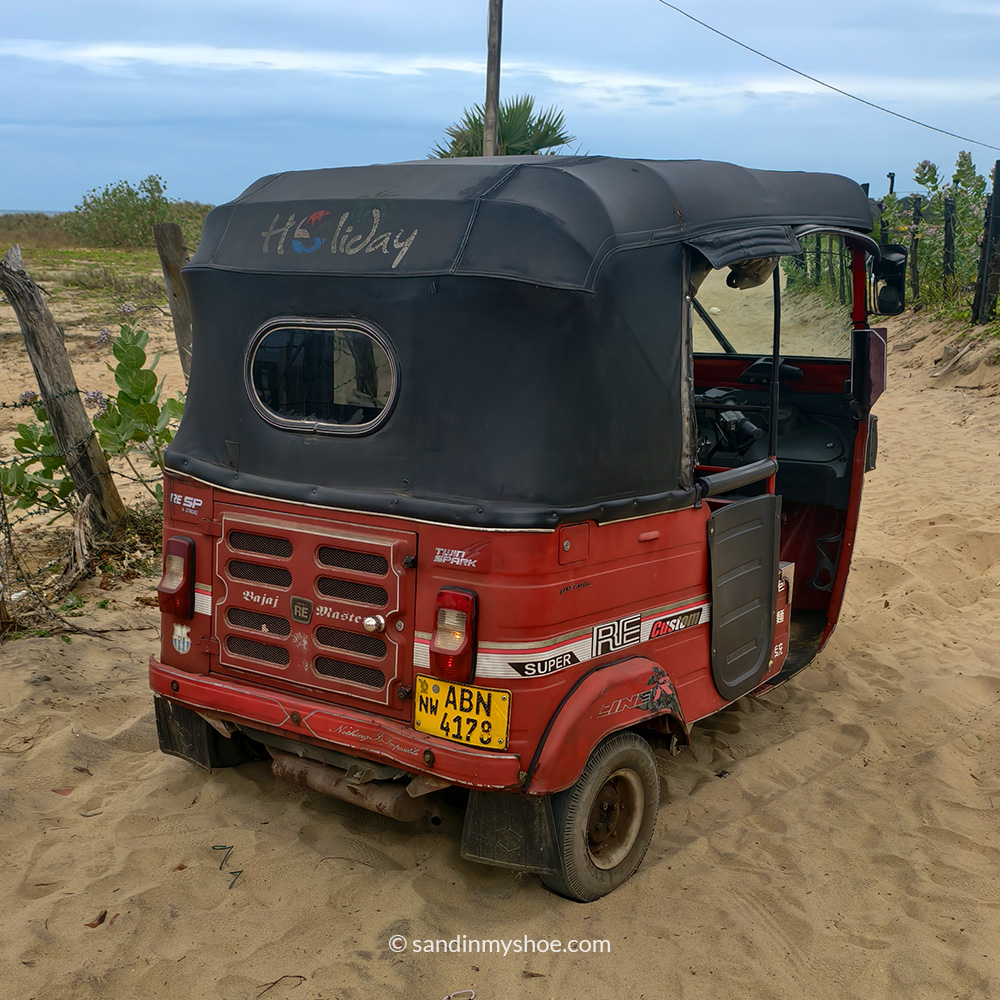
- Panama Beach Located further south of Peanut Farm, this is a secluded, quiet beach with very few people around. It feels remote and untouched. If you’re driving your own tuk‑tuk, be careful on the way to Panama. The access road has several patches of soft sand, and it’s easy to get stuck. I underestimated it myself and ended up spending at least an hour digging the tuk‑tuk out.
Climb the Elephant Rock

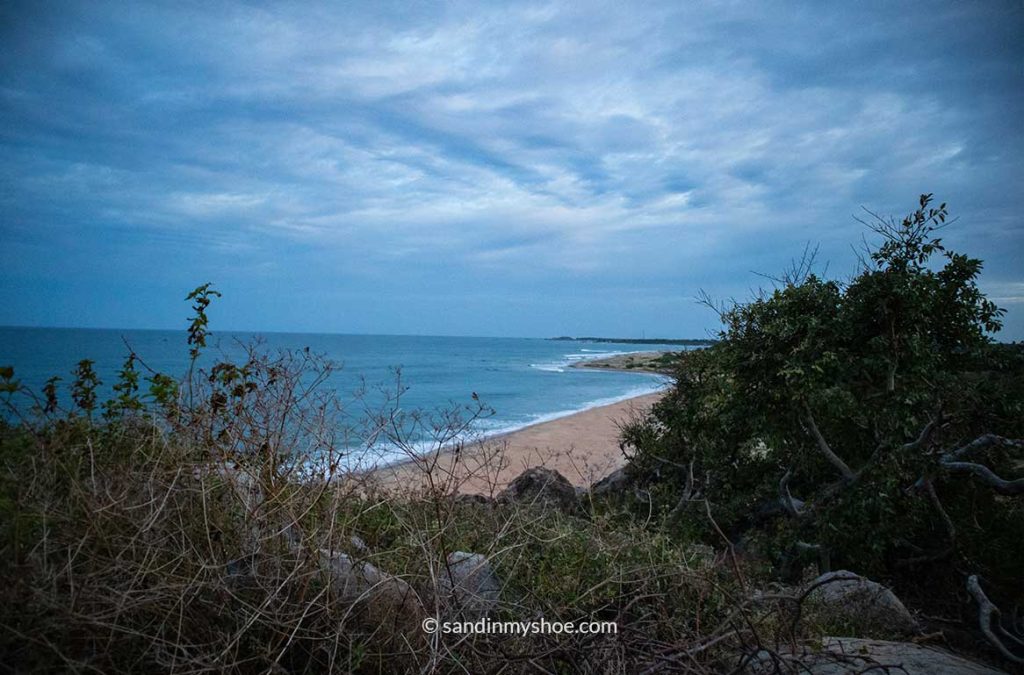
At the top of Elephant Rock you’ll get stunning panoramic views of the warm Indian Ocean, with waves rolling in and surfers from all over the world riding the breaks below. Hiking up here for sunset is a perfect way to end the day before heading back into town for dinner.

During my visit, I saw some wild elephants around the area, so keep an eye out, but stay in a safe distance. And whatever you do, don’t swim in the lagoon near the Elephant Rock as crocodiles are known to be present there from time to time.
The hike itself is short and easy, taking about 10 minutes to reach the top. The rock sits roughly 4 km from Arugam Bay, but there’s no direct road leading all the way to it. Your tuk-tuk will drop you at the main road, and from there it’s a simple walk to the foot of the rock. In total, expect around 30–40 minutes to reach the top, including the tuk‑tuk ride from Arugam Bay.
Look for Wild Elephants (Be careful though)
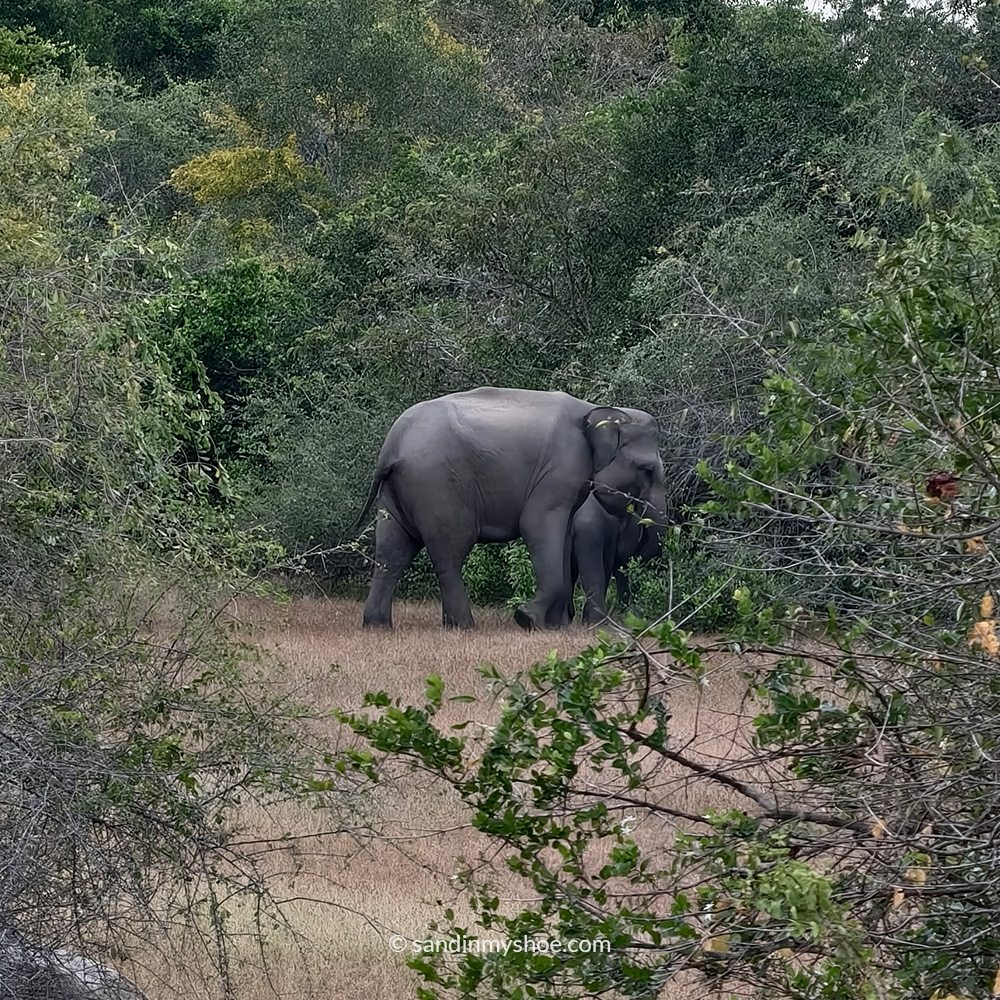
As mentioned above, wild elephants roam around the outskirts of Arugam Bay. It’s impossible to know exactly where they’ll be as they move freely, but they often stay close to water sources. I spotted a couple of them around the area of Elephant Rock.
It also helps to ask tuk‑tuk drivers if they’ve seen any recently — they’re on the roads all day and often know the latest elephant locations.
Important: Always keep a safe distance. Wild elephants can be unpredictable, especially if they feel cornered or surprised.
Join the Pottuvil Lagoon Tour
When you’re ready for a break from the beach, a Pottuvil Mangrove Lagoon tour is a calm, nature‑rich escape. You drift through still, glassy water in a small wooden boat as your guide points out crocodiles, elephants along the shoreline, and an incredible variety of birdlife.
Visit Kumana National Park
Kumana National Park is another great choice for a break from the beach, and it sits close to Arugam Bay. It’s quieter than the more famous parks and, for many travellers, a better choice than the lagoon tour if you’re hoping to spot wildlife—leopards included. The landscape is open, the birdlife is exceptional, and the overall experience feels far less crowded.
Visit Yala National
Yala is Sri Lanka’s most popular national park, largely because it has the highest density of leopards in the country. It’s the place most visitors go when they want the best possible chance of a sighting, though it can feel busy compared to Kumana.
A smart way to visit Yala National Park is to book a safari that includes a drop‑off at your next destination. That way you avoid backtracking to Arugam Bay and turn the safari into part of your travel day instead of a separate trip.
The Easy Summary
Visit Arugam Bay with surfing as your main mission — that’s what the place does best. Just make sure you get the season right and budget a little extra, as it’s more expensive than you might expect. Aim for May to September, keeping in mind that some years the season starts late, so it’s worth checking the weather forecast. The most reliable surf is usually June to August.
Beyond surfing, you’ve got relaxed beach days, a bit of hiking with ocean views, and easy access to nearby national parks and the Pottuvil Lagoon if you want a break from the ocean.


No comments yet, be the first one!
I appreciate hearing from you. If you have any suggestions, questions, or feedback, please leave a comment below. Your input helps ensure the information stays relevant and up to date for everyone.
Thank you for sharing your thoughts!