

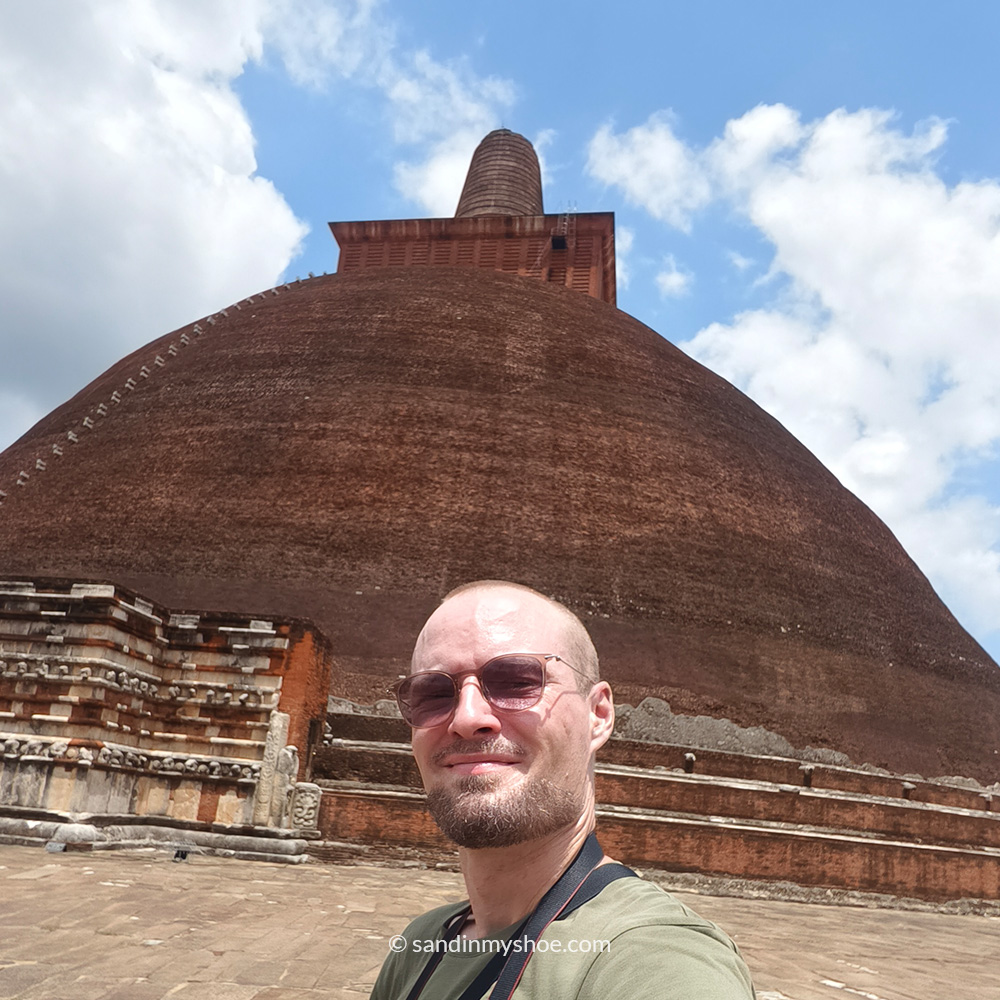
It’s a quite cool place, but without the right context it easily becomes stupa, stupa and yet another stupa. For clarity: a stupa is a Buddhist monument.
Quick Glance: What to Know About Anuradhapura City
- Opening Hours: Daily from 7:00 AM to 5:30 PM
- Cost: Adult $30 USD / Child $15 USD (free for locals)
- Best Time to Visit: Early morning or late afternoon due to the heat and crowds.
- Worth It: Yes — don’t miss it.
- Total Time to Spend: I spent 6 hours. But, most visitors typically spend around 3-4 hours.
- How to Visit: It’s best to have your own vehicle, as the sites are quite spread out. A tuk‑tuk or a bicycle works perfectly for getting between them.
I created this travel guide for Anuradhapura to give you the essential history and culture background that makes this site come alive, plus a look at what my own visit was like. You’ll also find tips on where to stay, how to explore the ruins, why you should bring socks to the heat, and everything else you need to know to make your visit smoother and more enjoyable.
Where to Stay in Anuradhapura Near Old Town
Best Value Stays With Pool & Excellent Reviews
Top Budget-Friendly Stays With High Ratings
All recommendations are verified and have consistently strong Google Business reviews. They are affiliate links at no extra cost for you—they help support this site.
Short History of Anurahapura
In a nutshell: the most Buddhist place in entire Sri Lanka.
Short video about my experience visiting Anuradhapura
Anuradhapura was the very first capital of Sri Lanka, dating back to around 1000 B.C.E, when the ancient Sinhalese civilization ruled. Today it’s a UNESCO World Heritage Site thanks to the remarkably well-preserved ruins scattered across the area.
At the heart of Anuradhapura is a sacred Bodhi Tree, which had a central role when the city was established. It said that a Buddhist nun named Sanghamitta brought a cutting from Buddha’s own enlightenment tree and planted it here in the 3rd century B.C.E.
From there, Anuradhapura flourished for more than a thousand years before being abandoned after an invasion in 993. Nature slowly reclaimed the city, until it was rediscovered about 800 years later in the jungle and its palaces, monasteries and monuments were once again returned to the world.
My Experience
Getting There
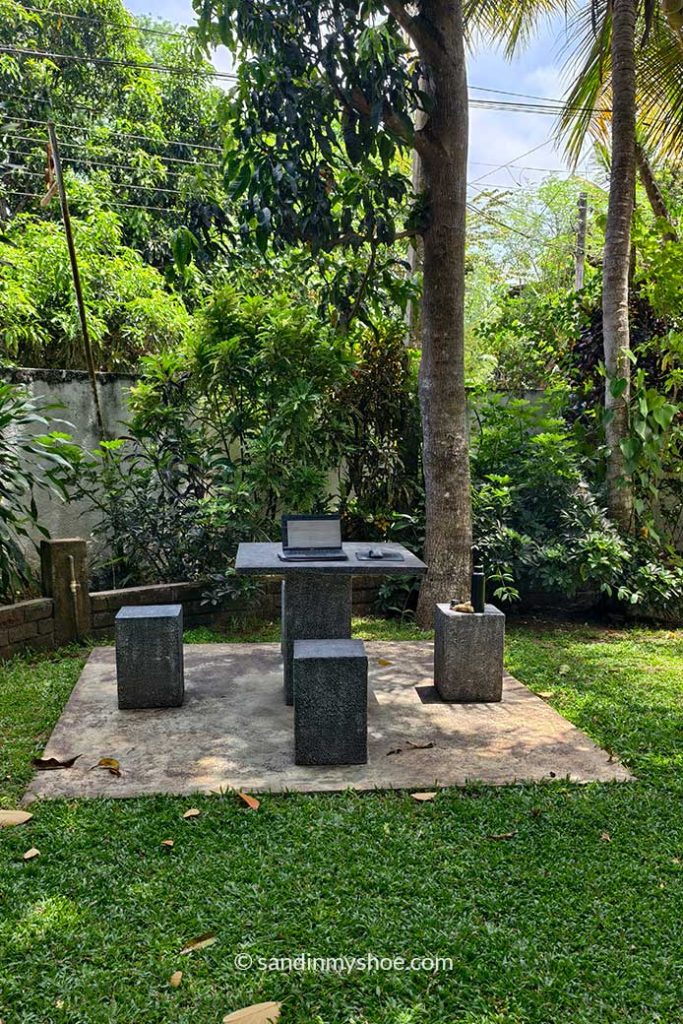
I arrived in Anuradhapura in my own tuk‑tuk after visiting both Negombo and Wilpattu National Park. I stayed just outside the city in a wonderful guesthouse with a full garden, and since I had some work to do, that little patch of nature became a surprisingly perfect office for the day. I stayed two nights in total.
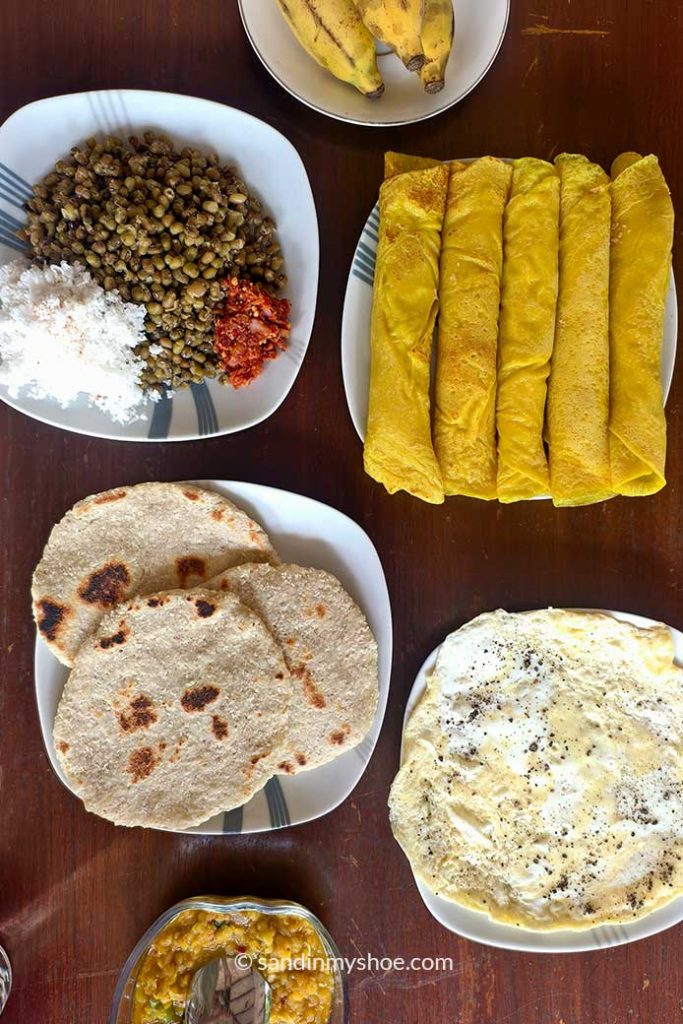
The morning before heading into Anuradhapura, I ordered breakfast at the guesthouse — something I slightly regretted, because it was huge, easily enough for a small family of three.
Five pancakes, three bananas, a plate full of beans and coconut shavings, three Sri Lankan bread pieces, an omelette, another bean dish, and a coffee. The bill came to about 1500 LKR (around $5 USD). And since I wasn’t raised to be a quitter, I finished everything except two bananas, which I packed for later.
I basically rolled myself into the tuk‑tuk, because I hadn’t been this full in ages, and set off — drowsy and very well‑fed — toward the sacred capital, the old town
At the gate, I met up with some travelers I’d crossed paths with earlier on my trip, and together we set off to explore the ruins.
The Visit
Because the area is quite vast, we took my tuk‑tuk with us to save energy for the actual exploration rather than spending it walking from sight to sight. We started around 10 AM, though in hindsight, beginning early in the morning would have been far better — the heat builds quickly.
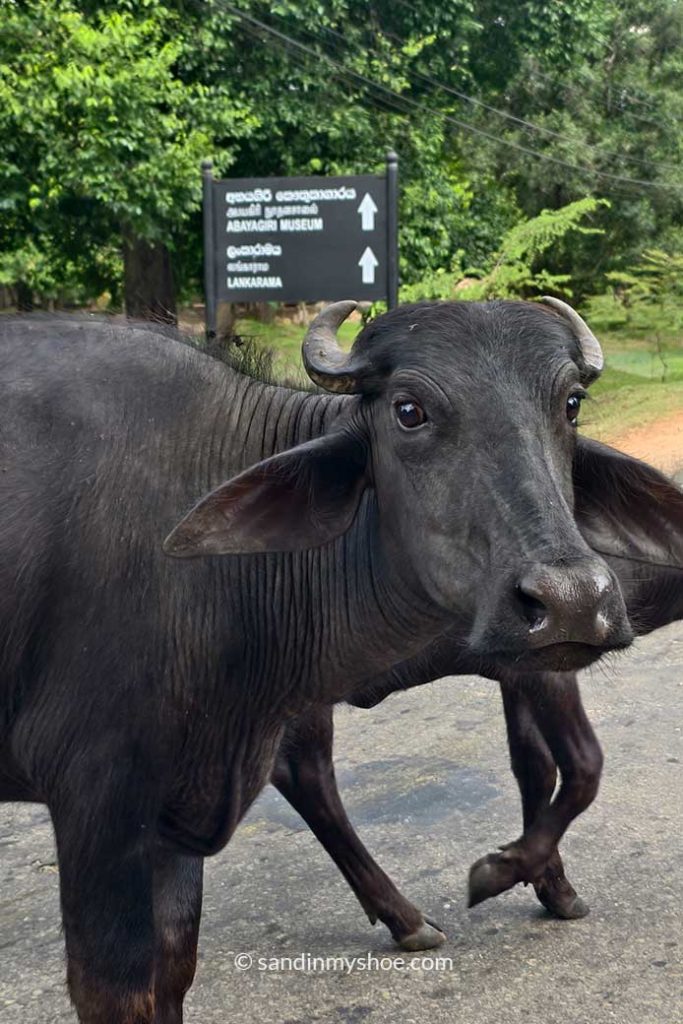
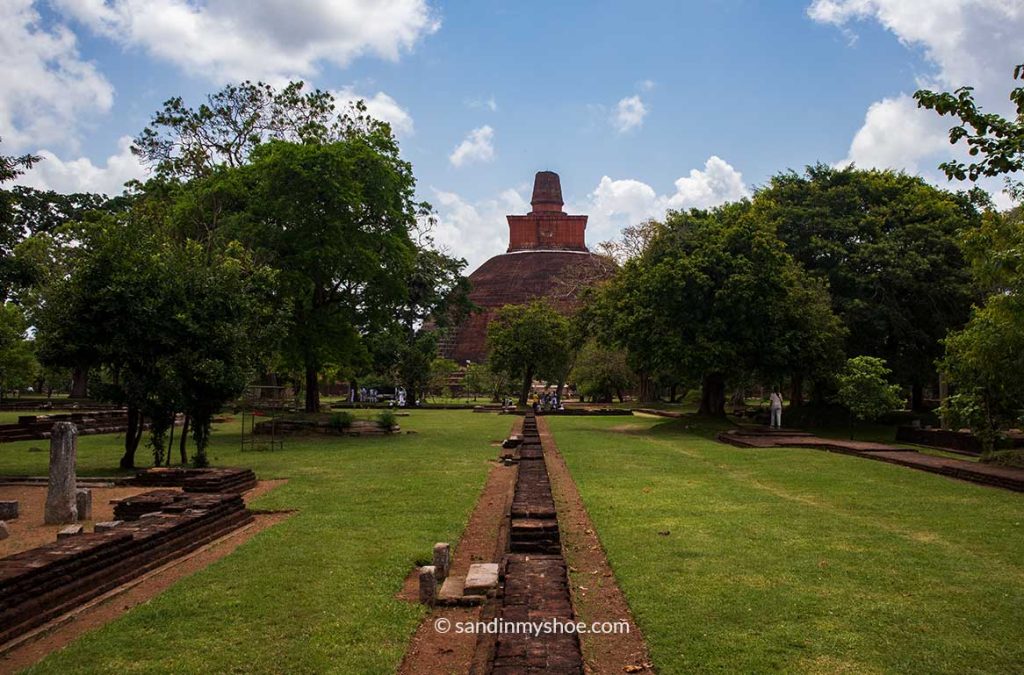
The surroundings are quiet, serene, and very green. Plenty of trees offer shade. There are, of course, monkeys around, but also farmers gently herding their cows through the area. The whole atmosphere felt pure and kind. Gentle smiles were exchanged as we passed worshipers. As a tourist, I felt not just tolerated, but genuinely welcomed.
Looking at the map, we realized there’s quite a lot to see — 19 sights in total, ranging from stupas and gardens to monuments, a museum, and more. The sights are numbered, so the easiest way to experience them all is simply to follow the numbers in order.
A quick heads‑up: make sure you’re satisfied with one area before moving on, because security won’t let you go back once you’ve passed into the next zone. And there’s quite a lot of security personnel around.
With so many sights to see, it’s easy to get a bit fatigued halfway through. We visited roughly half of them before taking a break for coffee, coconuts, and ice cream to recharge. Fortunately, there are plenty of vendors inside the grounds selling snacks, drinks, and even lunch, so you don’t need to leave the premises. Also it’s best not to leave because it’s not guaranteed you’ll be allowed back in with the same ticket.
Back to the sights: as you move between them, you’ll start to notice that many stupas share the same shape but come in two very different looks: bright white and earthy‑colored. Structurally, they’re the same type of Buddhist monument. The difference is just restoration and age.
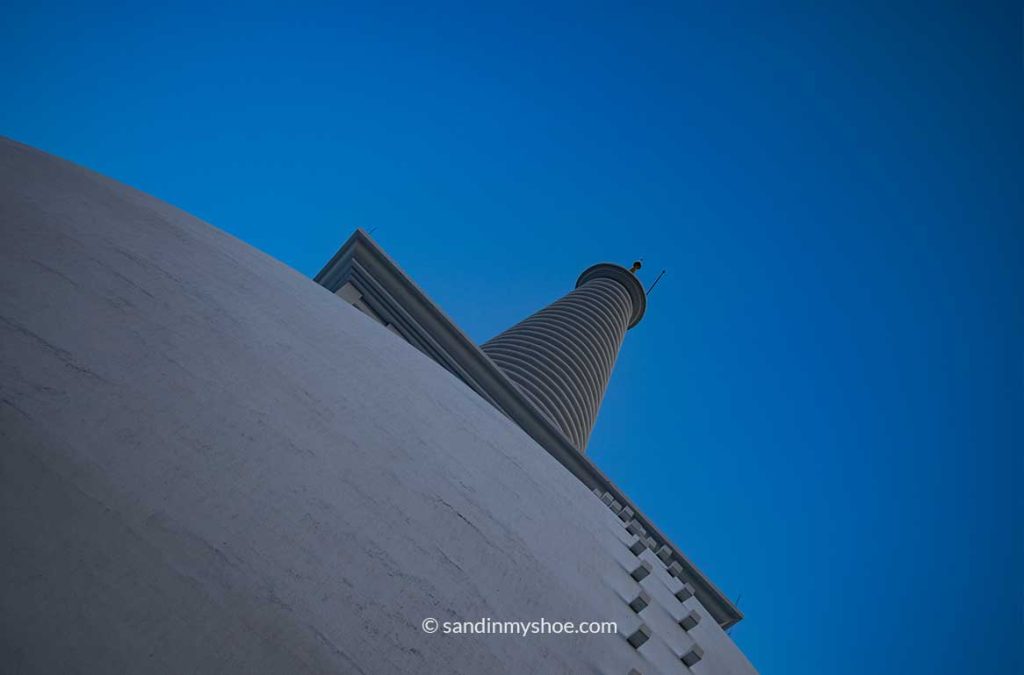
- White stupas have been fully restored and re‑plastered, often because they are still major, active pilgrimage sites.
- Earth‑colored stupas are the original brick structures, where the outer plaster has worn away over centuries. Many are treated as archaeological monuments rather than fully restored temples.
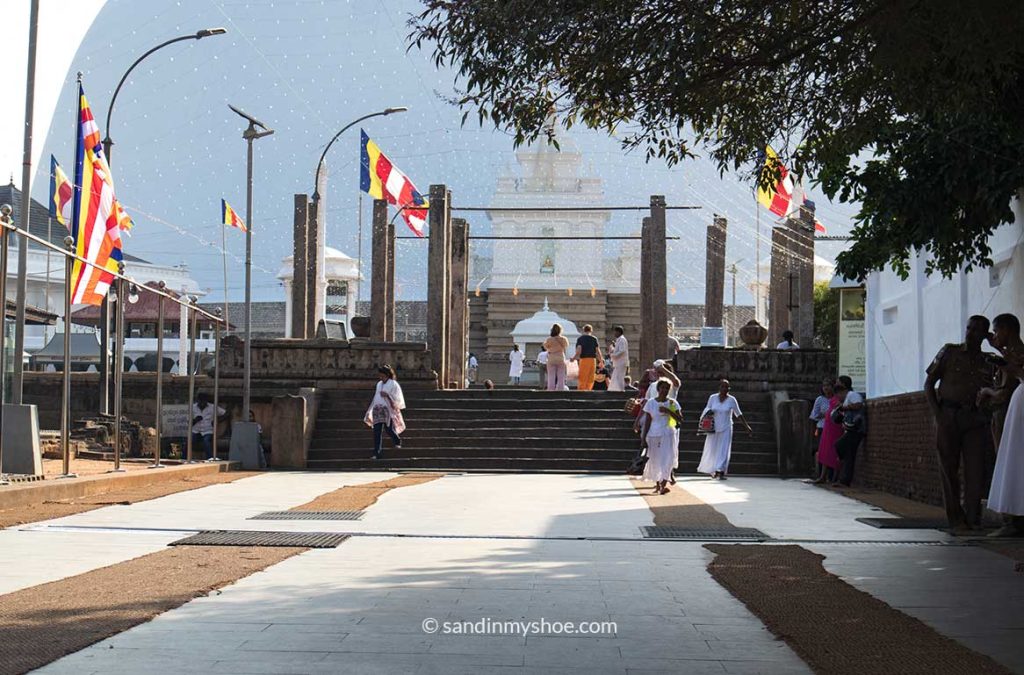
Most locals visiting were dressed in their finest white clothing, symbolising purity and spiritual awakening. There were also scholars of Buddhism holding classes near the stupas, and monks in orange robes strolling calmly between the sites.
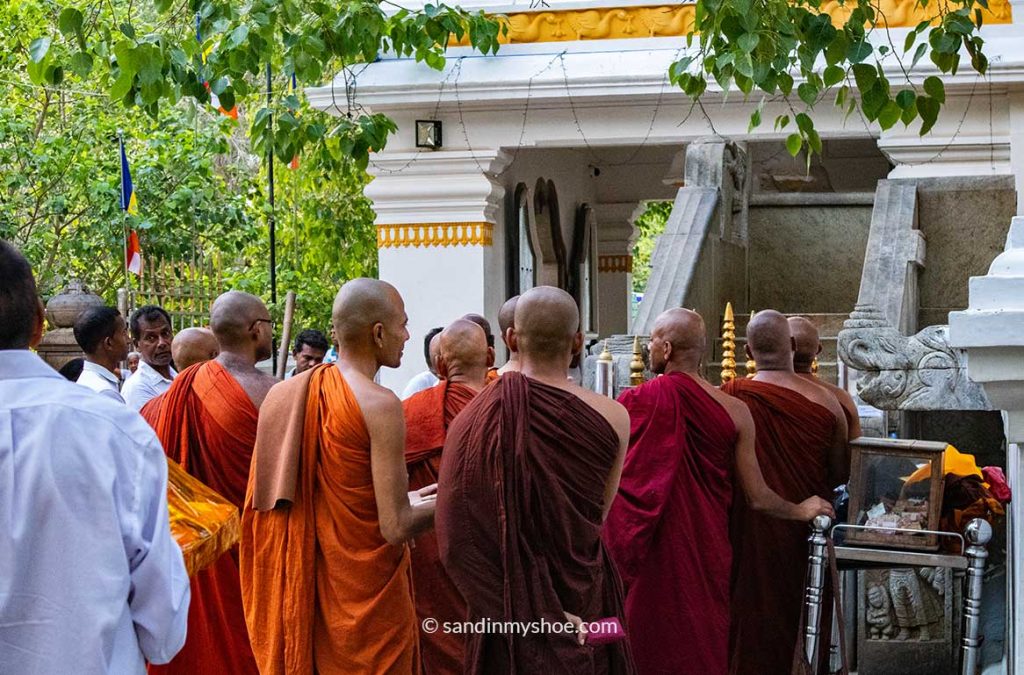
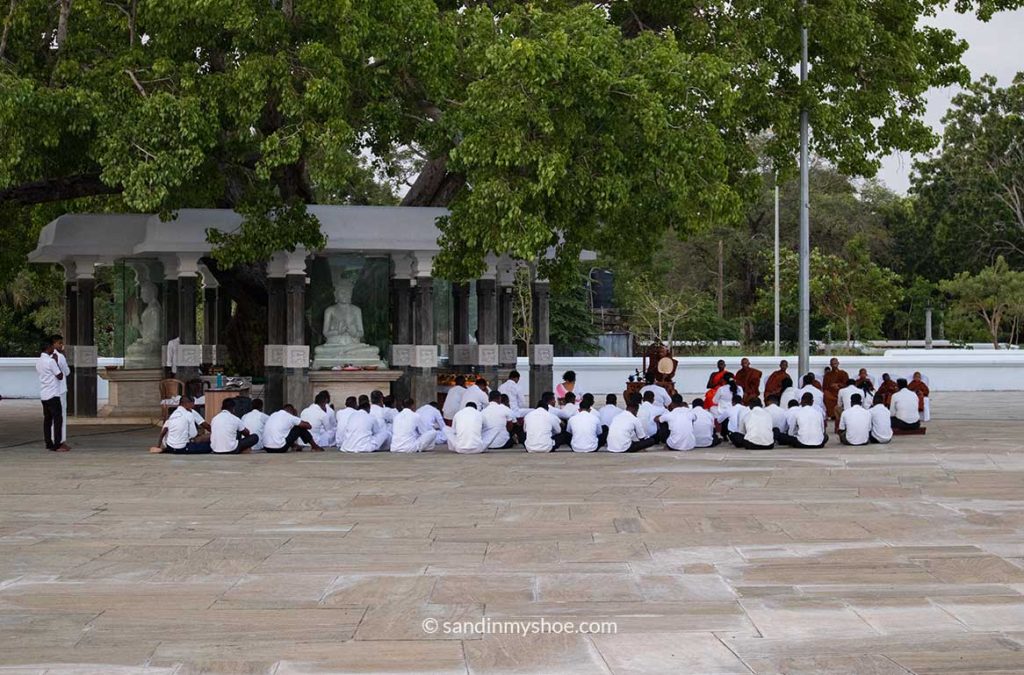
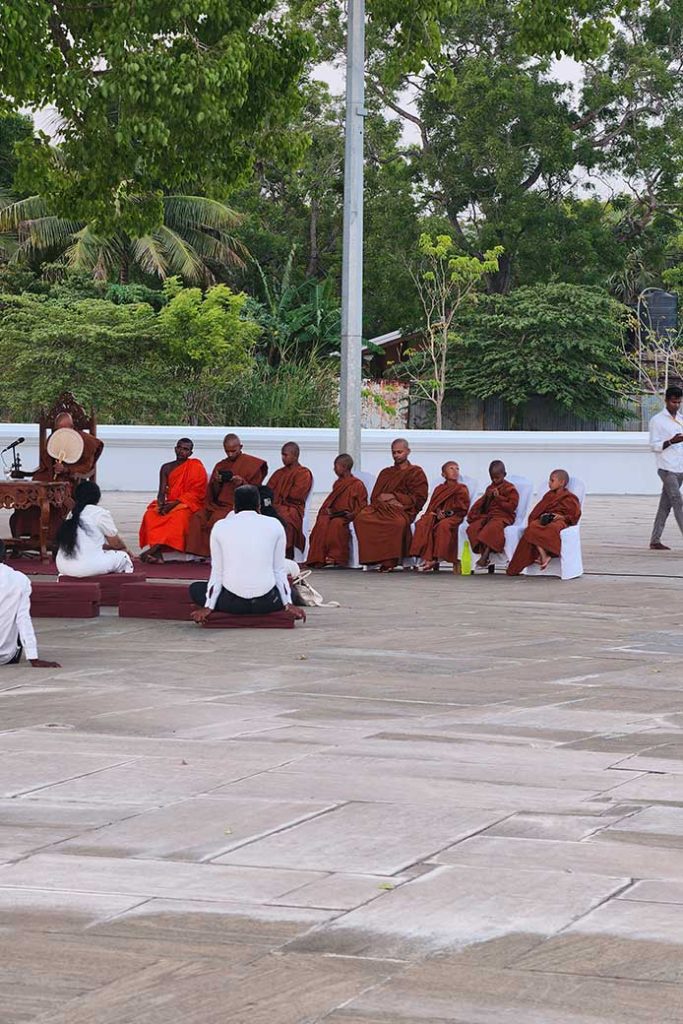

Watching all of this — the worship, the rituals, the quiet devotion was beautiful to watch for a non-believer like myself.
My Favorite Ones
I won’t cover every single sight since that would be a bit too much information, but here are my favorites. The numbers refer to the sights in the pamphlet you’ll receive at the entrance.
The Museum (1)
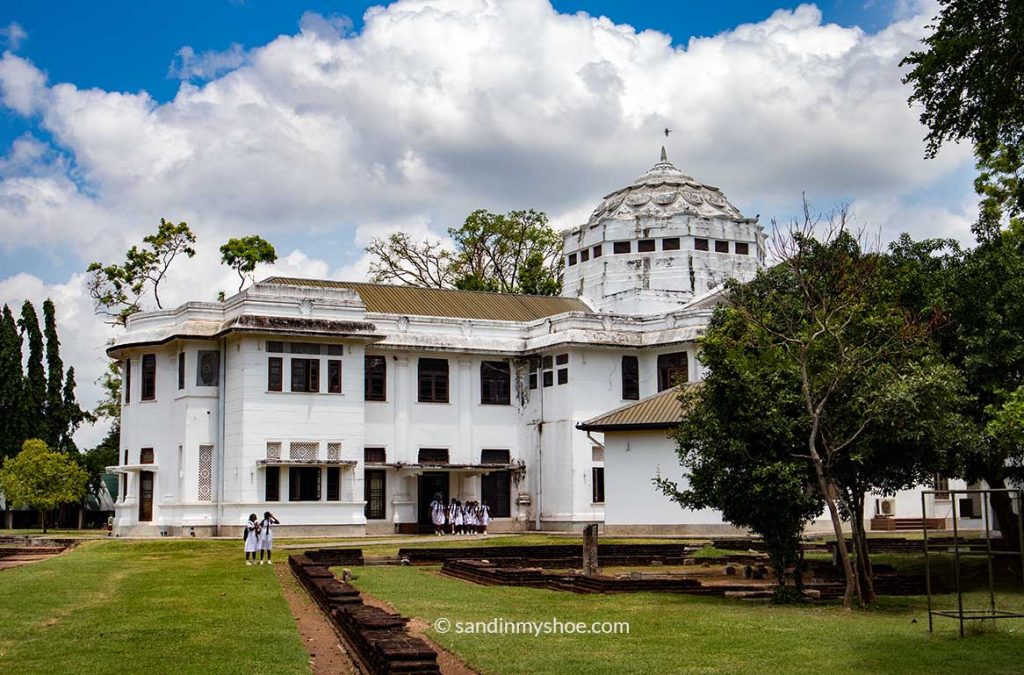
The museum gave me just the right amount of backstory to make the ruins come alive. It’s not huge, but it’s packed with context, so I’d recommend taking your time and digging through it properly before heading out.
Jetavanaramaya Stupa (2)
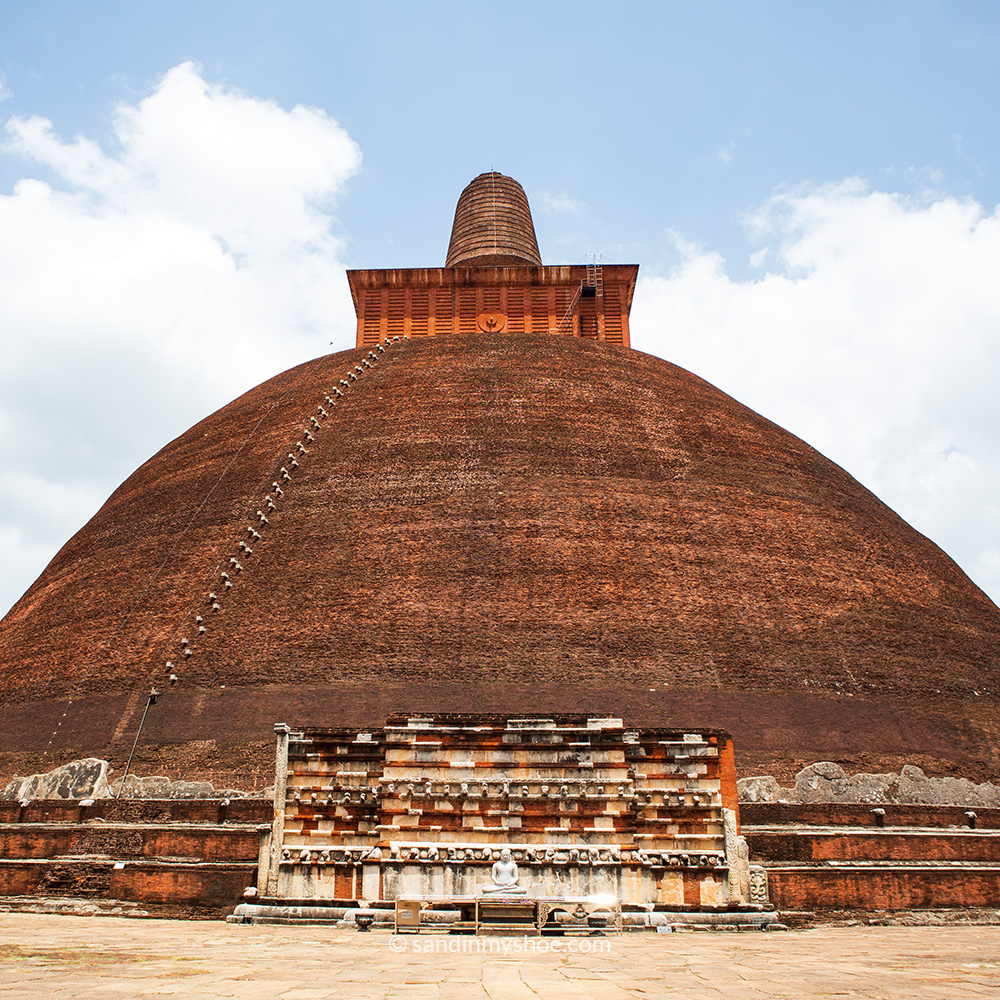
This stupa was once the tallest in the world at 120 m (393 ft) — and one of the tallest structures on Earth. It’s a colossal brick monument that shows Anuradhapura in its raw, ancient form. Unlike the bright white stupas, this one keeps its earthy color, which makes it feel more like a time capsule than a restored shrine.
Twin Pond (4)
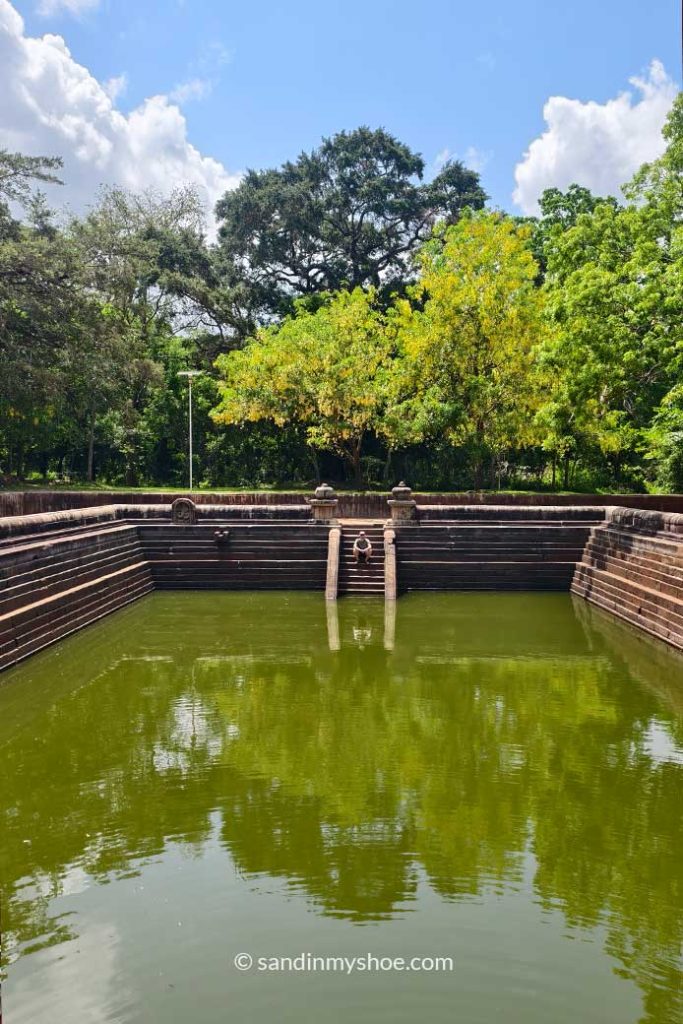
A beautifully symmetrical pair of stone‑lined pools tucked away in a quiet corner of the complex. I really enjoyed the calm here — the reflections, the stillness, and is a great contrast to the rest of the sights.
The Moonstone (10)
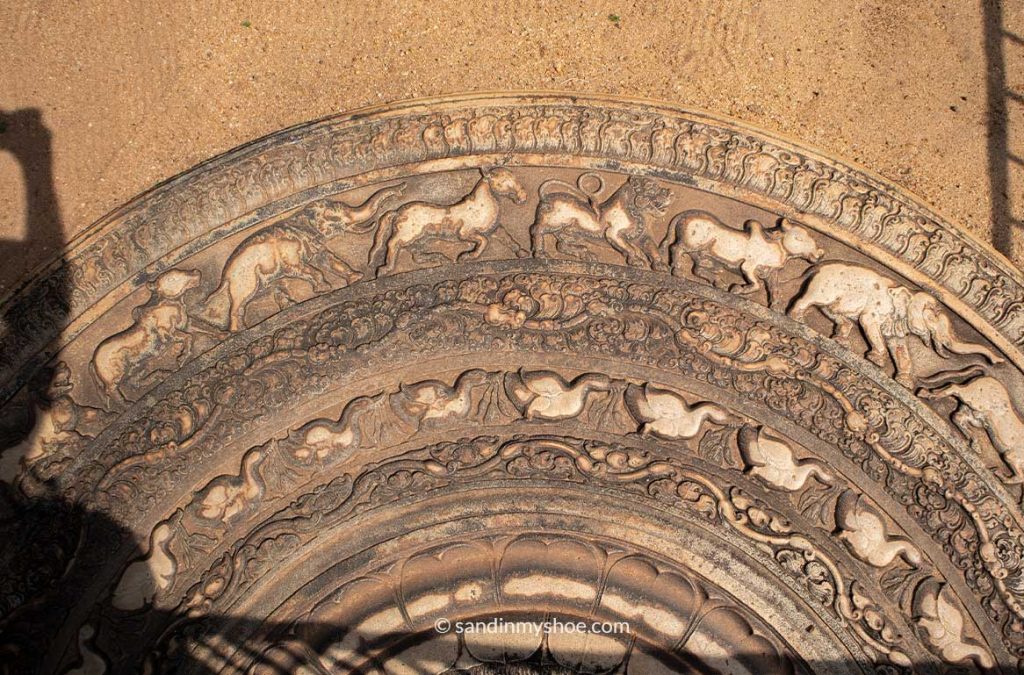
This beautifully carved half‑circle stone symbolizes the Buddhist cycle of birth, suffering, death, and rebirth. Once you know what each ring represents, it becomes one of the most meaningful details in the entire ancient city. I’ll leave that detail for you to find out in the museum.
Ruvanvali Stupa (13)
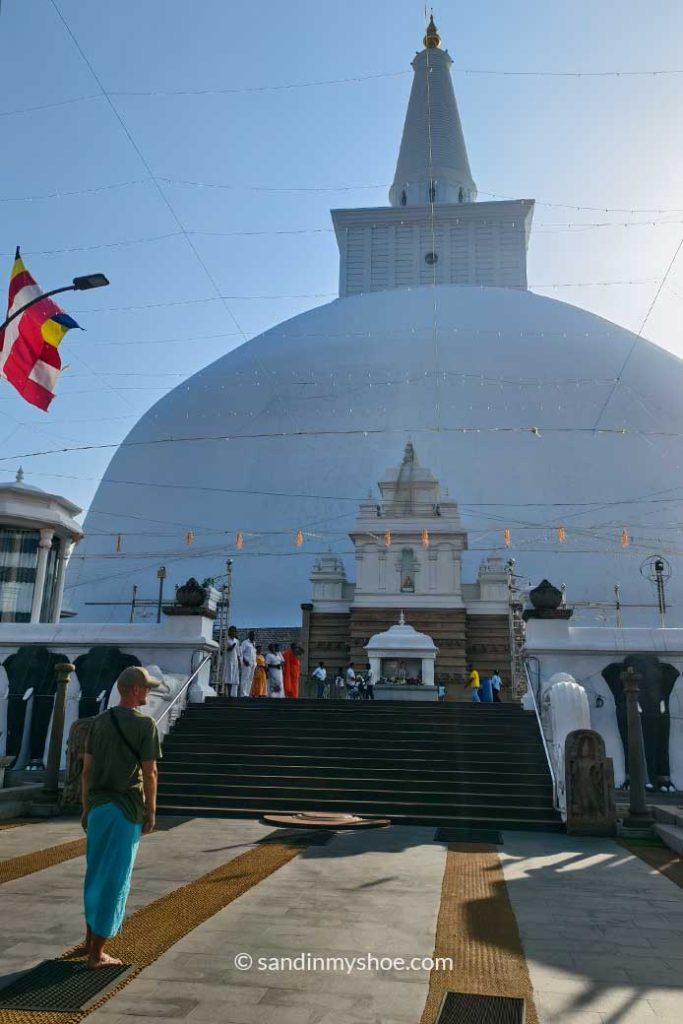
One of the most striking stupas in all of Sri Lanka — a massive, glowing white dome that feels almost otherworldly in the sunlight. It’s an active place of worship, so you’ll see devotees in white circling it, offering flowers, and praying.
Tree of Enlightenment (15)

This sacred Tree of Enlightenment is believed to be grown from a cutting of the original Bodhi tree under which the Buddha attained enlightenment. It’s one of the oldest historically documented trees in the world. The energy here is calm, focused, and deeply spiritual. Even if you’re not religious, it’s hard not to feel something since locals are very into their worshiping.
Planning You Visit
How to Visit Anuradhapura
The ancient city area is quite vast, so you’ll definitely need a method of transportation. Many tourists hire a tuk-tuk with a driver to take them between the different sights, while others prefer exploring by bicycle. Walking is possible too, but in reality it’s better to save your energy for the sites, as some of the distances can be tiring — especially in the heat.
I had my own personal tuk-tuk, which made getting around super easy.
Tip: If you decide to cycle, stay somewhere close to the ancient city so you don’t burn all your energy before even arriving.
Opening Hours for Anuradhapura
Every day: 7:00 AM – 5:30 PM
When to Visit Anuradhapura
Go very early, aim at 7.00 AM so you’ll avoid the hottest part of the day and the big crowds of tourists or late afternoon for the same reasons.
Food and Drinks
Yes — there are plenty of small vendors inside the grounds selling snacks, coconuts, ice cream, drinks, and simple lunch options. It’s convenient, and it also means you don’t have to leave the premises
What to Wear and Bring
- Clothing: Wear modest clothing that covers your knees and shoulders. Avoid the color orange, as it’s strongly associated with monks and nuns. If you accidentally show up in knee‑revealing shorts or a tank top, you can rent a sarong for a small fee at the entrance.
- Camera: Always worth bringing — the sites are incredibly photogenic.
- Large bottle of water: It gets hot, and shade isn’t always guaranteed.
- Hat, cap, or sarong: Bring something to cover your head from the scorching sun.
- Sunscreen: It’s really needed.
- Socks: You’ll need to remove your shoes or slippers in temple areas, and the stones can get extremely hot. I was literally running for shade more than once as the skin on my feet felt like it was slowly burning away.
How to Get a Guide For Anuradhapura
If you want to get a guide, there are plenty waiting around the entrance. You can also book one through platforms like GetYourGuide or Klook, where you can check their reviews before deciding. I skipped getting a guide myself— partly to save money — but in hindsight, it might be worth it if you want the full historical and cultural context.
Entrance Fee for Anuradhapura
- Foreigner: Adult $30 USD / Child $15 USD
- Local: Free
For official entrance fees, check the government site — the Central Cultural Fund’s own page and the most reliable source.
How Many Days to Stay in Anuradhapura
One full day is enough for most people to see the highlights, which usually means staying two nights unless you arrive very early. If you want a deep dive into the ruins, consider an extra day for exploration and use it to visit Mihintale. It’s an important nearby monastic site often considered the birthplace of Buddhism in Sri Lanka (I didn’t visit, but many travelers recommend it).
Where to Stay in Anuradhapura
I stayed in a very friendly guesthouse run by the most hospitable owner. It had a fantastic garden where ended up doing some work, and the breakfast honestly blew me away. It was a wonderful place overal. Unfortunately, it’s not listed anymore on booking platforms. However, I have done some digging and found some great accommodations options — both near old town if you plan to bicycle, and some excellent price-to-value stays closer to the city.
How to Get to Anuradhapura
By Personal Tuk‑Tuk
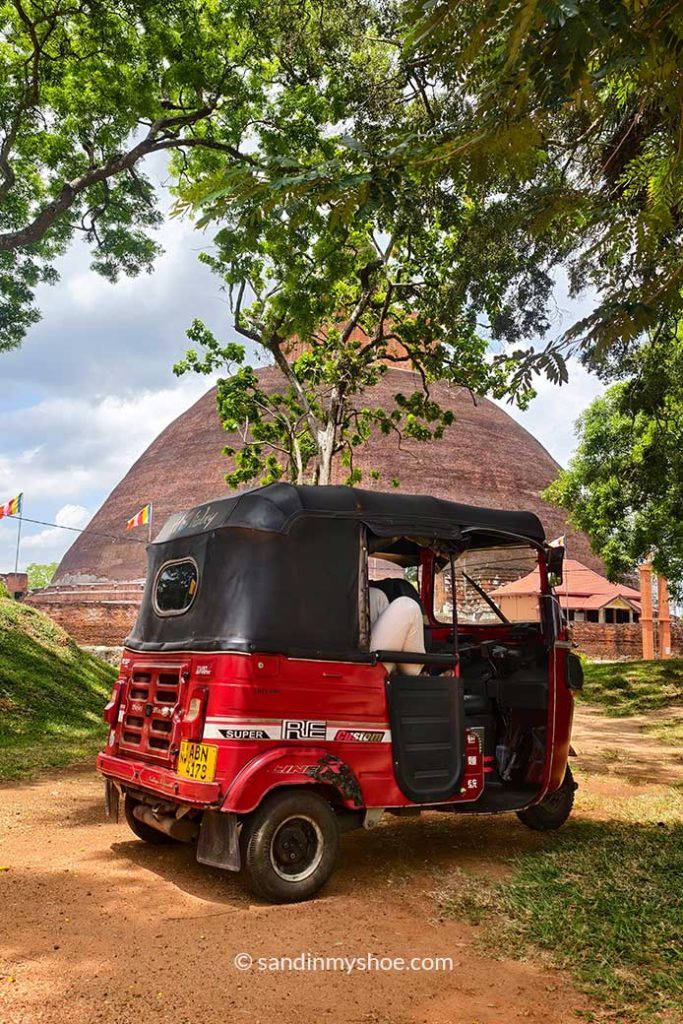
I rented my own tuk‑tuk, and it made getting around Sri Lanka incredibly easy. If you’re comfortable driving one, it’s a fun and flexible way to travel. Read my other post: Sri Lanka Tuk-tuk Guide and find you if it would suit you as well.
By Bus
If you’re staying in Colombo, head to the Colombo Bastian Mawatha bus station and hop on a bus bound for Anuradhapura. The journey takes around 5 hours. You can check schedules and book tickets through 12go.asia.
By Train
For the train, check departure times on their official website, then simply go to the station and buy your ticket there. Trains are slower but scenic, and a great way to experience local travel.
Use the PickMe app for transport to either the train or bus station — it’s reliable and cheaper than Uber.
The Easy Summary
I really enjoyed my visit. The stupas are genuinely impressive, and in terms of scale Anuradhapura feels quite similar to Sigiriya. What makes it stand out, though, is how many structures still remain. Sigiriya is mostly ruins, while Anuradhapura gives you a fuller sense of an ancient city. Both places are remarkable in their own way. I recommend to visit.
The Next Natural Travel Step: Anuradhapura to Sigiriya
For many travelers, the next natural step is to continue to Sigiriya. It’s only about 80 km away, and there are a couple of options to get there. The local bus is obviously the cheapest option, but if you are a full car, sharing a taxi won’t be that expensive, you’d be looking at a total cost of about $35 USD.
If you choose the bus, head to the old bus station in Anuradhapura and take one heading for Dambulla. From there, hop on another bus bound for Sigirya. The whole journey will cost you less than $2 USD, and timewise around 3 hours.


No comments yet, be the first one!
I appreciate hearing from you. If you have any suggestions, questions, or feedback, please leave a comment below. Your input helps ensure the information stays relevant and up to date for everyone.
Thank you for sharing your thoughts!