
Equipped with a half-broken tuk-tuk, I drove across Sri Lanka, covering more than 1,000 km. Here are 17 lessons I learned — practical tips to help you plan your Sri Lanka Trip better and make the most of it once you’re on the road.
1. Bring Your Own Coffee
Sri Lanka is a tea country, and if you are a coffee addict like me, you’ll quickly notice that the coffee in Sri Lanka most of the times is not strong enough — and when it is, it’s often not so good. The are a couple of coffee chains that can make a proper coffee, and many touristy areas have decent coffee, but not always.
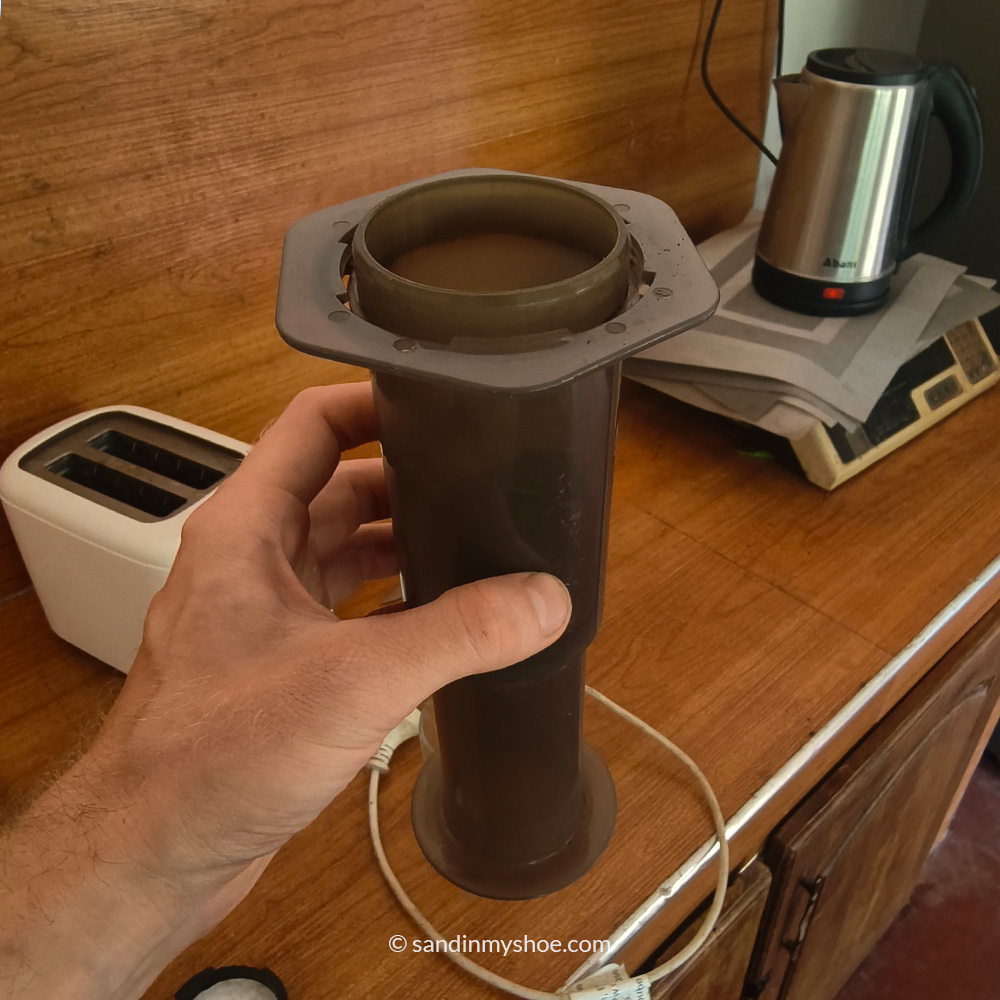
So if you need a morning fix or two, and don’t want to constantly be on the lookout, bring your own. I usually packing an Aeropress: it’s light, cheap and makes a proper coffee. If you prefer something simpler, bring instant coffee.
2. Know the Monsoon Seasons in Sri Lanka
There are two separate monsoons seasons in Sri Lanka, each arriving at different times of the year to different coasts. The best part? No matter when you visit, there’s always a sunny side of the island to explore.
I traveled in May, when Negombo had occasional showers, the Hill Country (Ella and Nuwara Eliya) were super wet and misty, but most of the cultural triangle (Anuradhapura, Sigiriya, Dambulla—except Kandy) and the east coast (Trincomalee) had fantastic weather.
- Northeast Monsoon (Maha)
The Maha monsoon season is the most active between October and January and brings rains mainly to the north and east coasts. The Cultural Triangle sees only moderate showers, especially in November–December, but remains very visitable. Hill Country are relatively dry during Maha, making this a good season for hiking and views. - Southwest Monsoon (Yala)
The Yala monsoon season pounds the South and West coasts between May and September. Hill Country gets heavier rains, while the cultural triangle stays mostly dry.
For a deeper dive into which months are the best to visit Sri Lanka, have a look at my other post: Best Time to Visit Sri Lanka
3. Choose the Right Safari
There are over 20 National Parks in Sri Lanka, but only four of them are the most popular.
- Yala National Park: Famous for its leopards and dramatic landscapes. The most popular one in Sri Lanka because the park has the highest density of leopards in the worlds. Best time to visit is between May and early September.
- Minneriya & Kaudulla National Parks: These two parks connect and are famous for the largest gathering of the elephants in whole Asia. Best time to experience it is between July and October, peak months being August and early September.
- Udawalawe National Park: Known for its consistent elephant sightings year-round, and easy to reach from the West and South coasts. In the same area, there’s also an ethical elephant transit home that looks after dozens of baby elephants.
- Wilpattu National Park: A quieter, more remote park in the northwest with excellent leopard potential. During my visit, I spotted not only leopards and elephants, but monkeys and peacocks as well. The season is between February and October.
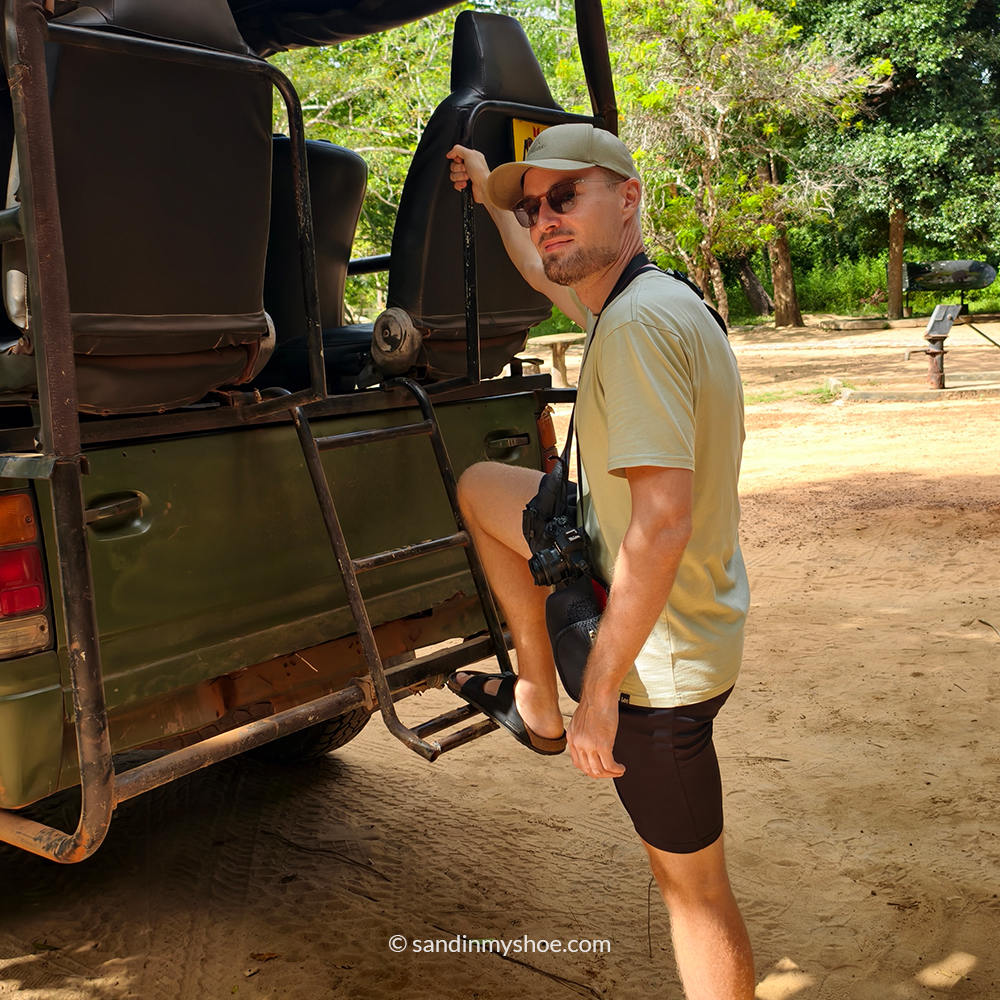
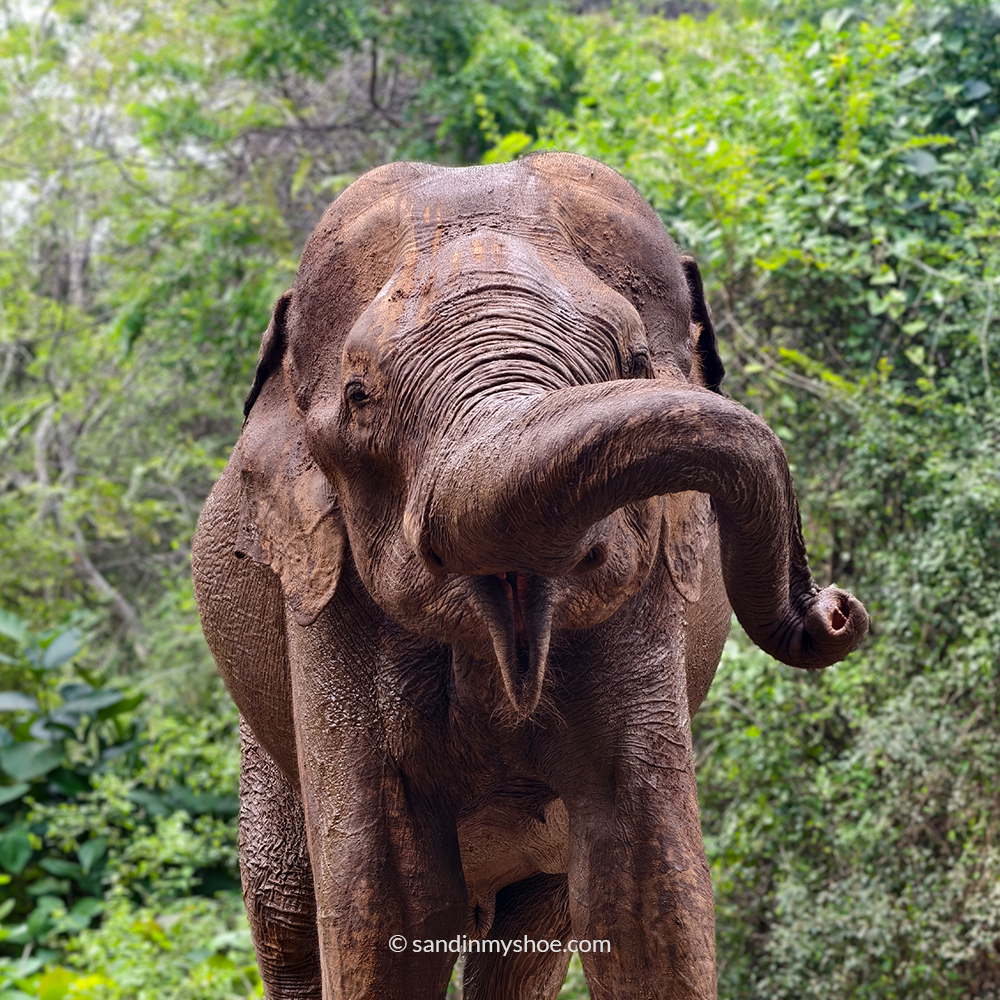
For the absolute best experiences visit Yala and Minneriya in August or early September, that way you’ll get to experience the massive gatherings of elephants in Minneriya and spot plenty of leopards in Yala or Wilpattu.
4. Skip Colombo
You can safely skip Colombo without any fear of missing out. Unlike many other Asian capitals, Colombo doesn’t have any must-see landmarks. What you’ll find are some markets, a national museum and a big mall. The cultural and natural highlights lie outside the capital.
I even recommend staying in Negombo on your day of arrival. It’s closer to the airport and offers a more relaxed start of your trip. For a deeper comparison read my post Negombo or Colombo to see which option suits you best.
5. Consider Exploring Sri Lanka with Your Own Tuk-Tuk
Before I arrived in Sri Lanka, I kept hearing other travelers rave about their experience exploring Sri Lanka with a tuk-tuk, and describing it as one of the best things they’ve done. That got me curios, and I ended up renting one myself for nearly three weeks. I drove more than a thousand kilometers: from the west to the north, then to the east, and finally back to the west.
Along the way, I shared the road with monkeys, the occasional wild elephant, and even horses — all while adjusting to left‑side traffic. In Sri Lanka, traffic rules often feel more like suggestions, and the biggest vehicle usually has the right of way.
What I loved most was the freedom to stop anywhere and explore places far from the tourist trail. It was a mix of chaos, freedom, and adventure — and it gave me some of my best memories from the trip.
Read my Sri Lanka Tuk-Tuk Guide if you want the full details.
6. Try the Street Food
I’d highly recommend the street food, but with cautiousness since hygiene isn’t always a priority. Stick to vendors that are popular, and before buying just have a look how they handle the food.
My favorite street snack quickly became the Chicken Roti: a folded flatbread in a rectangular shape filled with spiced chicken, potatoes, onions, and sometimes peas or carrots. It’s an amazing and healthy little snack, and with couple of pieces it easily becomes a full meal.
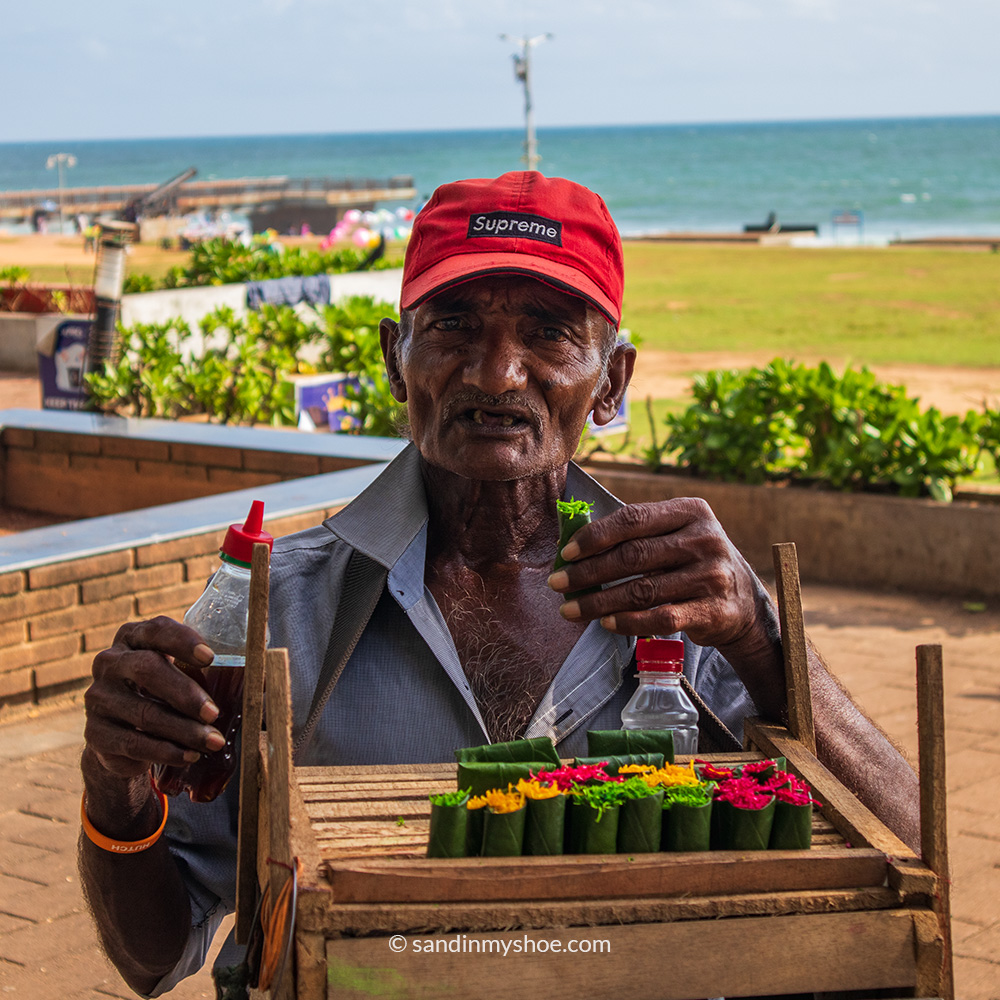
Another delicious is the Isso Vadai, which is a spicy prawn fritter made from lentils and topped with small prawns. Crispy on the outside and soft inside.
7. Eat Vegetarian Thali
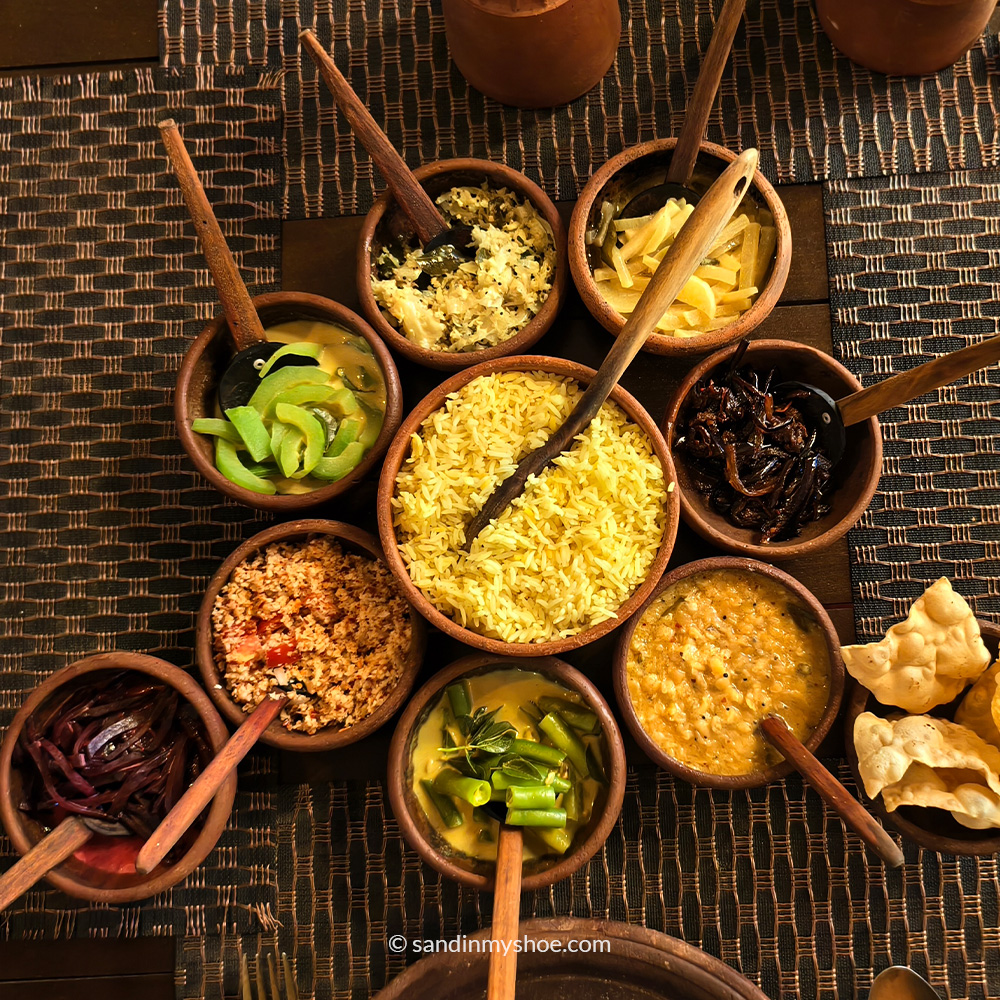
I’m usually a big meat‑eater, but the Sri Lankan vegetarian thali completely blew me away. In Sigiriya I was served a tray of ten small bowls circling a mountain of rice — beans, curries, chutneys, and spiced vegetables. The colors and aromas were intoxicating.
I remember devouring the first few bites in a rush, then catching myself slowing down, savoring each spoonful. The more I tasted, the more satisfied I felt. I ended up finishing it all by myself, and not sure if actually was meant for two people.
8. Sri Lanka is Super Affordable — But Not in Tourist Areas
In general, Sri Lanka is an inexpensive country. Outside the tourist zones, everyday costs are strikingly low: an ice cream for 20 LKR ($0.05 USD), a coffee for 70 LKR ($0.20 USD), and a roadside lunch for low as 330 LKR ($1 USD). The cheapest night I found in a guesthouse was 2000 LKR ($6.50 USD). With prices like these, you can easily spend just as little as $10–15 USD per day.
But step into the tourist areas and it’s a different story. A coffee jumps to $2-3 USD, lunch to $8-12 USD, and even a simple ice cream costs $1-2 USD. A basic private room will set you back at least $15 USD. You get the idea — the difference is significant.
If you want to spend less on accommodation and food, consider renting a tuk‑tuk or motorbike so you can stay a bit outside the touristy areas. With your own transport, you’re not tied to expensive hotels and tourist-oriented restaurants in the center. Instead, you can base yourself in cheaper guesthouses or homestays just a short ride away—saving money while still having easy access to the sights and main tourist areas.
9. Everything Imported Is Expensive
If you have a sweet tooth like me, bring your own candy and chocolate — because anything imported in Sri Lanka is heavily taxed. A small bag of candy that costs me $1.50 USD in Sweden was nearly $5 USD in Arugam Bay.
On the other hand, local snacks and fruit are incredibly cheap. For example a kilo of bananas cost me just $0.3 USD in Kandy. So while imported treats will burn a hole in your wallet if your sweet tooth is a big as mine, you’ll find plenty of local alternatives that might satisfy your cravings.
10. Cost of Popular Tourist Sights Can Be 100 Times Higher for Foreigners
Visiting Sri Lanka’s major tourist sights can be significantly more expensive for foreigners. The biggest difference I experienced was when I visited Lion Rock in Sigiriya, where the entrance ticket cost me nearly 100 times more than what a local paid.
- Sri Lankan nationals: about $0.40 USD
- Foreigners from SAARC countries: $25 USD
- Other foreigners: $35 USD
I heard some fellow travelers complain about this, and some chose to visit the nearby Pidurangala Rock instead — which offers stunning views for a fraction of the price ($3 USD versus $35 USD).
While the price gap between locals and foreigners is steep, I understand it. The average salary in many parts of Sri Lanka is around $200 USD, and if that entrance money goes toward preserving cultural sites and supporting the country, I don’t mind contributing.
11. Tourist infrastructure is still under development
Many tourist areas in Sri Lanka are still under development. Some are polished and well‑established, while others remain rustic and evolving.
Arugam Bay is a good example. The surf scene is thriving, but the infrastructure hasn’t fully caught up. At one point, while fueling my tuk‑tuk, a stranger even approached me at the gas station to ask if I was interested in going into business with him. I politely declined, but it shows how the area is still in transition — opportunities are everywhere, but the setup isn’t yet as structured as in Sri Lanka’s more established tourist hubs.
12. Shop for Souvenirs Along the Way
One thing I wish I had done differently was to buy souvenirs in the various places I visited. I left it until the end of my trip, and while I still found nice gifts, I would have gotten much better ones along the way. Each region has its own crafts and specialties, and picking them up along the way is far better than getting the generic stuff in Colombo or Negombo at the end of your trip.
13. Tipping
Tipping is not mandatory in Sri Lanka, and it’s generally not expected. But if you’re happy with a service, consider leaving a small tip — wages are very low compared to many other Asian countries. Even a little extra can make a meaningful difference, since the average monthly salary in Sri Lanka is only about $200 USD.
14. Pack Light, But Bring Pants, Sweater and a Rainjacket
Most of Sri Lanka is tropical, and most days you’ll only need a T‑shirt or light pants. However, in Hill Country— places like Nuwara Eliya and Ella — temperatures can drop noticeably and rain is quite common. You’ll want decent pants, a sweater to keep warm, and ideally a rain jacket or an umbrella.
I experienced dramatic temperature changes while driving my tuk-tuk from Kandy up to Nuwara Eliya. With an altitude difference of nearly 2,000 meters, it’s no surprise that the air was got colder. I was pushing the engine to the limit while shivering in shorts and t-shirt, rain burting through the partly torn side covers. I refused to stop and change into warmer clothes — they were packed at the bottom of my bag, and night was quickly falling.
15. Use the Right ATM to avoid High Fees
You’ll likely be withdrawing money from ATMs several times during your trip, and there are a couple of important ways to save money when doing so. Avoid Euronet ATMs because their fees are very high, and they are sneakily placed in many popular tourist locations to lure unsuspecting travelers.
Also, never accept the fixed currency conversion rate offered at the machine. The rate is usually terrible. I tested this once and ended up with a conversion that was about 10% worse than the unfixed rate.
I recommend using ATMs outside tourist areas and always decline the fixed conversion rate regardless of ATM— you’ll save yourself a lot of money over time.
16. Cash Is King
Although Visa and Mastercard are accepted in many places, you’ll often be charged an extra fee. Smaller shops and restaurants may not accept card payments at all, so carrying cash is essential.
Always keep cash on hand. I suggest having the equivalent of a couple of hundred dollars in Sri Lankan rupees. It will save you stress and make everyday transactions much smoother.
17. Use the Flip‑Out Display on Your Camera to Watch Monkeys Close‑Up
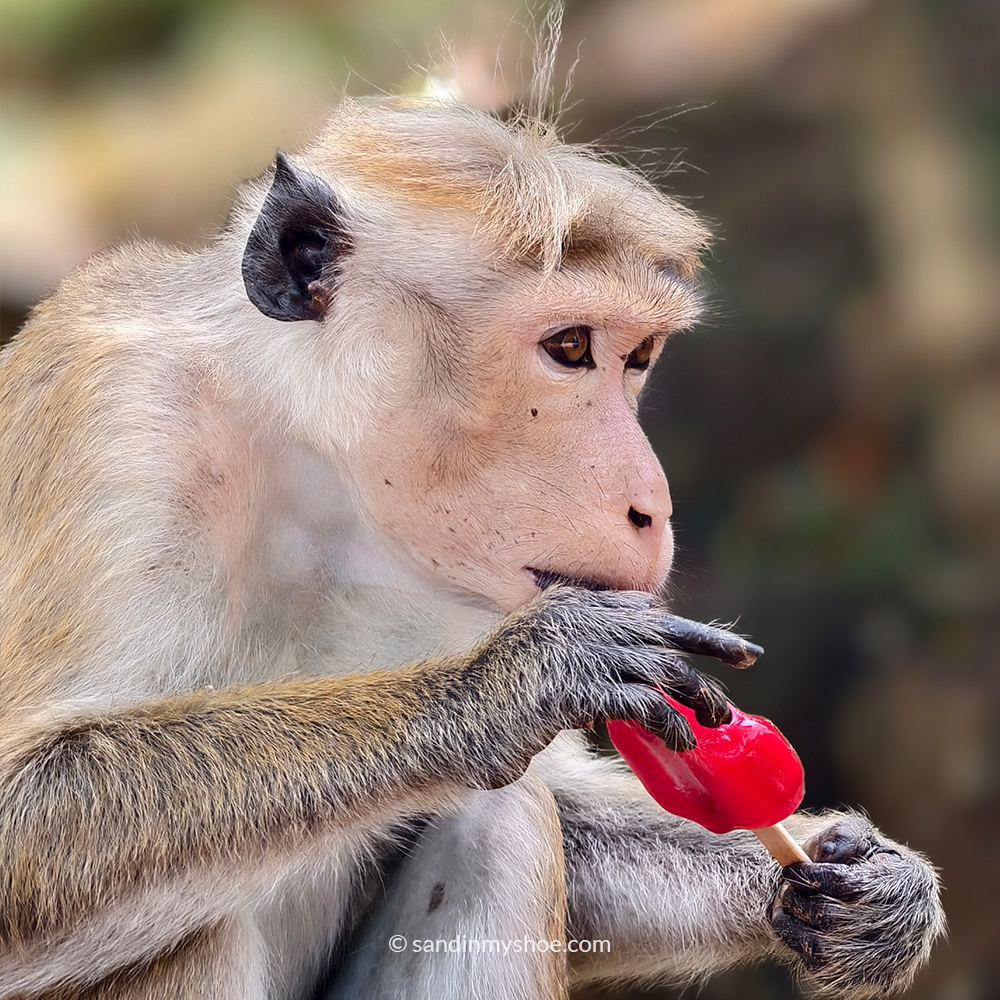
One clever tactic I found was to watch monkeys through my camera’s flip‑out display instead of looking them directly in the eye. Direct eye contact can be seen as a challenge, but using the screen lets you observe them closely without provoking aggressive behavior.
It’s a simple trick that makes encounters safer and more enjoyable — and it doubles as a great way to capture candid photos while keeping a respectful distance.
Continue Exploring Sri Lanka
Equipped with these travel tips, you ‘re ready to dive deeper into Sri Lanka. Keep exploring my other guides.


No comments yet, be the first one!
I appreciate hearing from you. If you have any suggestions, questions, or feedback, please leave a comment below. Your input helps ensure the information stays relevant and up to date for everyone.
Thank you for sharing your thoughts!