

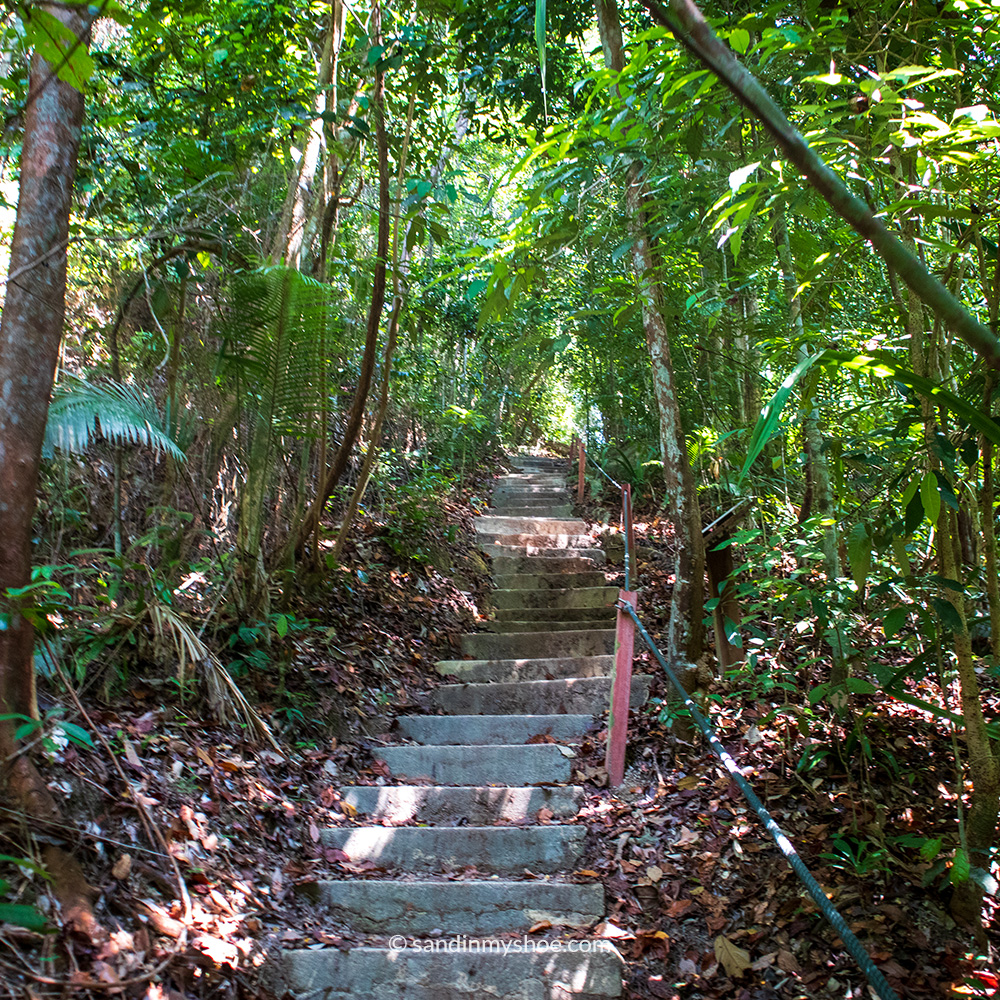
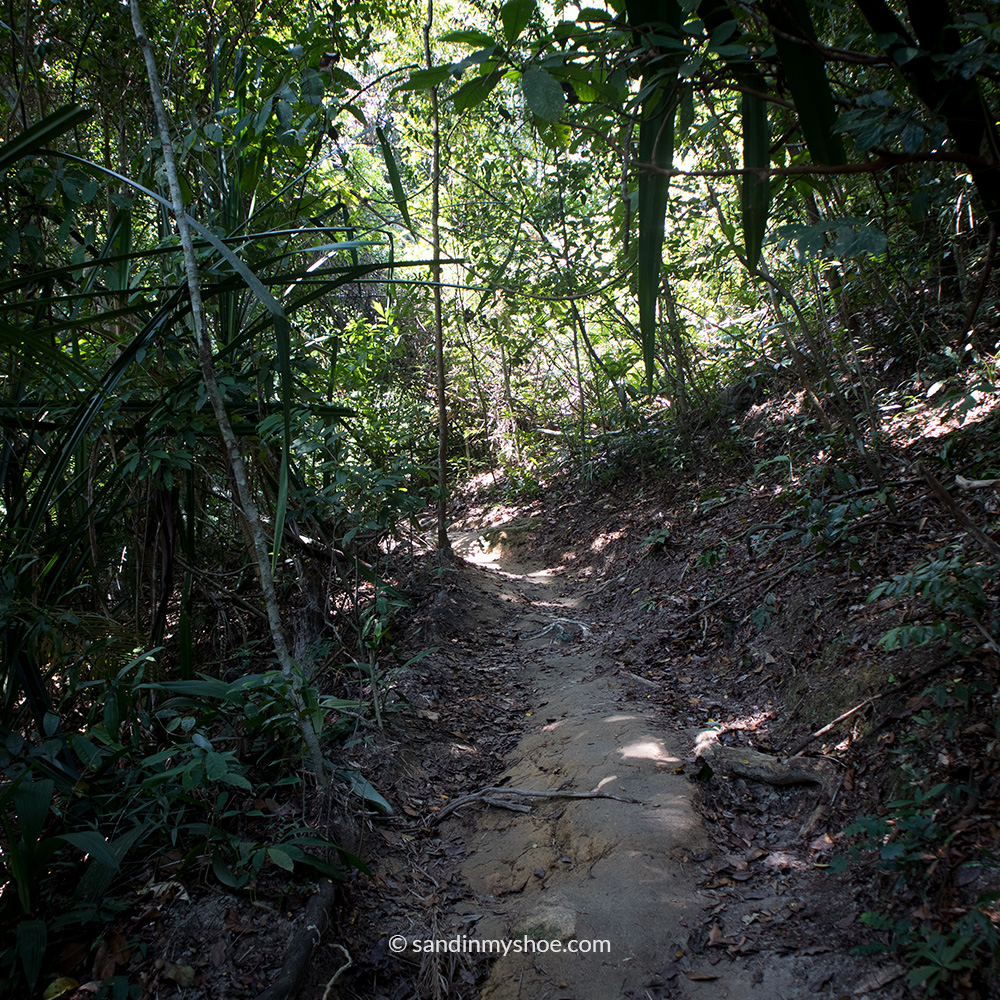
It’s a raw, slightly unpolished trail. Cicadas buzz so loudly the forest seems to vibrate, and every now and then the treetops shake as a monkey jumps overhead and disappears into the forest canopy.
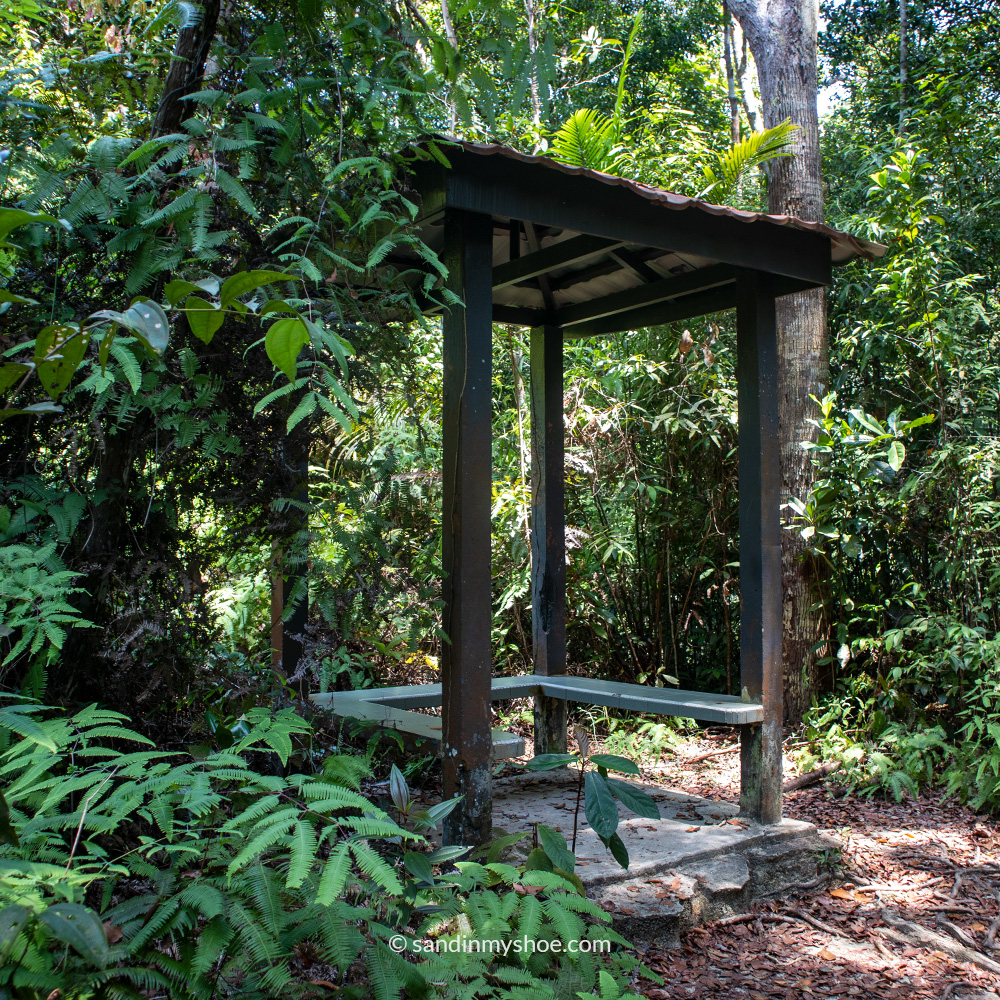
The path itself rolls up and down, and it can be a bit slippery, so bring proper sneakers — I almost made the mistake of hiking in Birkenstocks. Along the way you’ll find small rest spots with benches and a few creek crossings where you can sit down, unpack a snack, or dip your feet in the cool water before continuing.
Locals told me the trail was originally carved by seven men using buffalo to pull the logs and clear the path — a clever solution before heavy machinery ever reached this part of the island.
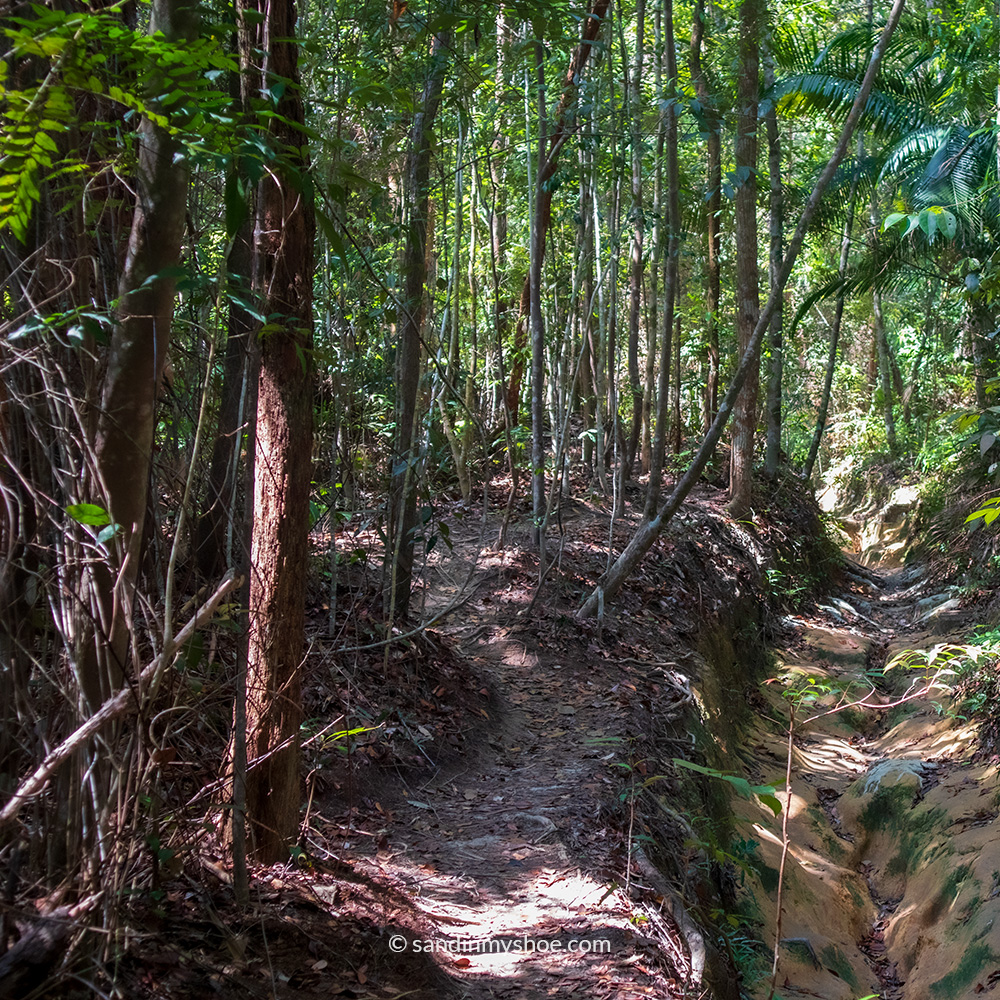
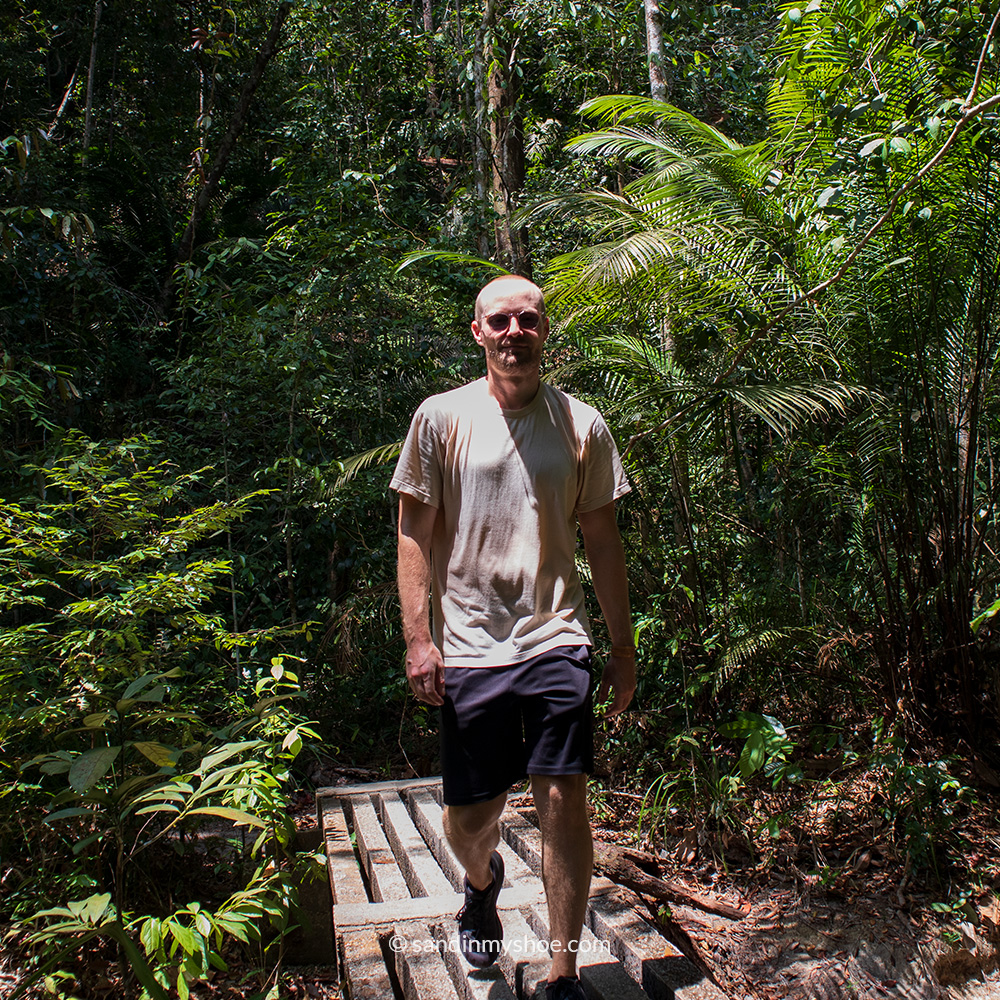
Despite its wild feel, Penang National Park is actually one of the smallest national parks in the world, and the smallest in Malaysia. The trails are well‑marked and compact, so even if you drift off the main path for a moment, you’ll reconnect with it soon enough.
Quick Guide for Penang National Park
- Ticket Office Opening Hours: 08:00-16:30
- Entrance Fee: RM 50 for adult foreigners, RM 20 student, Retired / children free
- Boat: You can visit the beaches in the national park by boat instead of hiking. Many people hike one way and boat back. Prices aren’t fixed — it’s all about negotiation.
- Time to Spend: Expect to spend at least 4-5 hours in total. Hiking one-way to Turtle Beach takes at around 1-1.5 hours.
Where is Penang National Park
Penang National Park sits on the northwestern tip of Penang Island, about 20 km from George Town. The distance is short, but the bus takes roughly one hour because it stops frequently along the route.
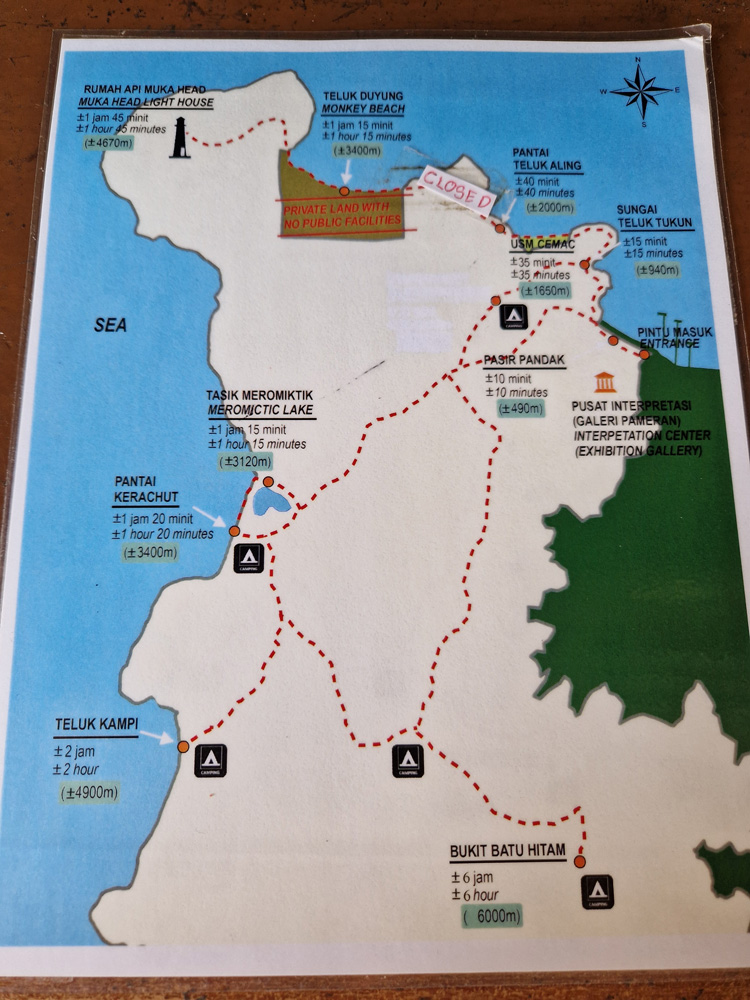
Trail Options: Turtle Beach or Monkey Beach
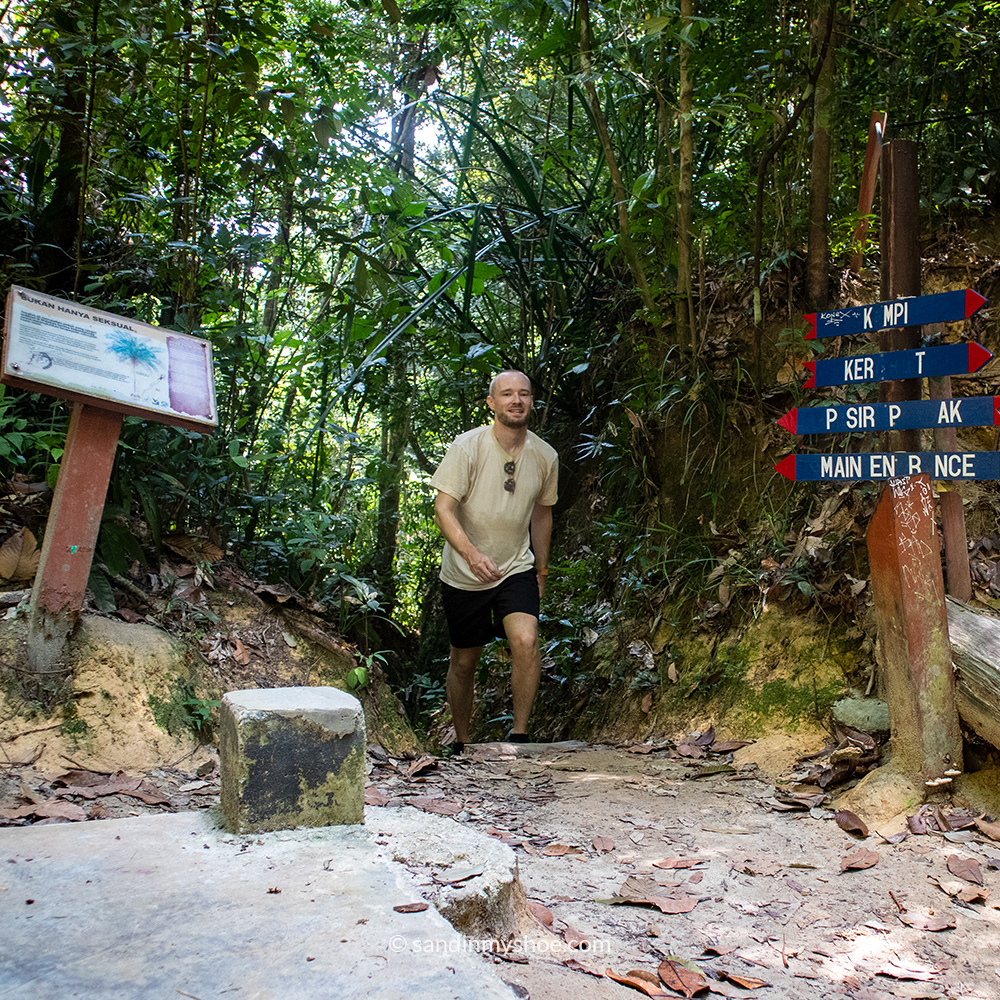
At the entrance you’ll be faced with two choices: hike to Monkey Beach or Turtle Beach. I chose the Turtle Beach trail — and there were a couple of monkeys on that beach as well.
Many hikers do a loop: walk to Turtle Beach, spend some time there, then take a boat to Monkey Beach for lunch at the small beachfront restaurant. From Monkey Beach, you can catch another boat back to the park entrance, which saves you from hiking the same trail twice.
I ended up hiking to Turtle Beach and back. Monkey Beach was closed, and I’d already met more than enough monkeys on this trip — no need to take a boat just to see more.
Common Q&A About Penang National Park
Yes — Penang National Park is absolutely worth visiting. It’s the smallest national park in Malaysia, calm and relaxing, and a great contrast to the city. The hike isn’t too demanding, and you’re rewarded with rich flora and fauna. The entrance fee is RM50 for adult foreigners (about USD 13). It’s a bit steep for a short hike, but by the end I felt the nature experience justified the cost.
If you’re in decent shape, the hike is manageable. The trail has some ups and downs, but nothing extreme. If you have knee issues or aren’t used to walking in heat and humidity, it can feel demanding. The good news: you can always take a boat back from either beach if the one‑way hike is enough.
No — swimming is not allowed at either beach. There are no lifeguards, waves can get strong, and box jellyfish are occasionally present, which can be dangerous. Enjoy the beaches from the shore instead.
It depends on what you want. I visited only Turtle Beach and still saw plenty of macaques. A couple of days earlier I’d also been surrounded by dusky leaf monkeys on Penang Hill, so I didn’t feel the need to visit Monkey Beach. If you haven’t seen monkeys yet and want to see a lot monkey in one stop, then yes — visiting both beaches can be worth it.
Yes. Bring at least RM200 per person. You likely won’t need all of it, but it’s good to have extra for boats, snacks, or emergencies. Boatmen generally accept only cash.
RM50 — Adult foreigners
RM20 — Students
Free — Retirees and children
Many visitors hike to Turtle Beach, then take a boat to Monkey Beach, relax there for a while, and finally take another boat back to the park entrance. It’s a great way to see both beaches without hiking the same trail twice, and the boat ride offers beautiful coastal views.
Personally, I hiked to Turtle Beach and back and had a great time — but the boat option is perfect if you want a mix of hiking, beaches, and scenery.
In my opinion yes as it’s not considered a difficult hike.
Yes. There are two restaurants on Monkey Beach: one with local cuisine and another with western food. But I still advise bringing your own lunch — a couple of sandwiches and you’ll be sure you can eat because there’s no certainty that they’ll be open every day.
How to Get to Penang National Park
Getting to Penang National Park is straightforward. The road is fully paved from George Town and in great condition all the way to the entrance, and you can reach it easily by bus or taxi/ride‑hailing.
By Bus
I took the bus from central George Town, and the ride took about one hour because of the many stops along the route. For public transport in Penang, I recommend using MyRapid Pulse, Malaysia’s official app — it gives far more reliable information than Google Maps. A few days earlier I noticed Google Maps wasn’t always accurate for Penang’s bus routes.
Finding the right bus is simple: just share your location in the app, and it will show you the fastest route. No need to memorize bus numbers or figure out where to catch them — just check the app the day before your visit.
By Taxi / Ride‑Hailing
You can also take Grab, Bolt, or Uber. If you’re traveling with a full car, the price often ends up similar to public transport, and you’ll get there a bit faster. It’s the most convenient option if you want a smooth, direct ride without transfers.
My Experience Hiking Penang National Park
I arrived from George Town around 10 in the morning, stocked with a couple of sandwiches, a big bottle of water, and a pair of run‑down sneakers. At the entrance I paid the RM50 (~USD 13) fee and checked my trail options: Turtle Beach or Monkey Beach. The clerk told me Monkey Beach was closed, so Turtle Beach it was.
As soon as I got my ticket, the boatmen circled me like hyenas. One immediately went on the offensive, explaining that I didn’t need to hike at all — I could take a boat to both beaches, or hike one way and book a boat back later. Prices are… flexible. It depends entirely on your negotiation skills. The price I was given was RM100 for a return ticket. But I was there to hike, so I declined and headed into the forest.
The trail to Turtle Beach is an earthy path with some slippery sections, so having shoes with decent grip helps if you don’t want to slide around. Trees surround you the entire way, cicadas buzz loudly, and every now and then the treetops shake as monkeys run overhead.
There are plenty of rest stops with benches along the trail, so if you’re not feeling super fit, you can pace yourself easily. Clothing-wise, I wore shorts and a T‑shirt, which was a good call — the humidity inside the forest is no joke. I brought mosquito spray but didn’t need it; still, I’d recommend carrying some because if the mosquitoes do show up, you’re at least 30 minutes from the nearest exit.
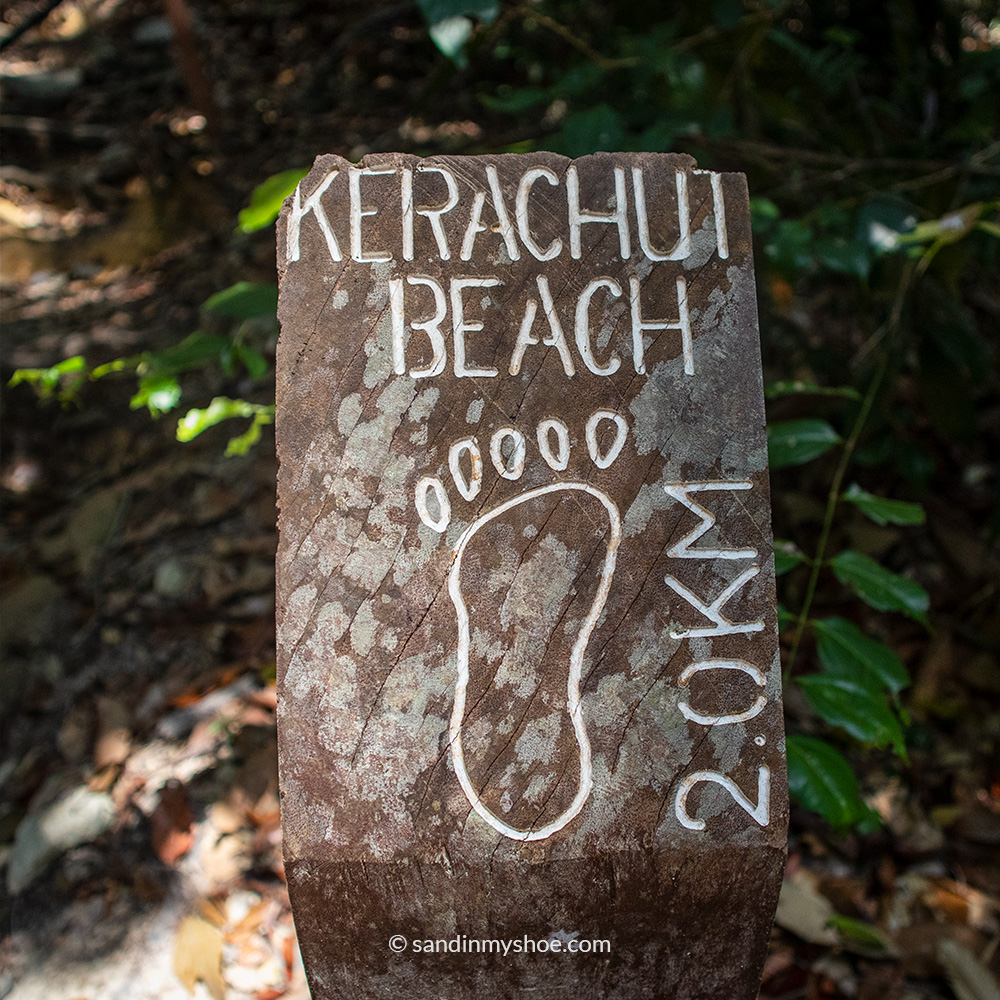
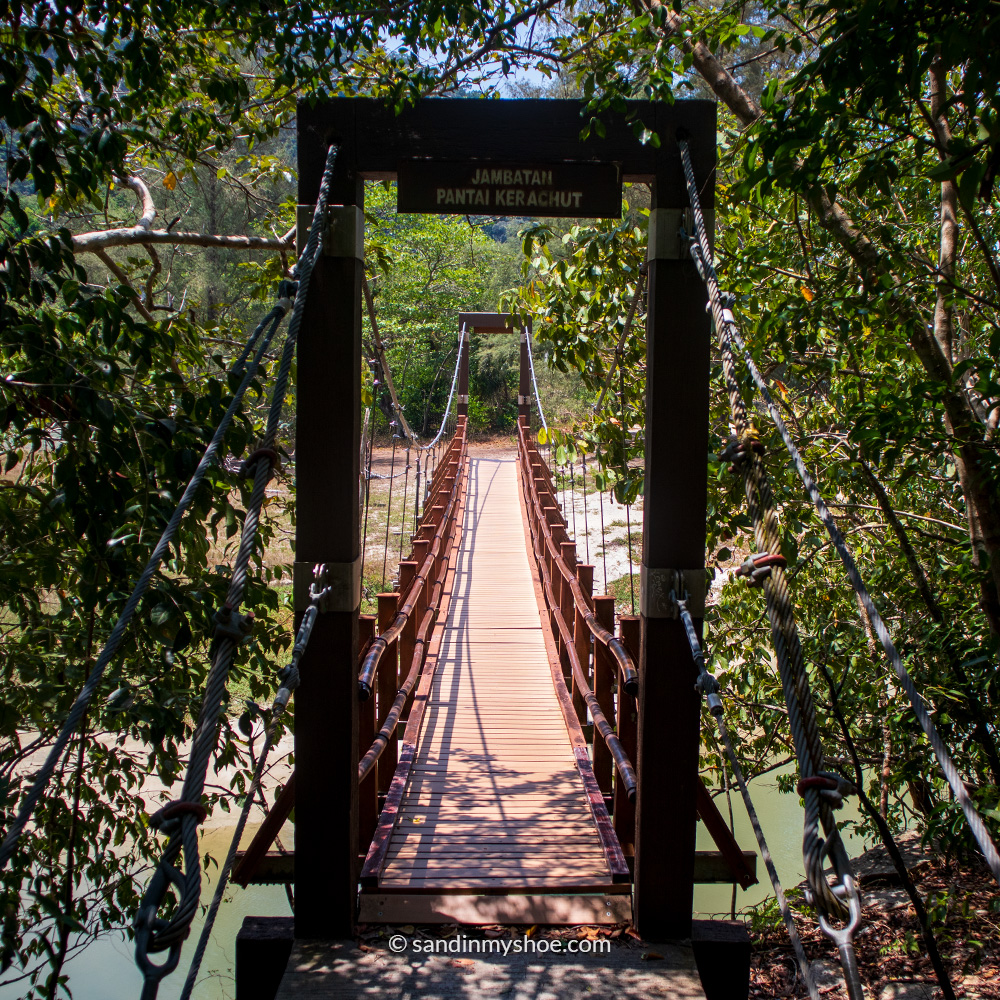
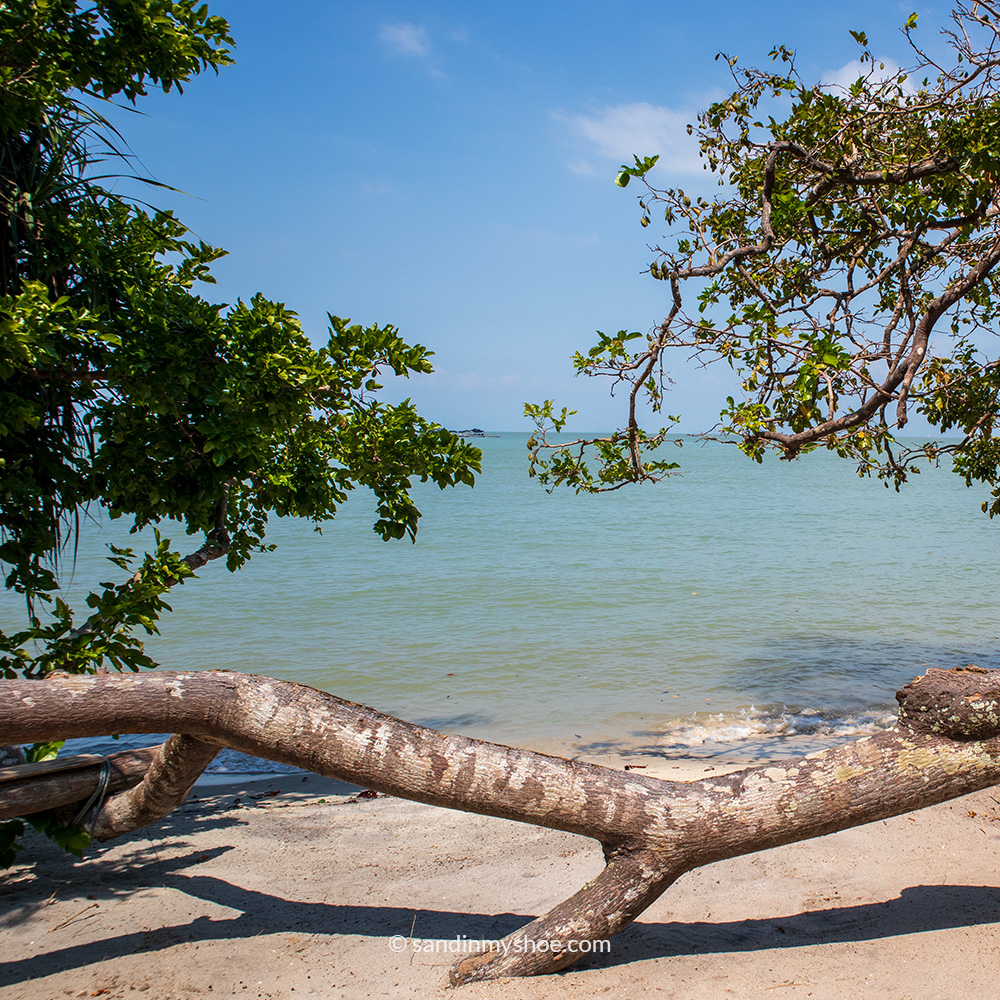
After about an hour and a half, I reached the hanging bridge that leads to Turtle Beach. Crossing it feels refreshing after the jungle heat, and the beach on the other side is incredibly inviting. Swimming isn’t allowed, and it’s worth respecting that — waves can get strong, and box jellyfish occasionally appear, which can be dangerous. There are a few swings and benches where you can relax and enjoy the view.
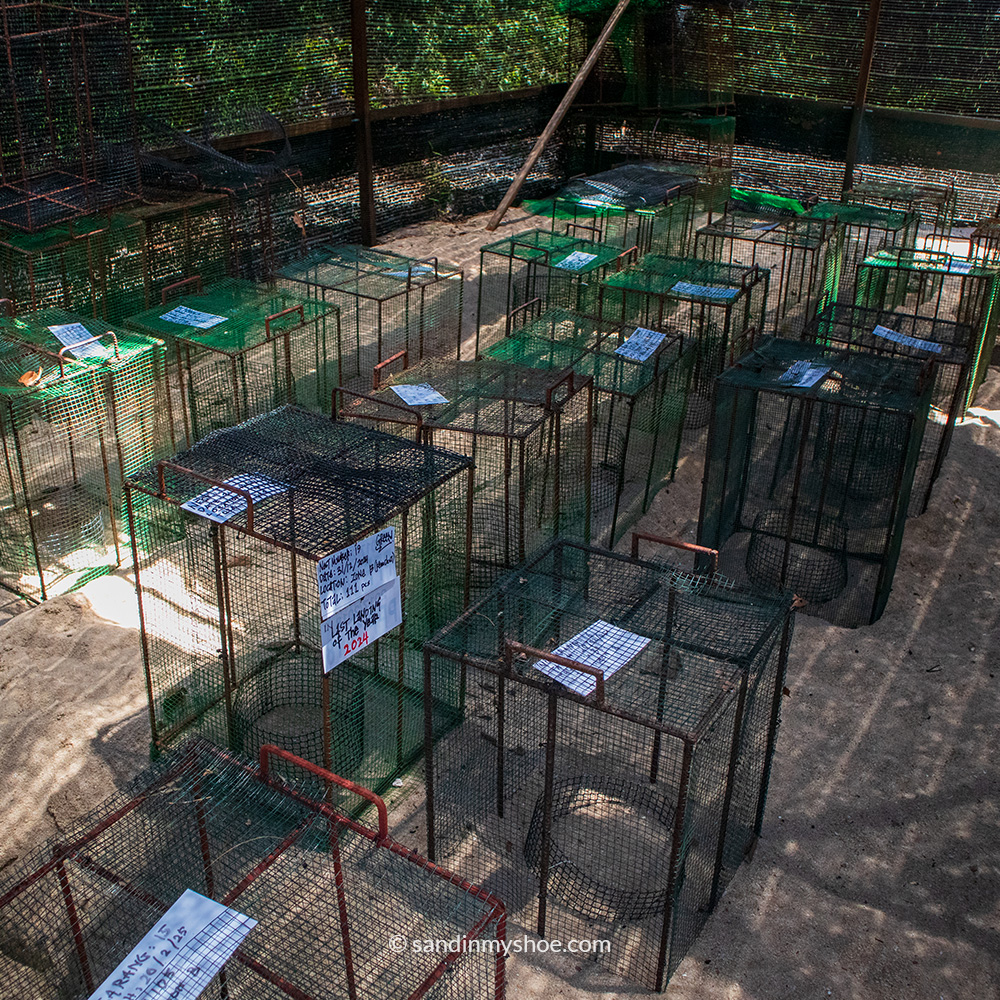
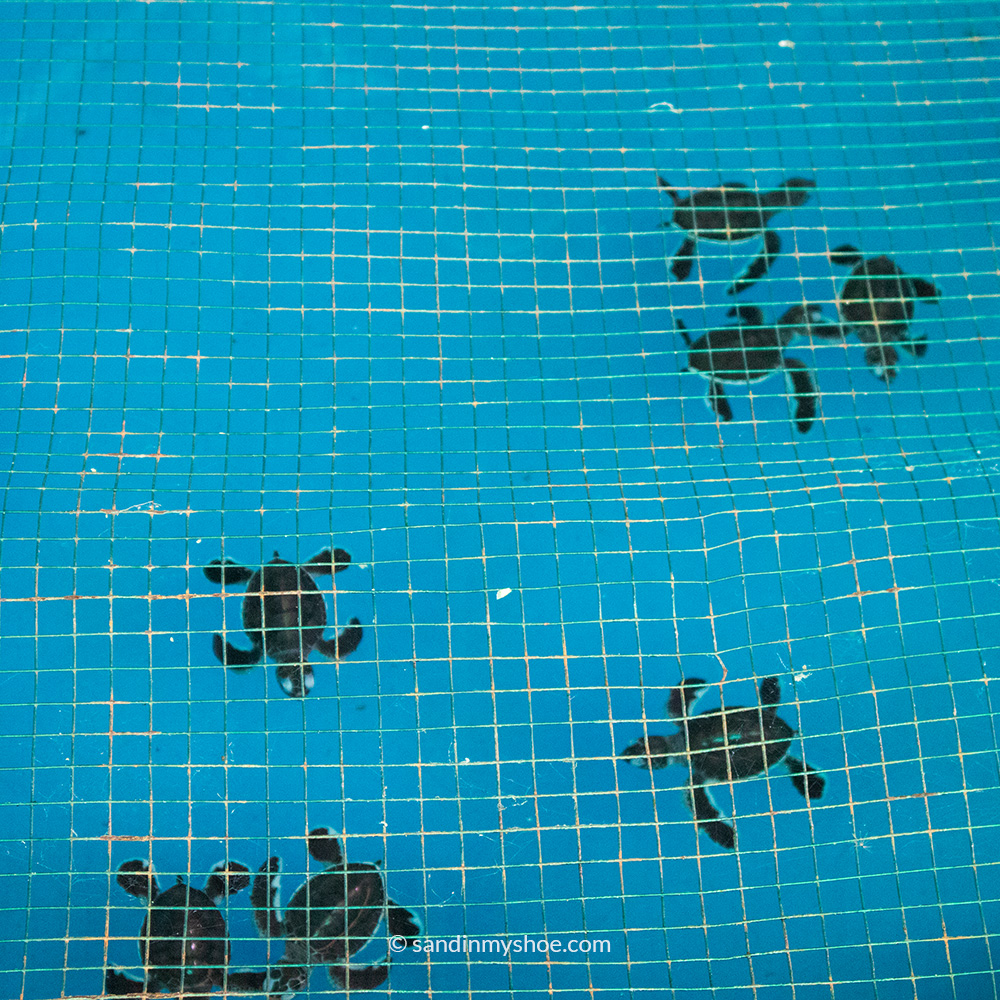
Next to the beach is the Turtle Conservation Centre, which protects sea turtle eggs from predators — both animals and humans. Studies suggest that roughly 0.05% to 0.25% of hatchlings survive to sexual maturity, so the sanctuary plays a crucial role in giving them a fighting chance.
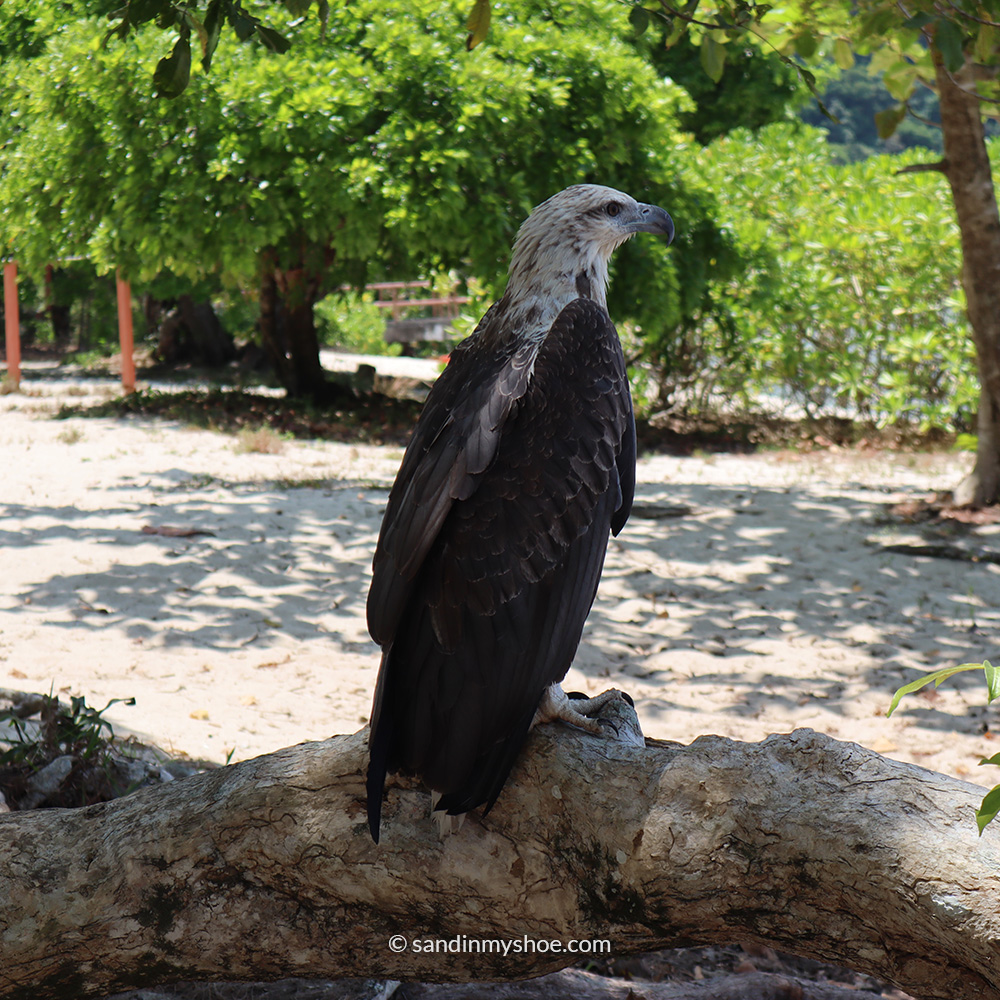
After visiting the sanctuary, I met one of the predators in person: a massive eagle resting in the shade of a tree. It was probably waiting for the sanctuary to release newly hatched turtles. Naturally, it turned into a photo session as hikers gathered around like paparazzi — at a respectful distance, because none of us wanted to find out what an annoyed eagle is capable of.
When it was time to head back, a boatman was picking up other passengers, so I had the option to ride back for a fee. But I stuck to my plan and hiked back. The return always feels faster for some strange reason.
Back at the entrance, I caught the bus to George Town — tired, sweaty, and already thinking about which street food stall I’d hit that evening.
If you’re planning to hike in the national park, I recommend dedicating the whole day to it and saving your energy for a relaxed evening of Penang street food. For more ideas on what to do after your hike, see my guide to the best things to do in Penang, including the top street‑food spots in George Town. And if you’re in the middle of choosing accommodation, check out my guide on where to stay in Penang.
Wildlife in Penang National Park
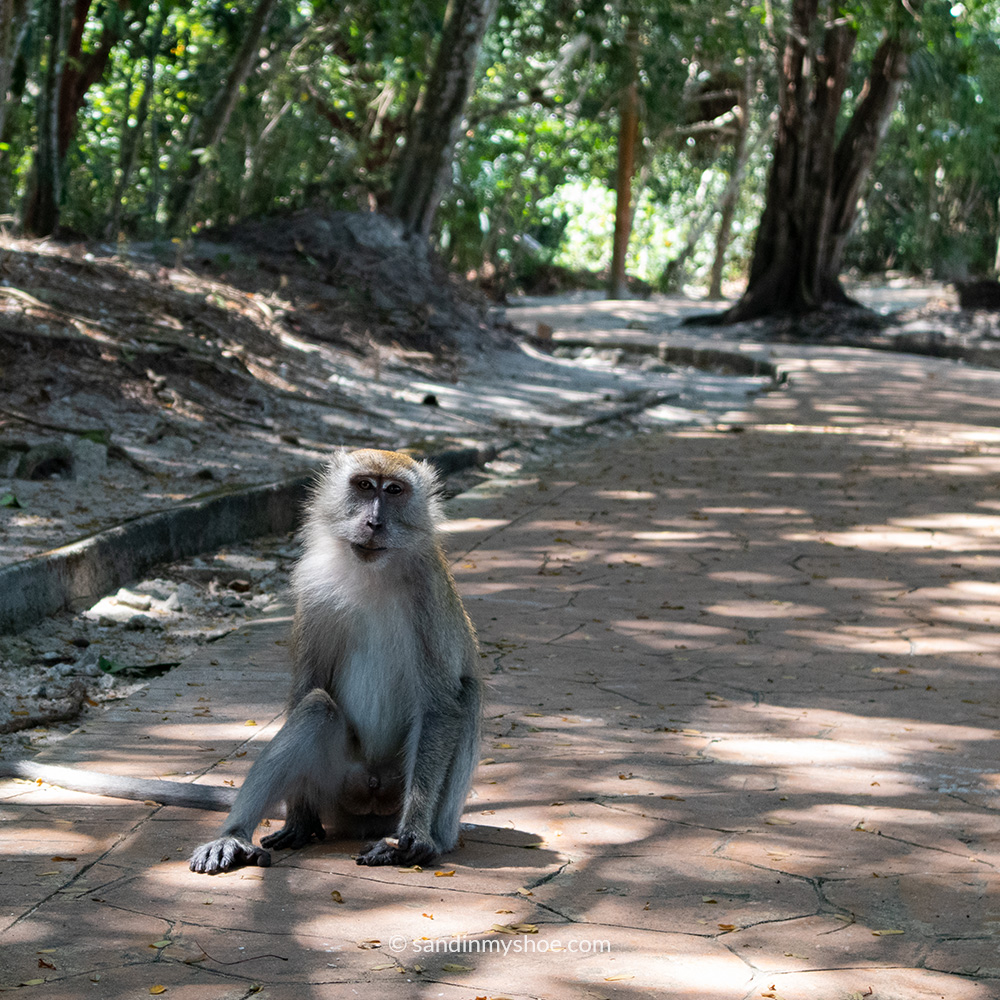
Penang National Park is home to a surprising amount of wildlife for such a small area. You’ll almost certainly see long‑tailed macaques (the monkey beach is filled with them), and if you’re lucky, the more gentle‑looking dusky leaf monkeys (I saw plenty of those on Penang Hill). Most of the monkeys seemed to hang around the beach areas, though a few might follow you for short stretches of the trail.
At Turtle Beach, you’ll find the Turtle Conservation Centre, where eggs are protected from predators and hatchlings are released back into the wild once they’re strong enough.
The park is also home to monitor lizards and even otters, although I didn’t personally see them during my hike. Monitor lizards are large but usually shy, and otters tend to appear early in the morning or around quieter, less‑visited parts of the coastline. You might also spot eagles circling above or resting in the shade near the beach.
And of course, insects are everywhere — especially cicadas, which create the constant buzzing soundtrack of the forest. Malaysia is also home to impressively large ants; I didn’t see them here, but I did encounter them during a 2D1N hike in Taman Negara, a national park deeper inland in West Malaysia.
What to Bring for the Hike
I recommend bringing everything with you from George Town. If you forget to buy water, you can get it at the entrance. When it comes to food, it’s best to bring your own — although there are two restaurants at Monkey Beach. I recommend bringing:
- 2 litres of water
- Light lunch (a simple sandwich or two is perfect)
- Shoes with good grip (avoid white shoes or anything slippery — the trail can get muddy)
- Cap or hat for sun protection
- Sunscreen
- Sunglasses
- Mosquito spray
- Cash (boat rides, drinks, food, or emergencies)
- Bank Card (if I remember correctly only card payments are accepted for the entrance ticket).
Best Time to Visit Penang National Park
The trail is mostly shaded by trees, but heavy showers can still make it muddy and slippery. Keep an eye on the weather forecast — short showers are usually fine, just expect a messier trail afterward. I recommend starting in the morning, ideally between 8 and 10 AM, when temperatures are cooler and the forest feels more pleasant.
When it comes to seasons, Penang’s wet season runs from July to October, and conditions can be more challenging during those months. Outside the wet season, the trail is generally dry, comfortable, and easier to hike.
 32°C
23°C
33°C
23°C
33°C
24°C
32°C
23°C
33°C
23°C
33°C
24°C
 33°C
24°C
32°C
24°C
32°C
24°C
33°C
24°C
32°C
24°C
32°C
24°C
 32°C
24°C
32°C
24°C
31°C
24°C
31°C
24°C
31°C
24°C
31°C
23°C
32°C
24°C
32°C
24°C
31°C
24°C
31°C
24°C
31°C
24°C
31°C
23°C
Summary
Visiting Penang National Park is absolutely worth it. Start early — around 9–10 AM — and expect to hike for about 3 hours total (round‑trip), not counting rest stops or time spent at the beaches. In total, plan for around 5 hours in the park.
You can take a boat one way or both ways if you want to shorten the hike or visit both beaches. Bring plenty of water and good shoes, and you’ll have a great time exploring the smallest national park in Malaysia.


No comments yet, be the first one!
I appreciate hearing from you. If you have any suggestions, questions, or feedback, please leave a comment below. Your input helps ensure the information stays relevant and up to date for everyone.
Thank you for sharing your thoughts!