
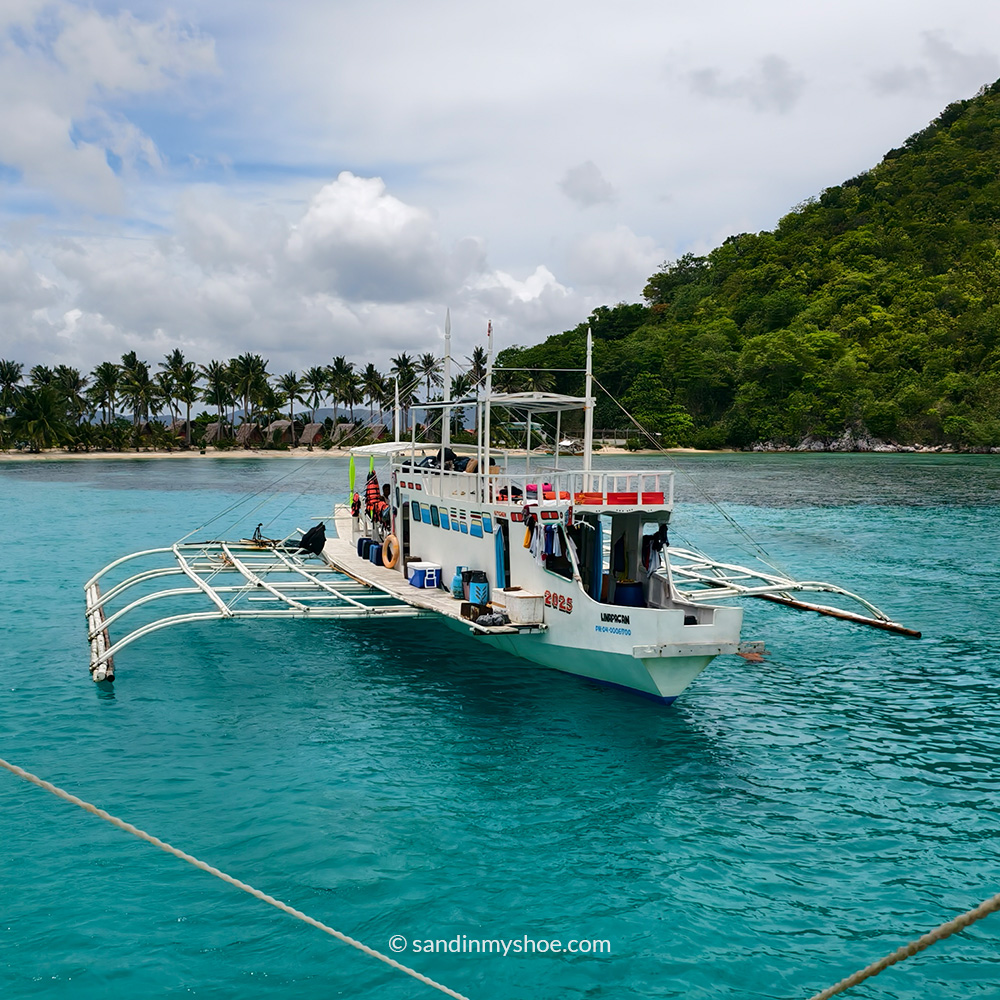
The El Nido to Coron Expedition is definitely one of the bucket-list experiences to do in the Philippines.
We were around 10 people in total plus the crew—a mix of solo travelers (me and a couple more) and groups from many different countries and age ranges. The crew vibe was great. Some of the crew didn’t speak English, but the ones in charge did. The energy was warm and welcoming throughout.
It’s for travelers who prefer empty beaches over crowds, rum over room service, and the idea of drifting between islands in a bangka instead of rushing to Coron on a ferry.
This post breaks down what the expedition is really like – from the route and the daily activities to practical things to know beforehand, the recommended group size, how much it costs, and how to book it.
Book The Expedition from El Nido to Coron
What the El Nido to Coron Expedition Actually is
The El Nido–Coron Expedition is a multi‑day journey through some of Palawan’s most remote islands on a traditional wooden bangka boat. Some tours run four, and even five days, but for me three days I was onboard felt like the perfect amount of time.

What makes this trip special is the pace. Instead of rushing between tourist spots, you move slowly through the islands, stopping at reefs, lagoons, sandbars, and tiny beaches that most visitors never reach. You sleep in simple beach huts on different islands each night, eat massive meals cooked by the crew, and spend your days snorkeling, swimming, cliff‑jumping, playing volleyball on empty beaches, and drifting through ridiculously clear water.
It’s part transport, part adventure, part digital detox — and arguably one of the most memorable ways to travel between El Nido and Coron.
My Experience on the Expedition
After spending a good amount of time on Palawan and hearing travelers talk about their experiences coming from Coron to El Nido (yes — you can do the expedition in both directions), I decided to join the 3‑day, 2‑night trip from El Nido to Coron myself. I was heading to Coron anyway to freedive, and taking the slow, island‑to‑island route turned out to be a great choice.
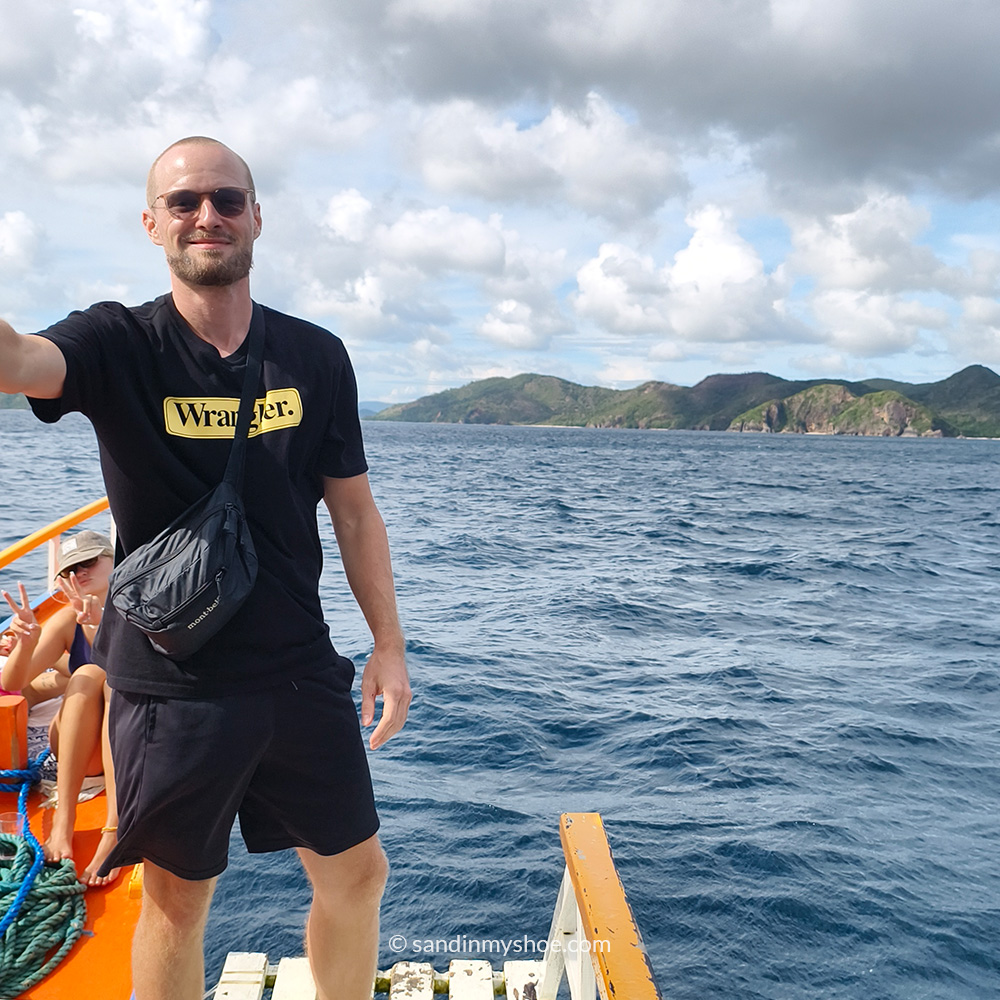
Here are the highlights from the expedition.
Stopping on Remote Islands
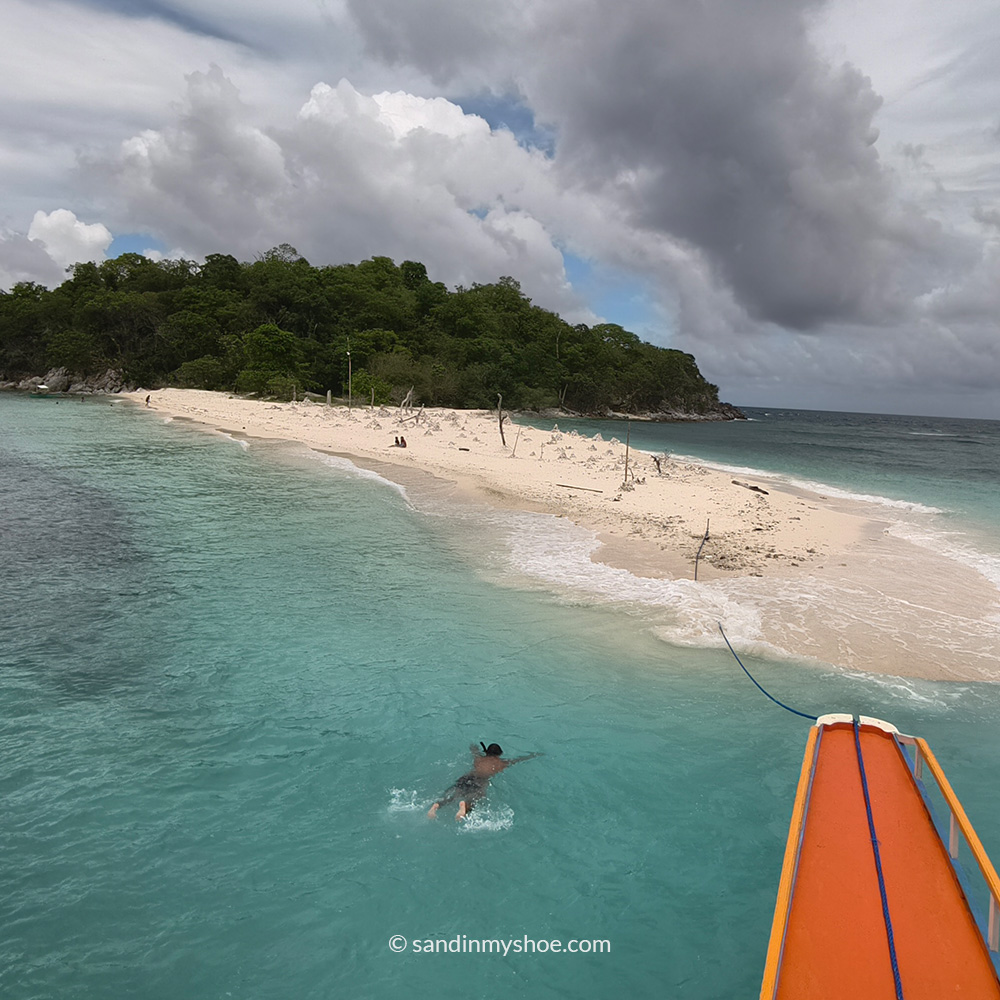
One thing I really liked about the expedition was how often we stopped on small, remote islands. Some were just a strip of sand with a few palm trees, others had shallow turquoise water and nothing else around. And some even had volleyball nets. It’s still a traveled route, but most of the time it felt quiet and empty in a way the regular day tours never do.
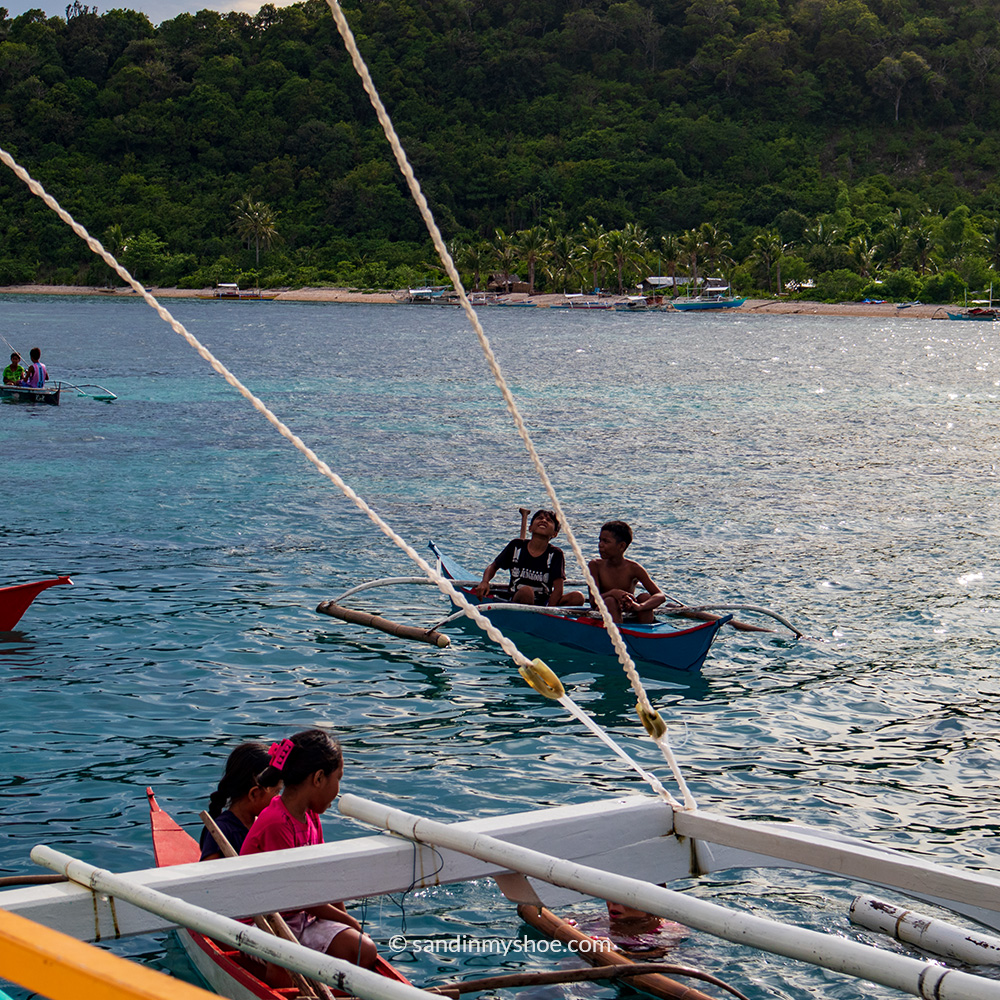
Other islands were home to small communities. Kids would paddle out in their own tiny boats, climb aboard, and wander around just to get a change of scenery.
Snorkeling
Snorkeling was a big part of the expedition, and we stopped at several spots with clear water and healthy reefs. Some areas had strong currents, others were calm and shallow, but the visibility was consistently good. You don’t need to be an expert — the crew points out the best areas and keeps an eye on everyone. One morning I even saw a couple of turtles cruising by.
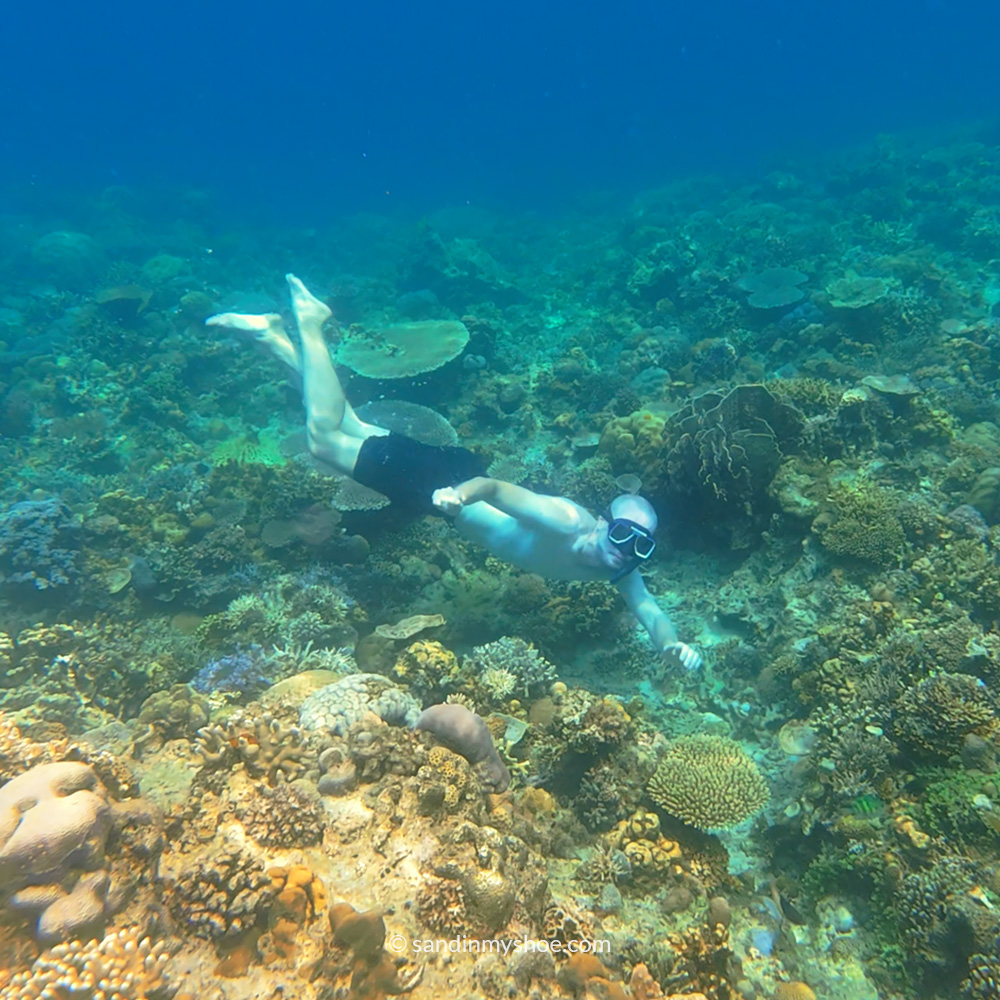
Keep your expectations a bit limited though, because it’s not going to be like the sardine run in Moalboal (which is probably the best snorkeling spot), but it’s still quite nice.
Cliff Jumping
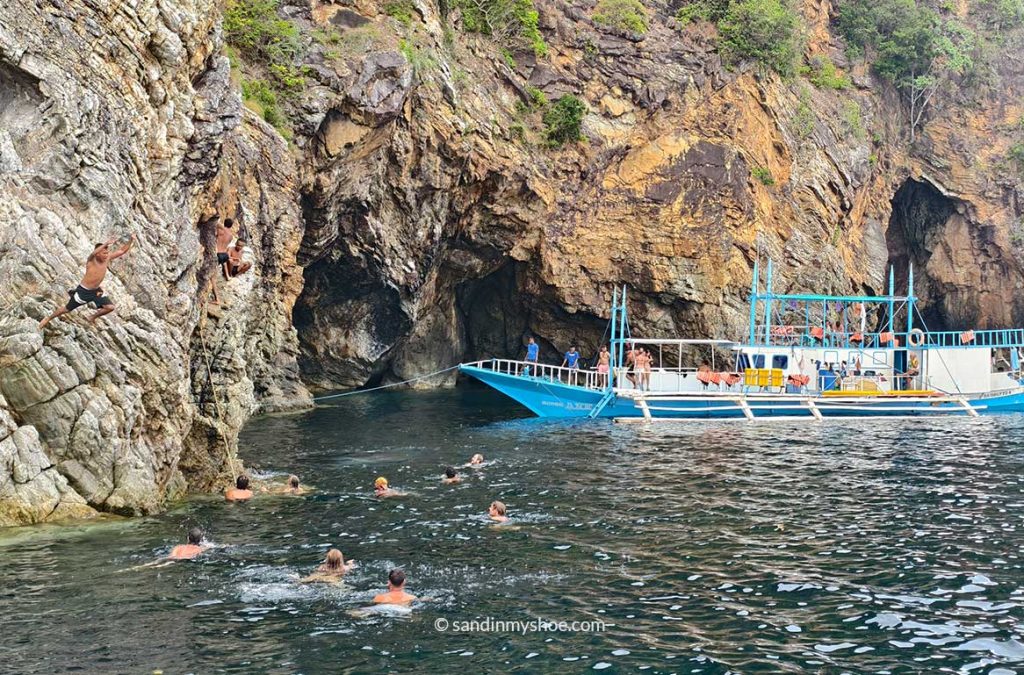
One of the days we stopped at an island with limestone cliffs, and there was an optional cliff‑jumping spot. The jump was around 8 meters (26 feet) — high, a bit slippery to climb up, and definitely enough to make you scream on the way down. I did. Along with my pride.
Some people went for it, some even did backflips (I still don’t understand how anyone can casually do that from that height — I feel like I’d break my back just thinking about it), and others stayed safely on the boat. It’s completely optional — you can just swim around or watch from the water if it’s not your thing.
Learning About the Dangers of Smaller Sea Creatures
One thing I didn’t expect on the expedition was how dangerous some of the smallest sea creatures can be. Everyone worries about sharks, but the real risks are often tiny: the blue‑ringed octopus, box jellyfish, and even the cone snail (the creature that lives inside those beautiful patterned seashells). All of them are extremely venomous.
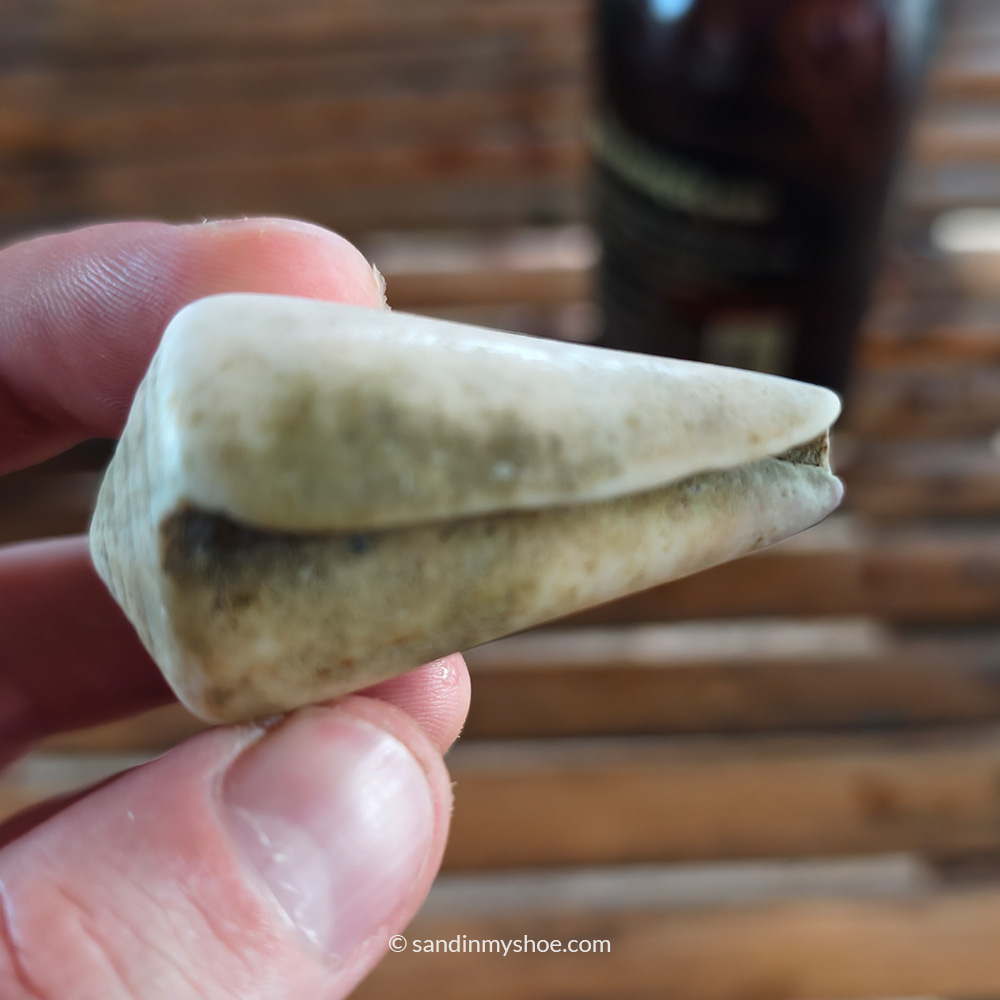
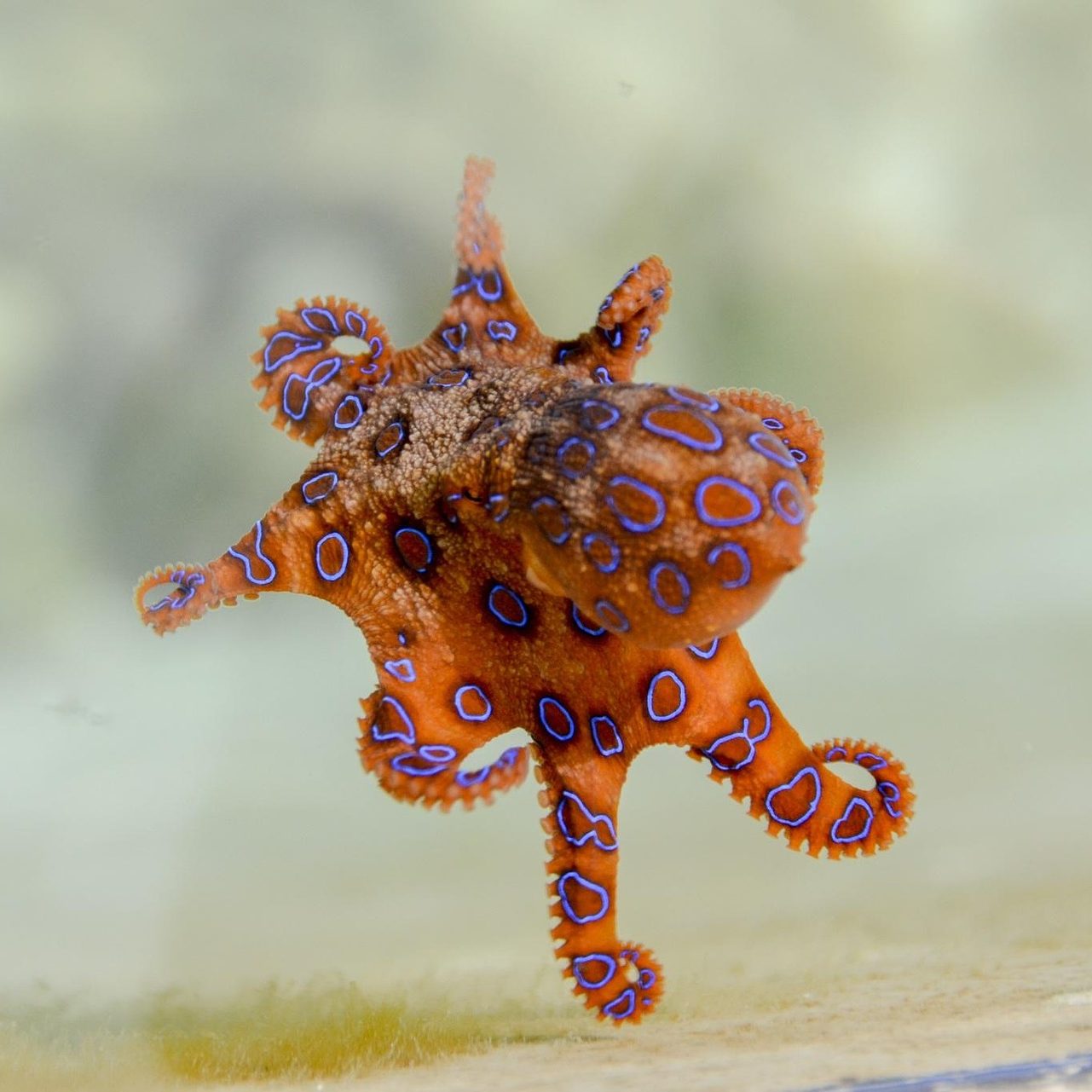
Our captain told us that many travelers underestimate these animals because they look harmless. During one of the expeditions, a tourist proudly walked up to him and showed what she had “caught” — a tiny blue‑ringed octopus swimming in a little pool of water in her hands. She had no idea she was holding one of the most dangerous animals in the ocean. Out here, between remote islands with no hospitals nearby, that kind of mistake can be life‑threatening.
Staying in Huts on the Beach
One of the highlights of the trip was sleeping in simple beach huts right on the sand. Falling asleep to the wind blowing through the bamboo walls and waking up to sunrise over an empty beach is something you don’t get on a normal ferry ride. Both nights, the huts were just a few meters from the water — close enough that you could hear the waves all night.
Each night we stayed on a different island, and every camp had its own vibe.
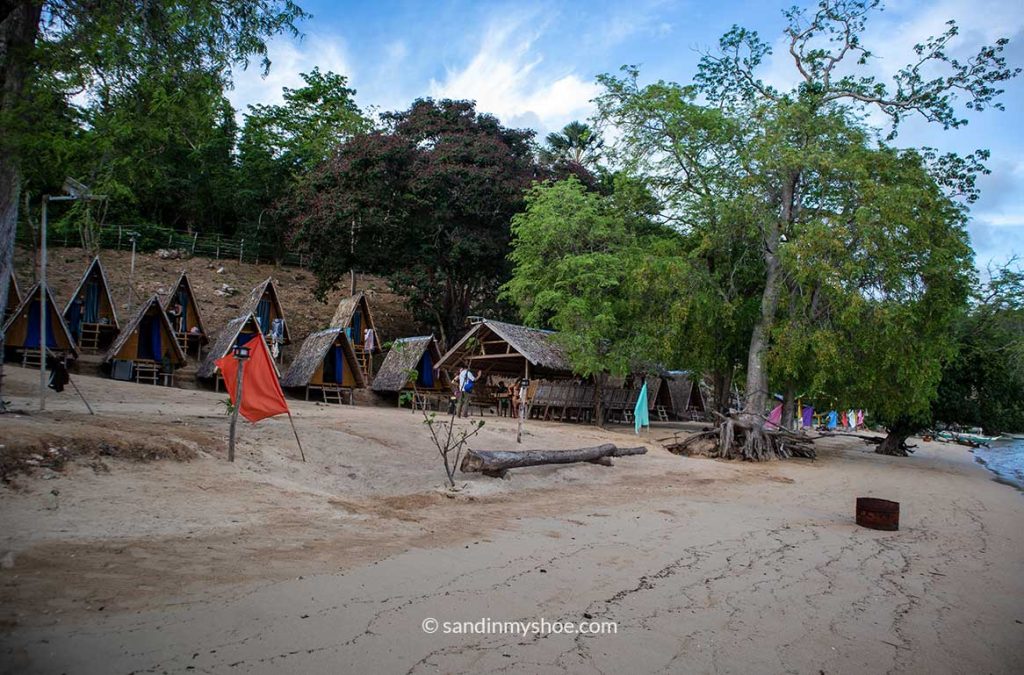
The first one was very basic: bamboo walls, a mattress under a mosquito net, and not much else. And there was a snorer (not me), who kept everyone awake — so definitely bring earplugs and an eye mask if you want proper sleep.
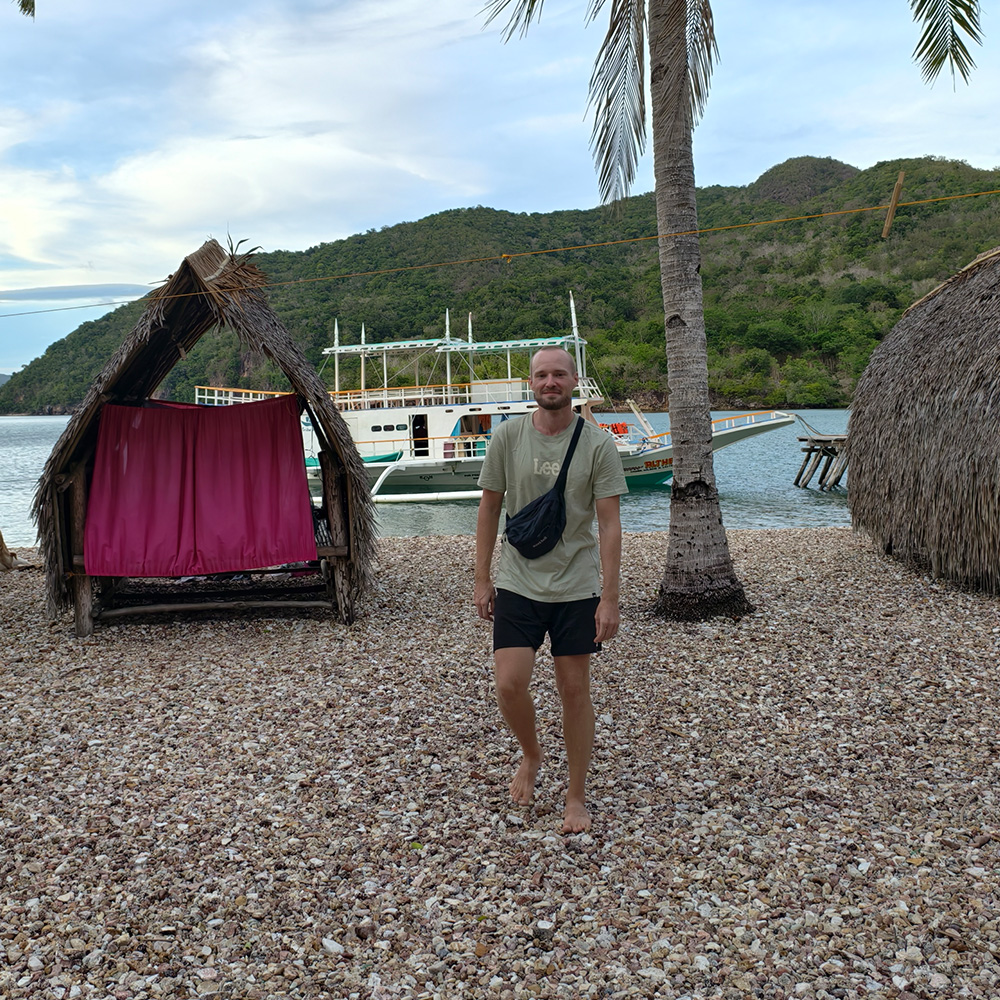
The second camp felt almost luxurious in comparison. It was similar hut-wise, but there was consistent electricity, and even karaoke equipment, which the crew wasted no time putting to use.

Devouring Filipino Food
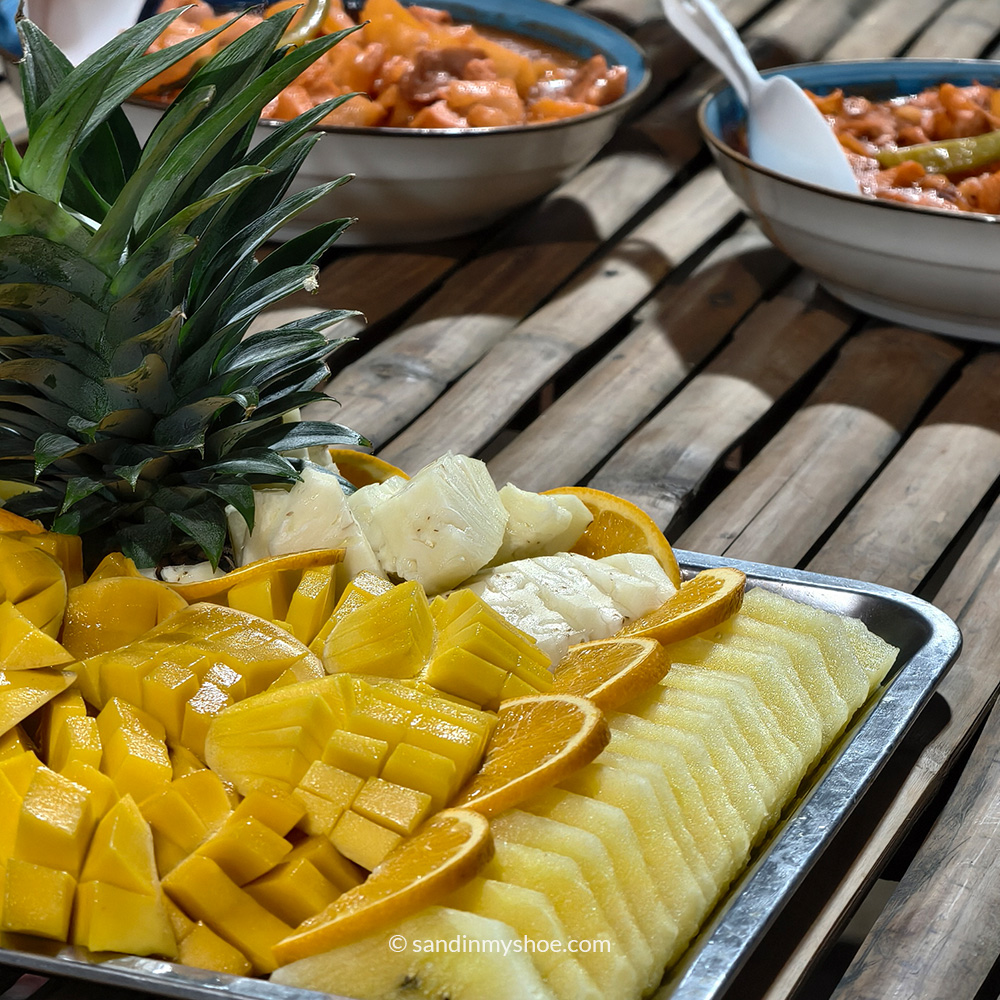
The food throughout the expedition was excellent — far better than I expected for a trip this remote. Every meal was cooked by the crew, and the variety surprised me. Most dishes were Filipino classics: grilled fish, chicken adobo, stir‑fried vegetables, fresh fruit, rice (always rice), and sometimes seafood caught the same day.
Meals were served family‑style, and after hours of snorkeling and swimming, everything tasted incredible.
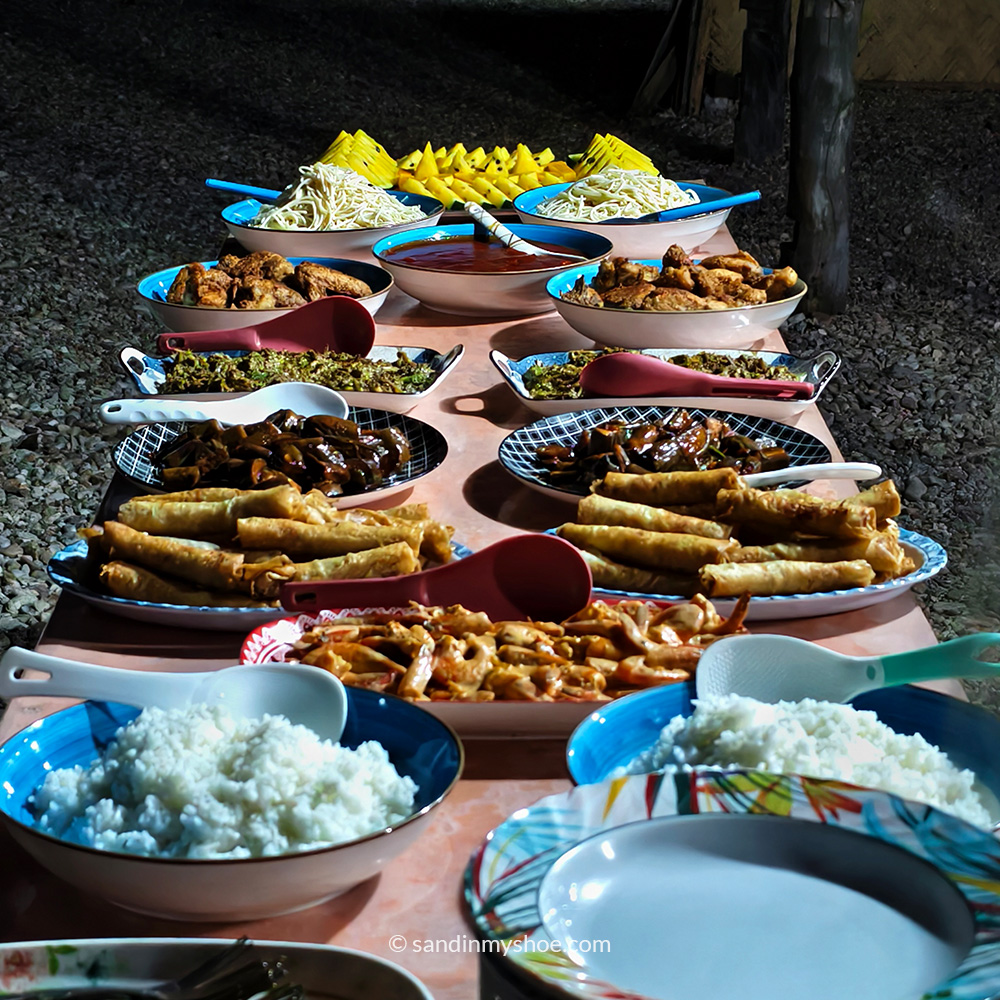
Unlimited Rum and Beer plus Karaoke
Many organizers advertise “unlimited rum and beer,” and while it’s not truly unlimited, it’s definitely more than enough. The drinks come out in the evenings, and the second night was when things peaked — the crew fired up the karaoke machine, the mic kept changing hands, and the whole camp turned into a sandy, off‑grid sing‑along.
Choose a Small Group for the El Nido–Coron Expedition
Smaller groups make the whole experience feel more intimate and relaxed. With too many people, the boat gets crowded, the island stops feel busier, and the overall vibe becomes less personal. We were 10 people plus the crew, which made it easy to get to know everyone a bit. If the group is closer to twenty, the dynamic changes and it can quickly feel like one of those mass‑tourist day trips — cramped boat, slower logistics, noisier atmosphere, and less flexibility for the crew to adjust plans.
What the Days Looked Like on the El Nido to Coron Expedition
Day 1 — Departure, First Islands & Settling In
Morning pick‑up from my accommodation in El Nido, followed by a van ride to the northern tip of the island where the expeditions depart. After a short briefing, we boarded the boat. Large bags were stored below deck, and smaller day‑bags stayed on the top floor.
We started the day drifting with coffee and fruit before the first snorkeling stop. Lunch was cooked fresh on the boat — simple Filipino dishes like grilled fish, vegetables, and rice.
The afternoon was relaxed: more snorkeling, a bit of volleyball on a beach, and slow cruising between islands.
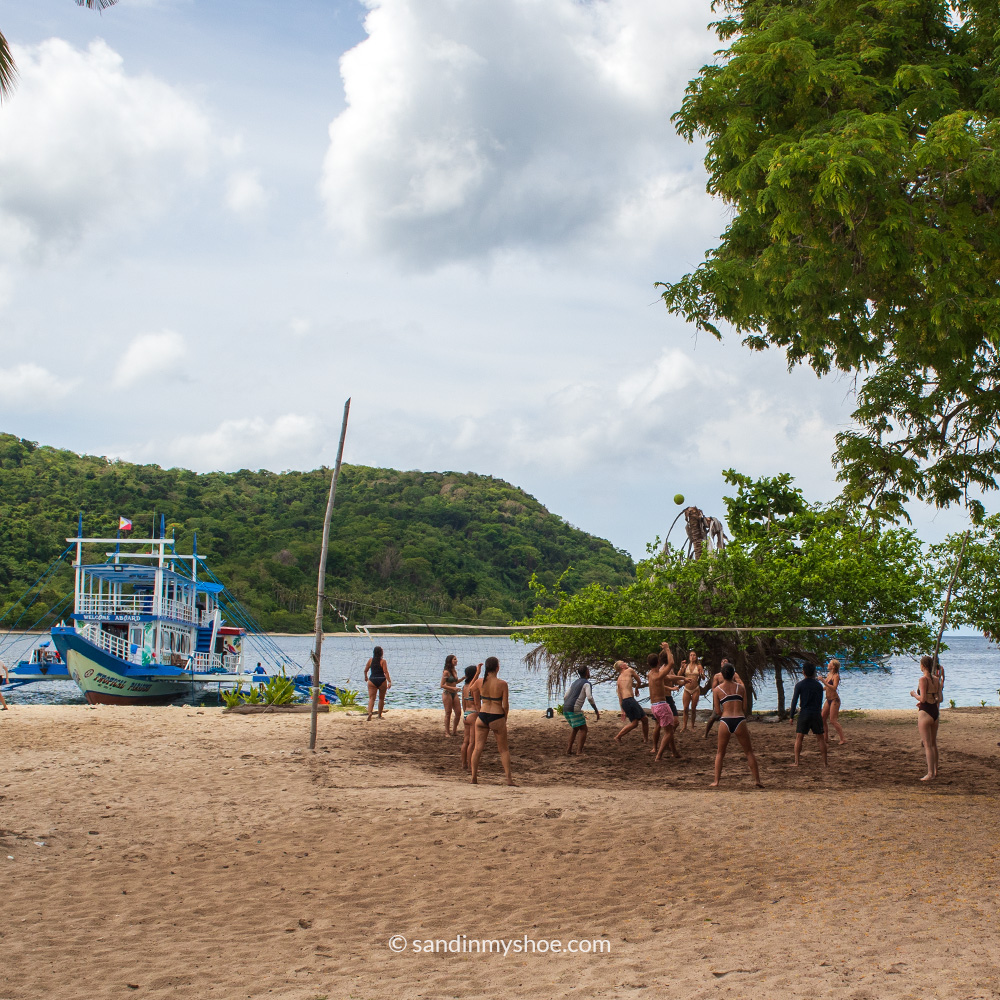
We arrived at a simple beach camp before sunset. Huts were basic — mattresses, mosquito nets, a cloth “door” — but perfectly fine for a night on a remote island. After settling in for a couple of hours and taking turns of taking showers, we had a feast of Filipino food, and then the drinks started flowing. Some people drank more than others once the rum and beer came out at the beach camp after sunset. One guy went so hard he spent the next morning completely knocked out — lying flat on his back on the bottom floor of the boat, arms stretched out like a starfish.
Day 2 — Snorkeling, Cliff‑Jumping & Remote Beaches
Day 2 was the most active. After breakfast, we hopped between reefs and lagoons with long snorkeling sessions in clear water. Lunch was cooked on the boat again, followed by more island stops.
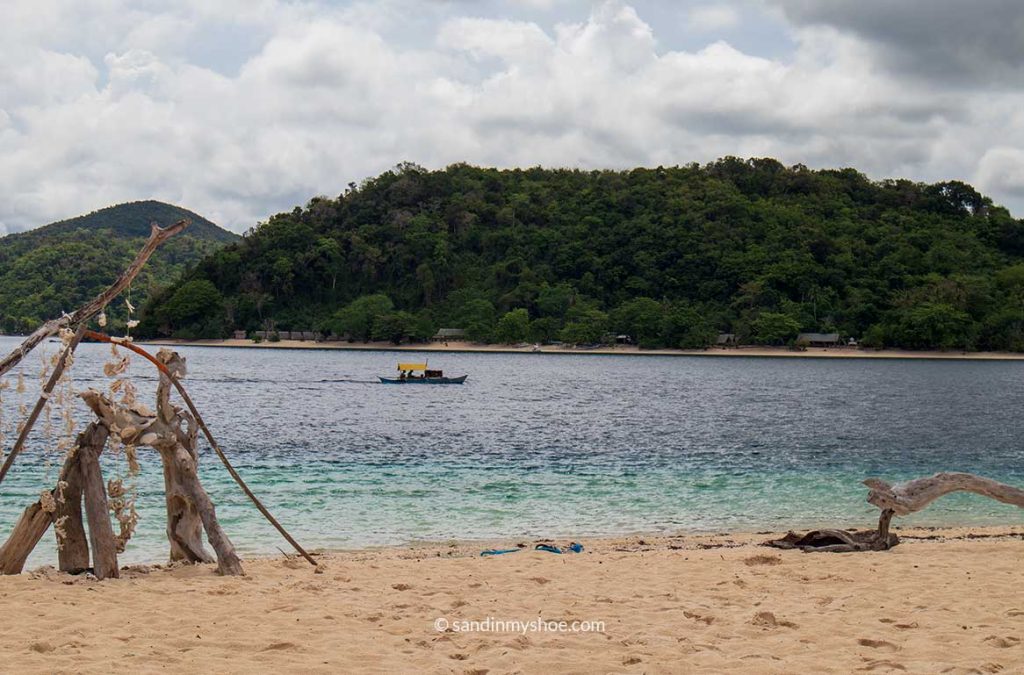
In the afternoon we reached a cliff‑jumping spot — about an 8 m (26 feet) jump — and later a couple of remote beaches where we were the only group around. The pace stayed slow and unhurried.
We reached the second campsite in the late afternoon, had dinner after dark, and spent the evening talking, singing karaoke, drinking, and watching the stars — incredibly bright thanks to the lack of light pollution.
Day 3 — Final Snorkeling, Long Cruise & Arrival in Coron
We started the morning with breakfast at the beach camp, followed by a last snorkeling session right off the shore. There were turtles swimming around the area, so most of us spent a good while in the water before packing up.
Lunch was served on the boat, and Day 3 came with a noticeably longer stretch of cruising. It was calm and scenic, but you could feel that everyone was slowly shifting into “return to land” mode.
By early afternoon we reached Coron Town. I think most of us were genuinely happy to be on land again with proper beds. Another day would probably have felt repetitive — so in my opinion, three days was the perfect length for this expedition.
Book The Expedition from El Nido to Coron
Practical Things to Know
Electricity & Charging
There’s no regular electricity in the huts, but each camp has a communal area with outlets. They run on generators, so the power isn’t on all the time and you can’t rely on it fully. Bring a fully charged powerbank so you don’t run out of battery for photos just in case.
Showers & Toilets
The toilet onboard of the boat is basic, there’s no running water, just a bucket of fresh water to be used. It’s simple but works fine for a couple of days. On the campsites there are actual showers, but just cold water, but still feel great after spending the whole day covered in saltwater.
Sleeping Setup
You sleep in open huts with a small cloth acting as a “door,” plus a mattress, mosquito net, and a light blanket. It’s very basic but comfortable enough if you’re not expecting hotel standards. Bring earplugs and an eye mask — the huts are open, so you’ll hear waves, wind, roosters, and people snoring or moving around.
Packing Essentials
Dry bag to keep your electronics safe, a powerbank, reef‑safe sunscreen, a quick‑dry towel, mosquito repellent, and something warm for the evenings. Flip‑flops are enough — you won’t need shoes. Avoid cork‑based sandals like Birkenstocks as seawater can ruin them.
Keep your luggage Where the Crew Says
Big bags are kept underneath the boat, and smaller bags go on the top deck. I made the mistake of moving my smaller bag with electronics because I was using my camera and thought it would be smart to keep everything with me. A couple of times I left it unguarded on the first floor of the boat. Some waves splashed in, the bag got a bit wet, and the saltwater ended up killing my laptop (fortunately an older one). If the crew stores your bags in a dry spot, leave them there — don’t move them around.
Weather & Sea Conditions
The sea can be choppy, especially on the longer stretches between islands. If you tend to get seasick, bring proper medication — otherwise you might end up spending hours feeling nauseous instead of enjoying the scenery. Even people who normally handle boats well can feel it on rougher days, so it’s better to be prepared.
Safety
I felt safe the whole way through. Life jackets are available, and the crew keeps an eye on everyone during snorkeling. But still — use your common sense. If you’ve got back problems, don’t cliff‑jump. If you’re not a strong swimmer, stay close to the boat. And always listen to the crew; they know the conditions better than anyone.
For Who is the Expedition For
I think it works for just about anyone — solo travelers, couples, and groups alike — as long as you’re healthy enough for long days on the water and don’t mind trading hotel comforts for a bit of saltwater and adventure, though most operators require participants to be at least 16 years old.
How Much Does the 3D2N El Nido–Coron Expedition Cost?
I actually found my expedition the old‑school way — from a small advertisement taped to a lamp post in El Nido. The price was ₱14,000 (~$238) and included food, lodging, booze, the boat ride to Coron, and snorkeling gear. It was a great deal, but also a bit of a gamble since I couldn’t check any reviews or verify the operator beforehand.
If you want something more reliable, I recommend booking through GetYourGuide or Klook. Prices are usually higher, but you can read reviews, see photos from past travelers, and be sure you’re joining a reputable operator with a solid crew. For most people, that peace of mind is worth the extra cost.
Is the El Nido–Coron Expedition Worth It
The prices I’ve seen on Klook are around ₱18,000 (~$300 USD), which includes food, lodging, booze, the boat ride to Coron, and snorkeling gear. When you compare it to traveling the “normal” way, the difference isn’t huge. Accommodation in Palawan is expensive — roughly $60 for two nights in a simple private room. A day ferry to Coron costs about $45, and food and drinks for three days easily add up to $80. You’d spend around $185 anyway.
So the real “extra” cost is roughly $115 — and for that, you get three days of drifting between remote islands, snorkeling in clear water, sleeping in beach huts, and basically traveling like a pirate while sipping rum in places that feel straight out of a movie.
Note that the environmental fees are usually not included and must be paid separately. There are different fees for the places you visit, plus an additional fee to enter Coron.
Book The Expedition from El Nido to Coron
Wrap‑Up: Should You Do the Expedition
If you want an adventure that mixes remote islands, long days on the water, and nights in beach huts with rum and karaoke — all far away from the crowds — this expedition is absolutely worth it. It’s raw, memorable, and nothing like the usual island‑hopping tours you get in El Nido. And honestly, it’s the coolest way to get from El Nido to Coron.


Thank you for this article. I am almost 70 but quit active, this sounds like something I could embrace. Can you tell me the tour operator you used. The 10 people on board sounds like the way to go. Last year I hiked up to Machu Picchu, so much fun!
Thank you for your input/ Phil Shaps pshaps123@gmail.com.
I am only going to the Palawan this year. El Nido Scuba, this trip and Coron scuba.
I highly recommend it, especially since you seem to be very active. I actually found my operator on a lamppost in El Nido while randomly walking by, but unfortunately I didn’t keep the contact info — it was just a WhatsApp number.
However, I would recommend booking through GetYourGuide, because you can see ratings from previous guests and feel more confident that you’ll be in good hands.
This one is the highest rated one out there: https://gyg.me/XNsOEDnJ