

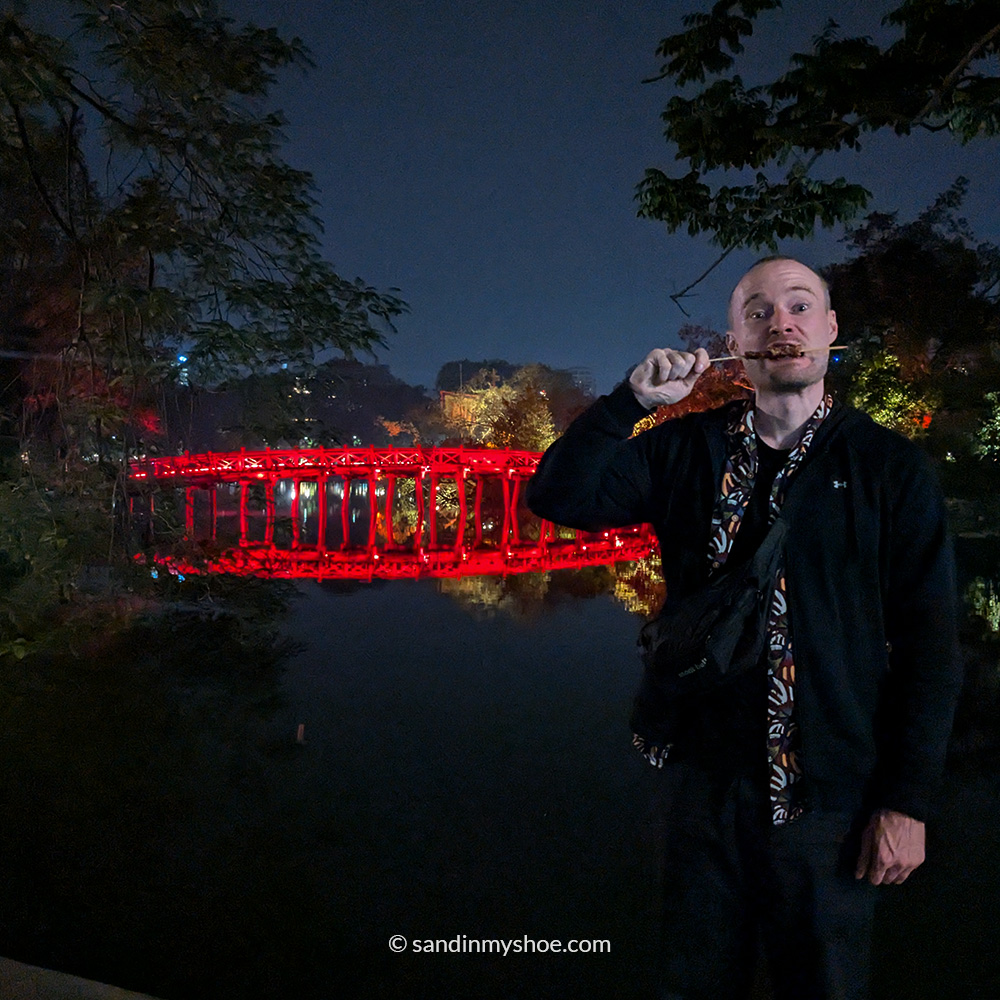
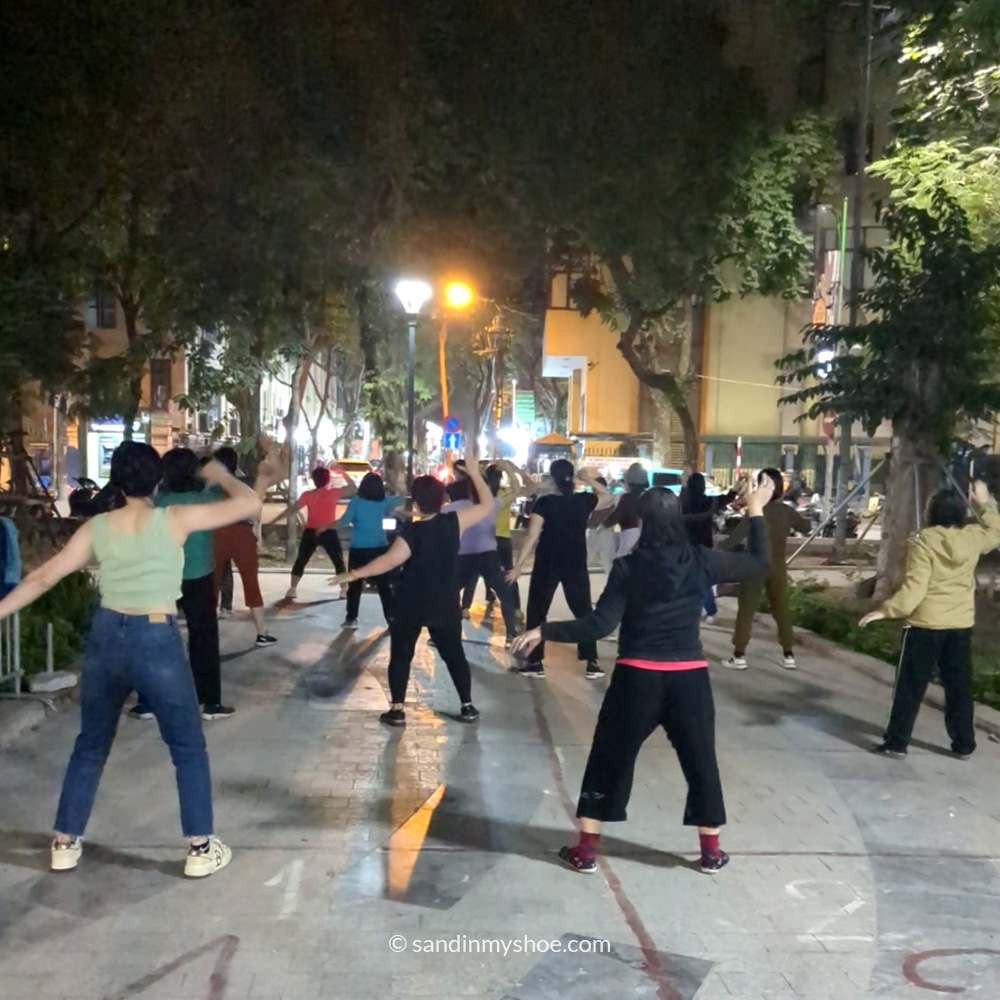
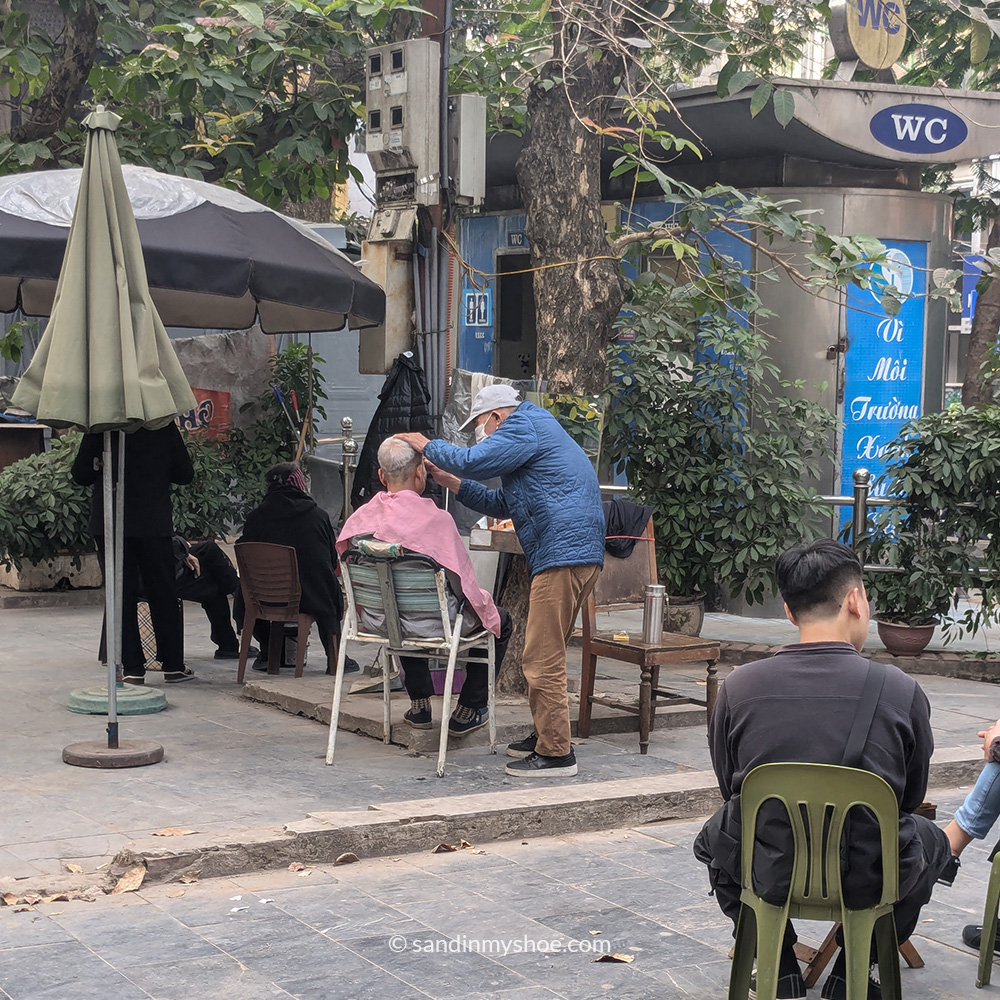
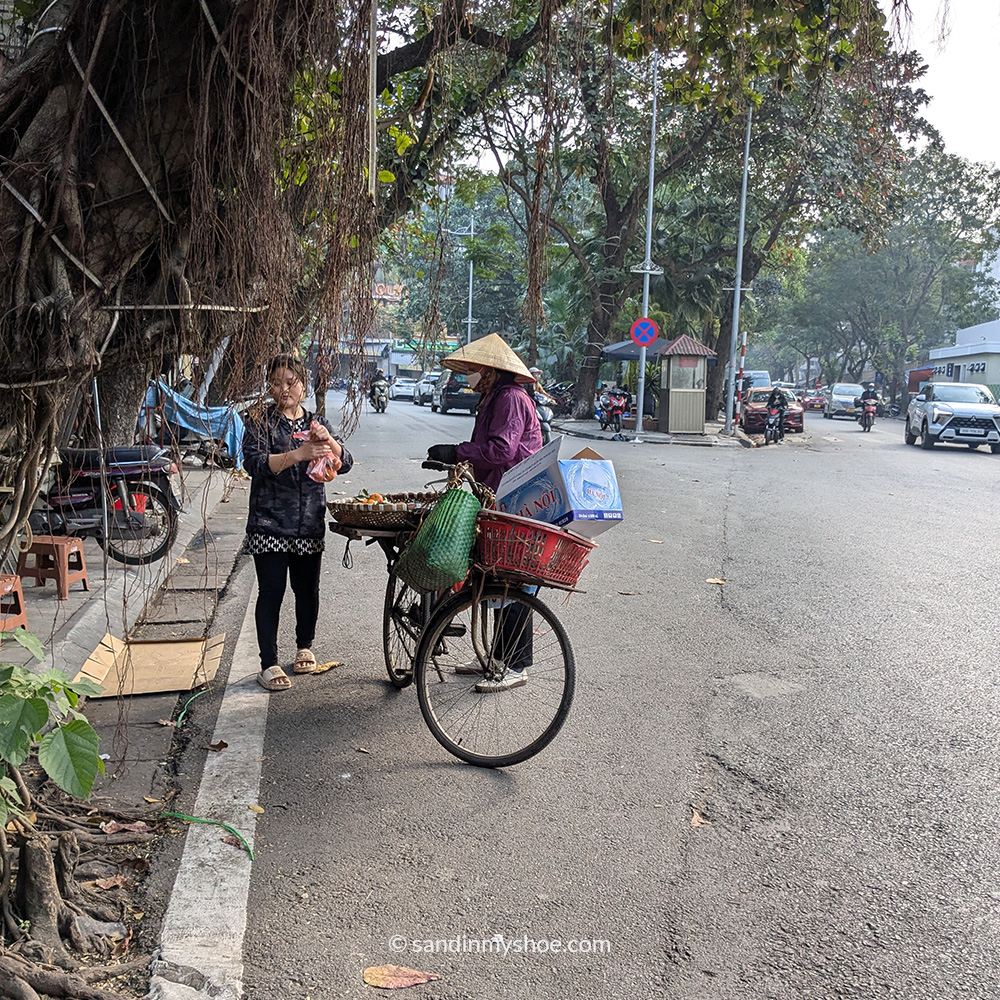
Beyond the constant buzz of motorbike traffic and the air pollution they cause, what stands out most are the small everyday scenes:
- people doing aerobics and dance classes in parks,
- outdoor barbers working on the sidewalks,
- local workers wearing the traditional conical hat going about their day,
- and cafés on nearly every corner.
If you’re traveling to Hanoi for the first time, I’d suggest soaking in the atmosphere rather than trying to tick off every single sight. You’ll get far more out of the city by exploring its street food, hidden cafés, and everyday life.
That said, it does help to know which experiences actually define Hanoi, without turning your trip into a sightseeing marathon where you sprint from one landmark to the next. The list below focuses on the essentials that make you “get” the city.
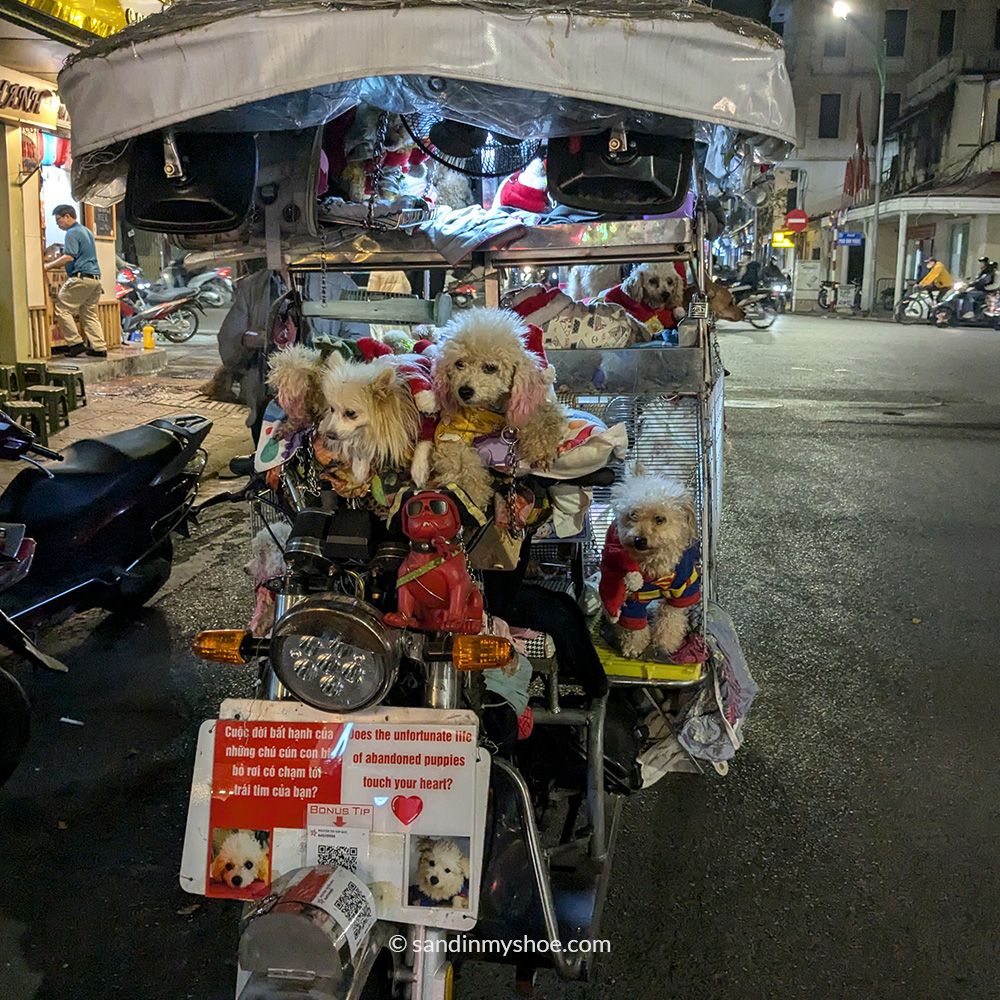
There’s also countless tiny dogs everywhere — though that’s true for Vietnam in general.
The Essential Experiences in Hanoi
Wander Around the 1,000 Year Old Maze of Old Quarter
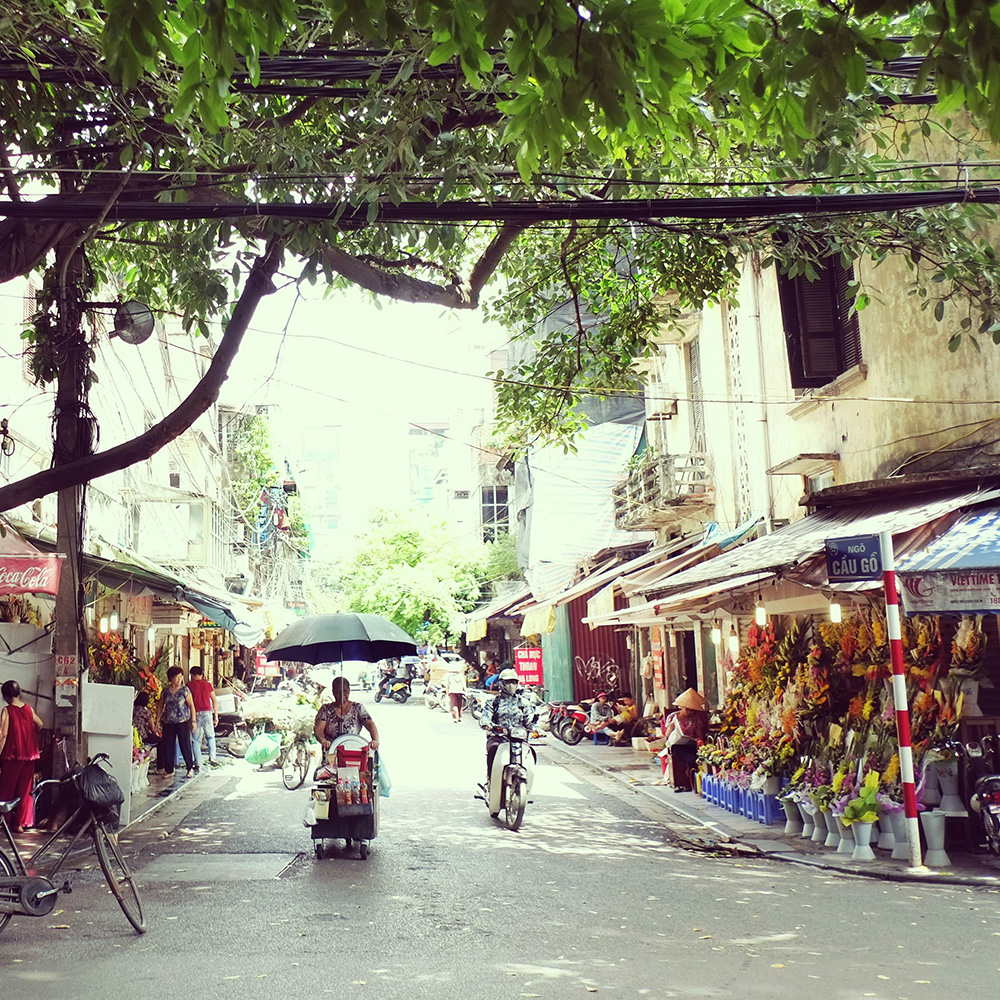
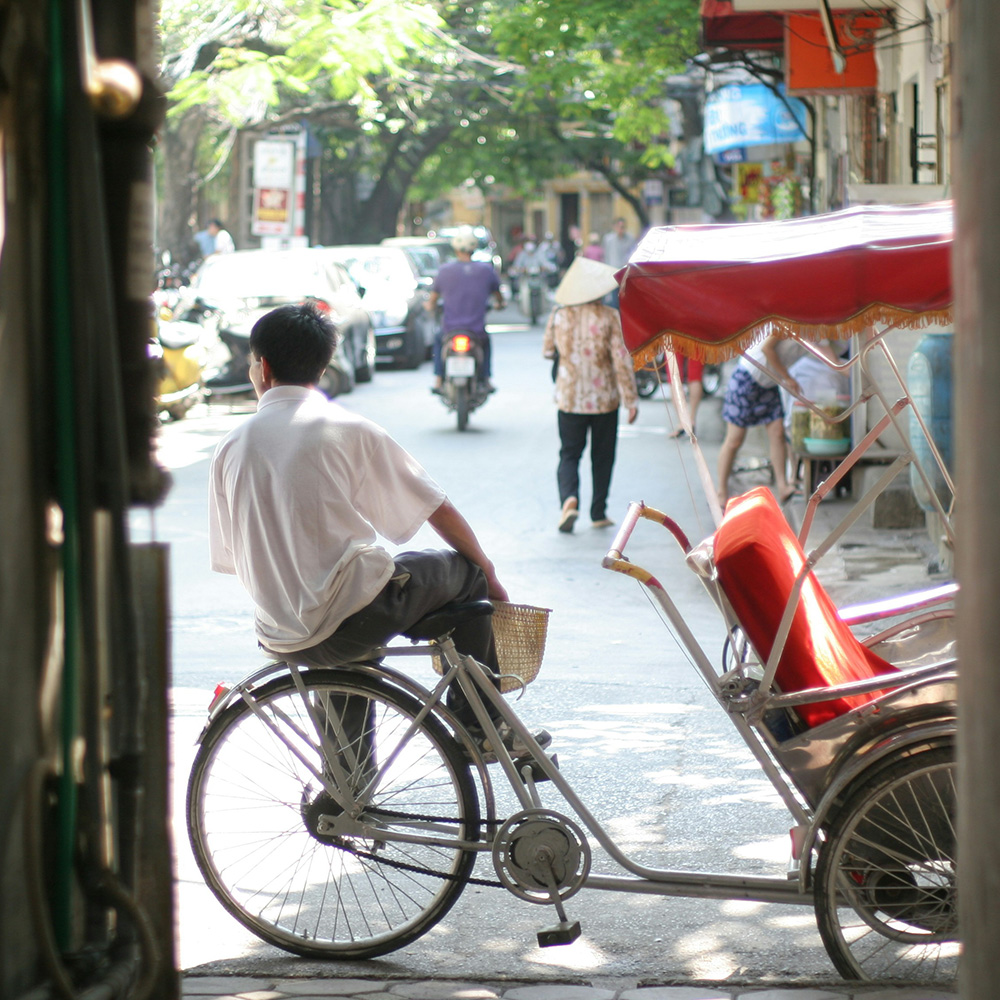
Spend the morning wandering and watching daily life unfold in Hanoi’s Old Quarter. The neighborhood is a 1,000‑year‑old maze made of 36 narrow streets, many of which were historically named after the craft sold there. You’ll pass streets like Hang Gai (silk), Hang Bac (silver), and Hang Non (conical hats) — a system that once made shopping incredibly efficient. Some of those old crafts have naturally faded, but a few still remain, and you’ll notice them as you walk through the district.
Expect scooters weaving through tight corners, tiny shops spilling onto the sidewalks, and cafés tucked into alleys you’d never find unless you were looking for them.
Try Hanoi’s Most Famous Coffee Creation
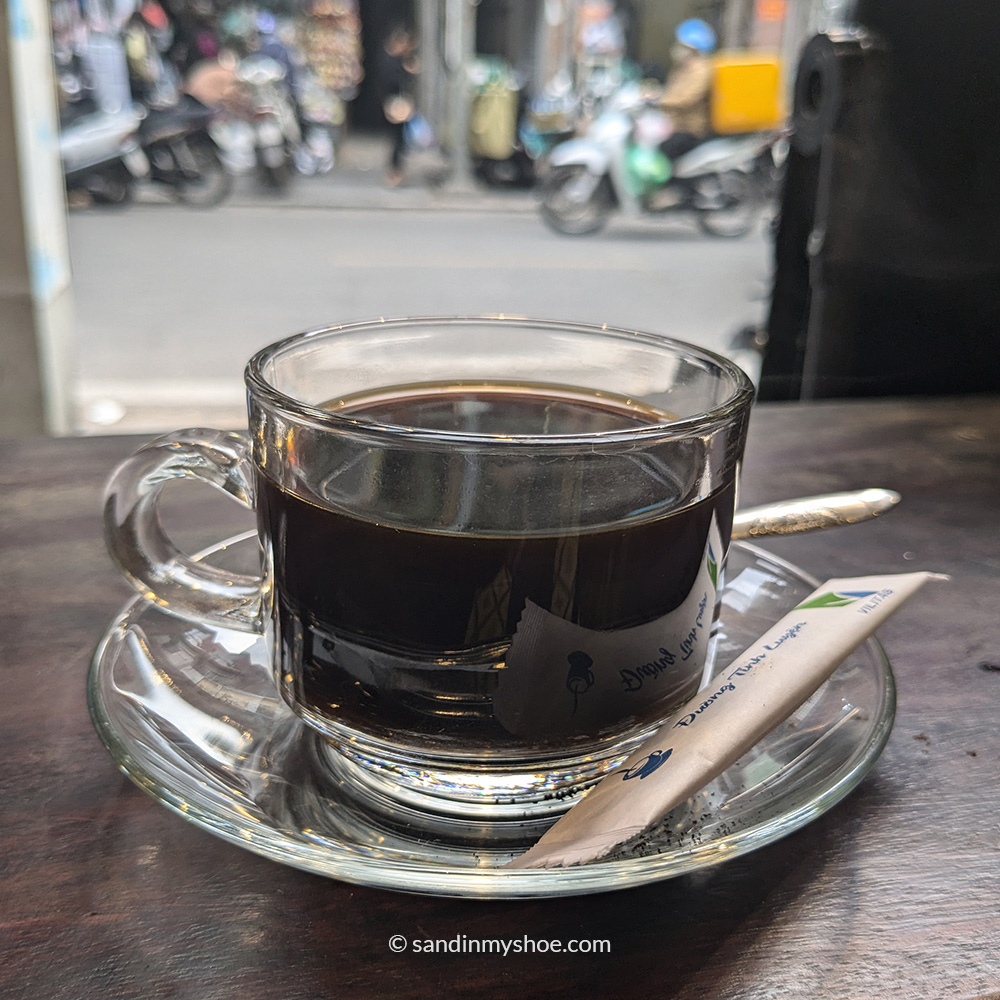
While you’re browsing the Old Quarter for a new conical hat, I recommend stopping at a café to try a coffee invention created here during the wartime milk shortage — the famous egg coffee. As a heavy black coffee drinker, I wasn’t sure what to expect. The idea of adding egg sounded odd; it works wonders in pastries, but in coffee? I’d also seen some pretty adventurous street‑food snacks in rural areas, so I was skeptical. But it turned out surprisingly good: creamy, slightly sweet, and very different from my usual black coffee.
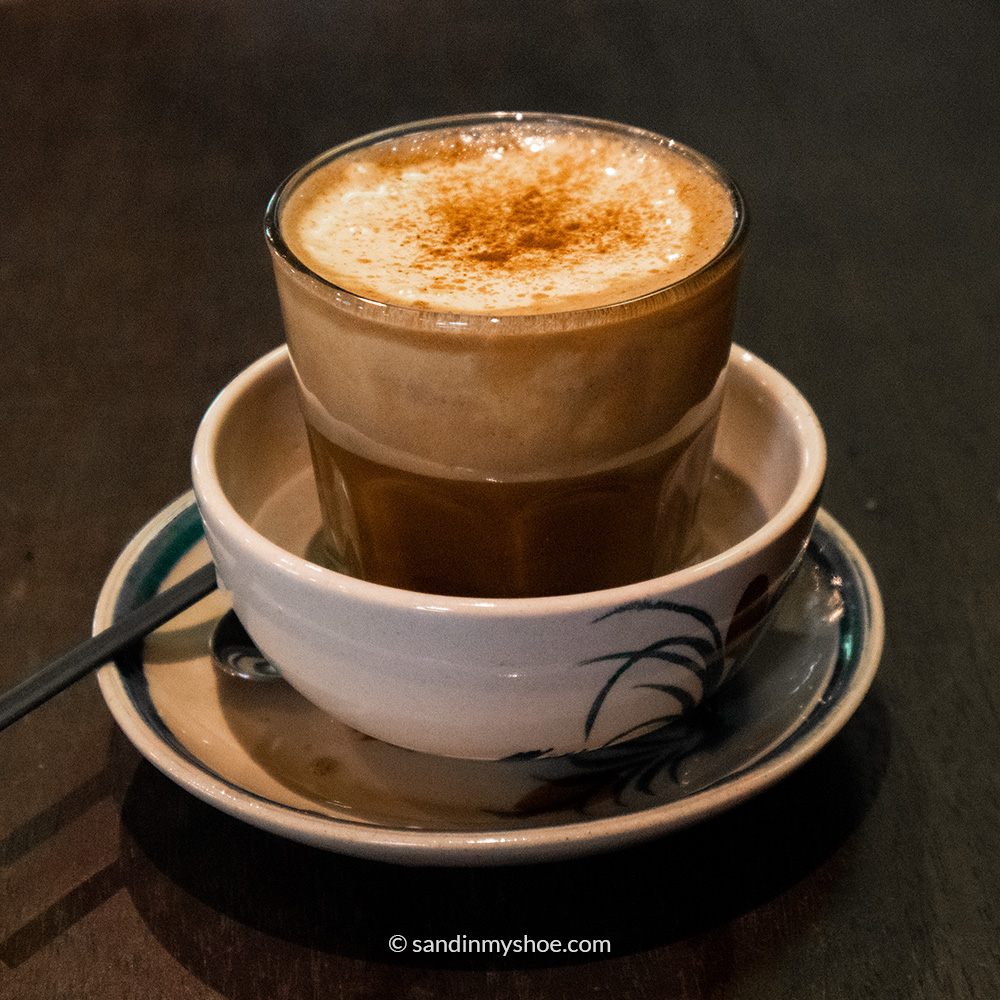
If you want to experience it in a cozy place in the old quarter, check out: Ca Bop.
Want to Learn More About Vietnamese Coffee? Join a Workshop
Explore the French Quarter
For a complete neighborhood picture of Hanoi, head into the elegant French Quarter right after the Old Quarter for the perfect contrast. Here the streets are wider, the buildings grander, and the pace noticeably calmer. You’ll find plenty of beautiful colonial architecture, leafy boulevards, and refined cafés that give the area a very different feel.
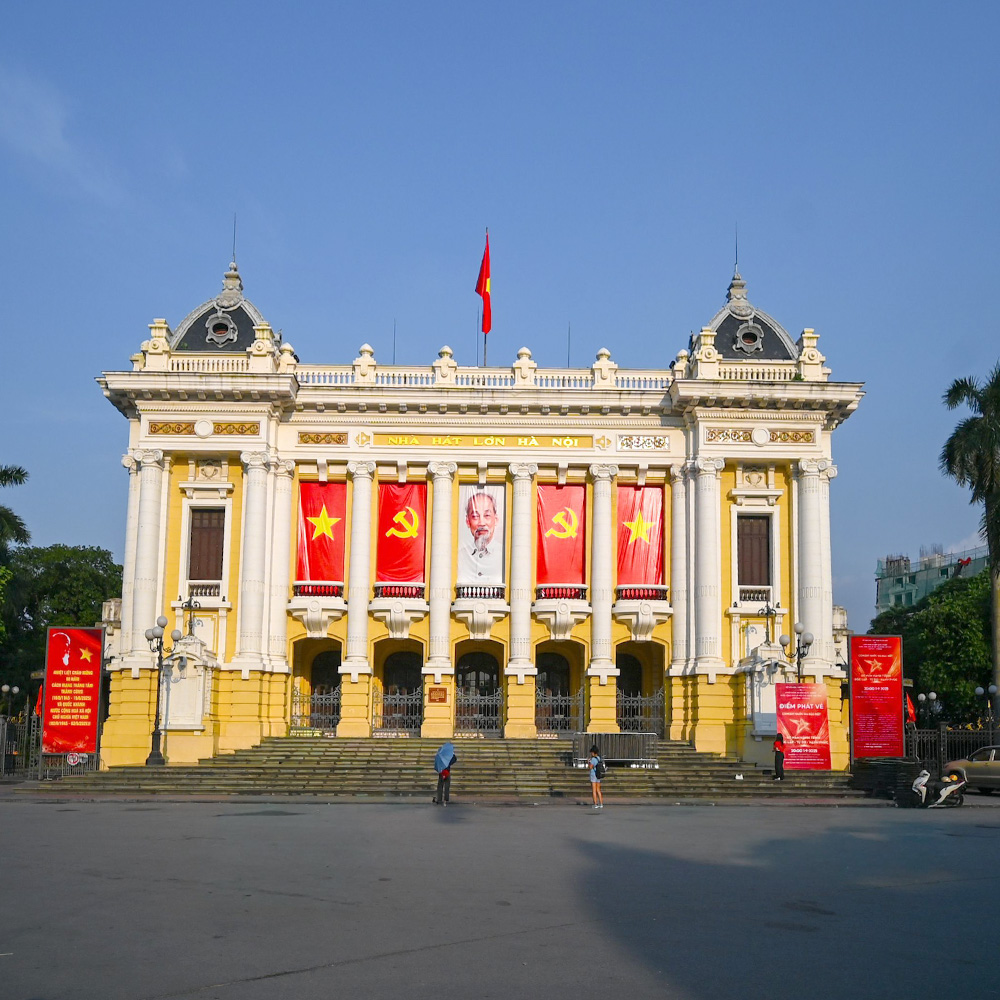
It’s not about ticking off a specific landmark; it’s about seeing another layer of Hanoi’s past.
Stroll Around Hoan Kiem Lake & Cross the Red Bridge to Ngoc Son Temple
In the area you have the famous Hoan Kiem Lake. In the mornings you’ll see people doing tai chi, jogging, stretching, or simply chatting on benches. By late afternoon, couples stroll around the water, families gather for snacks, and the whole area feels like a community living room.
Walk around the lake and then cross the bright red Bridge to Ngoc Son Temple. The temple itself is small and easy to visit, but the setting is what makes it special: a quiet island in the middle of the lake, surrounded by willow trees and the hum of the city in the background.
If you’re here on a weekend, the streets around Hoàn Kiếm turn pedestrian‑only, and the atmosphere changes completely. The motorbike noise disappears, kids cruise around in small electric toy cars, and musicians set up casual performance, and the whole area becomes one of the most relaxed spots in Hanoi.
Have Coffee as the Train Rolls Past Your Table
You’ve probably seen the social-media videos of cafés built along the train tracks. People sitting just half an arm’s reach from the passing train. Here you can order a coffee or even lunch, and wait for the train to pass.
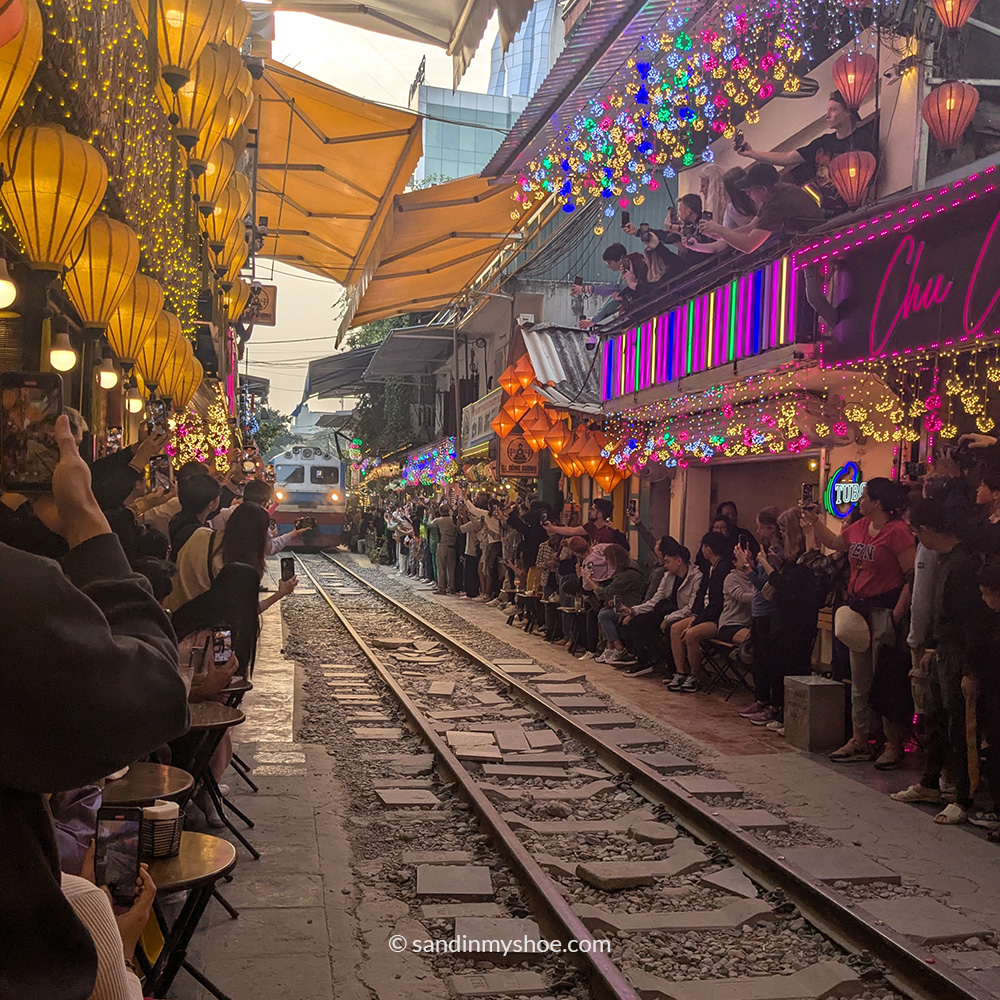

Expect it to be busy as the odd location draws quite a lot of tourists. When the train comes through, it passes incredibly close, and you really do need to be mindful; it’s not just for show. The police even close it at times due to accidents.
I wasn’t sure to visit, but finally FOMO convinced me, and I’m glad I did. It’s busy, a bit chaotic, and definitely curated for tourists, but still a fun experience. You’ll fuel up with food and coffee for the afternoon and check off one of Hanoi’s most talked‑about sights at the same time.
Getting here is easiest with the Grab app. This is the location.
Eat Your Way Through Hanoi’s Street Food
This isn’t a single sight, but it’s absolutely essential. Hanoi’s street food is one of the best ways to understand the city — chaotic, flavorful, and deeply tied to everyday life. The challenge, of course, is knowing what to order. Many places don’t have menus, and dishes can look unfamiliar. One easy trick is to simply point at what others are eating and then at yourself. It sounds basic, but it works surprisingly well.
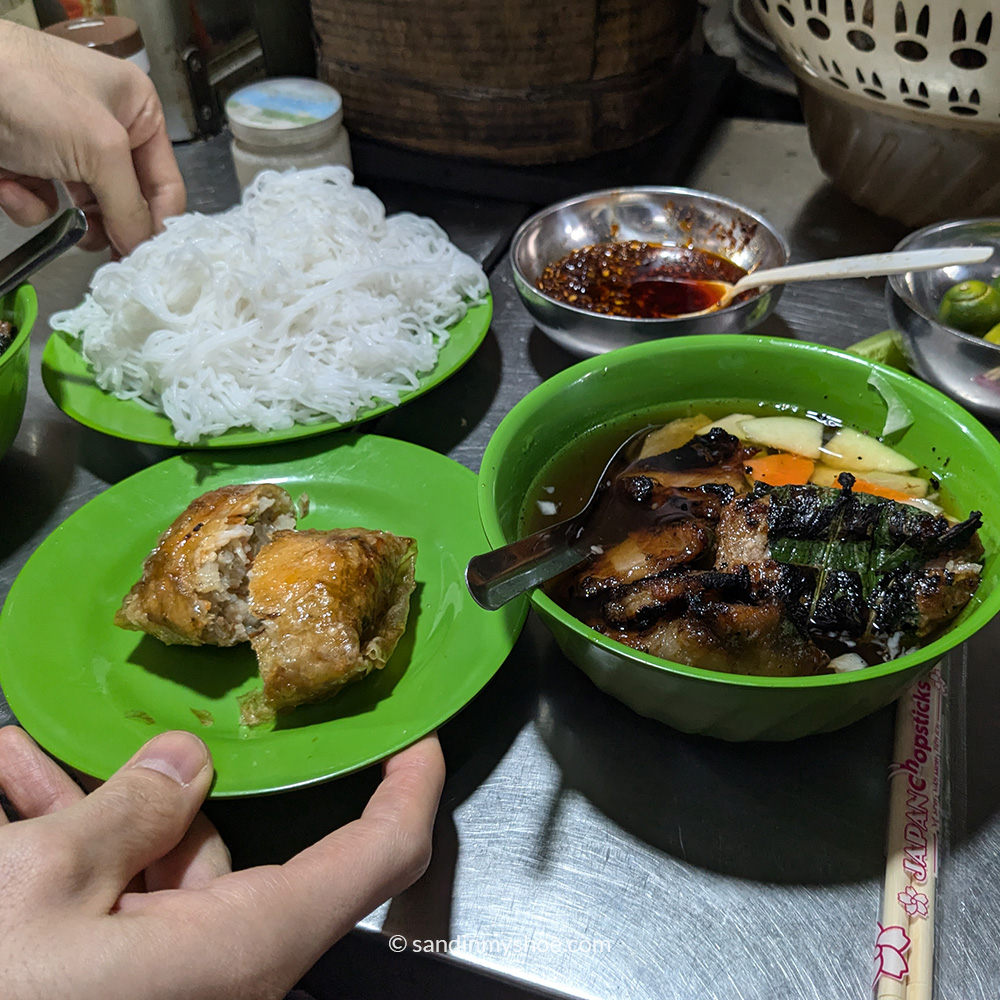
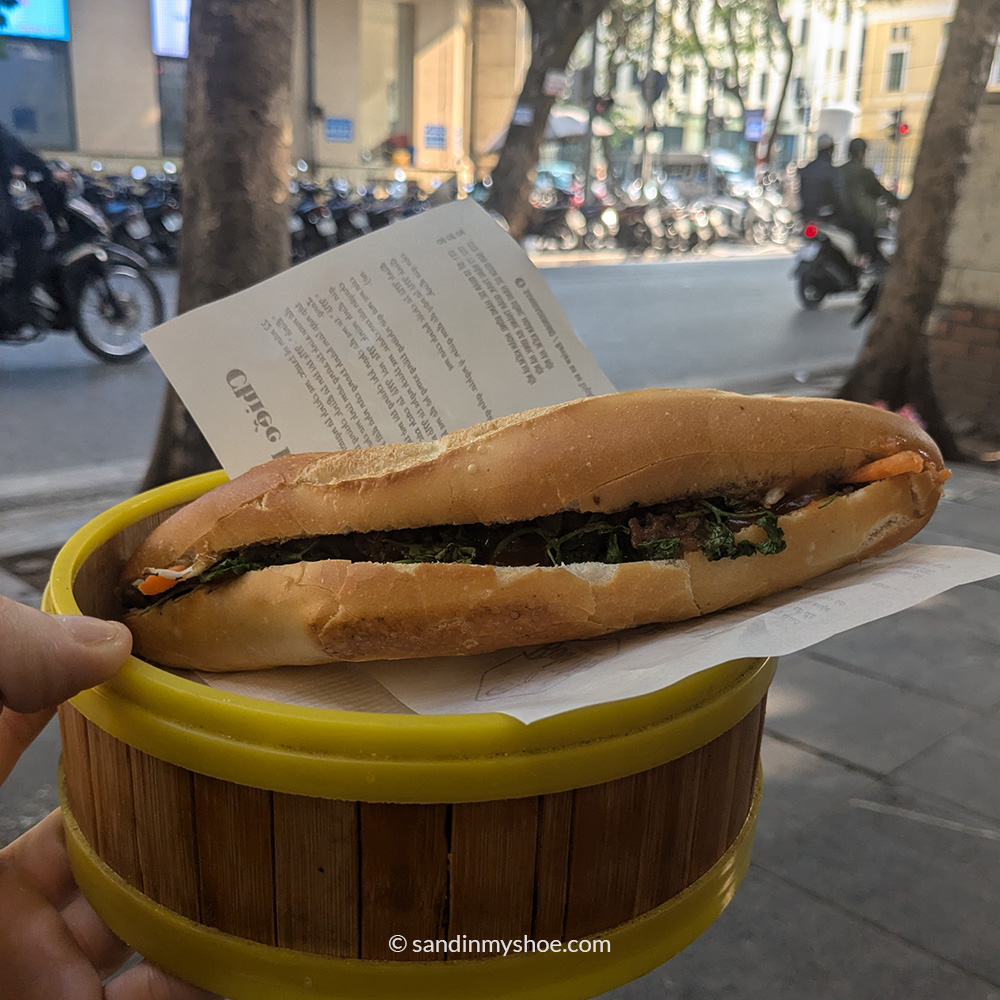
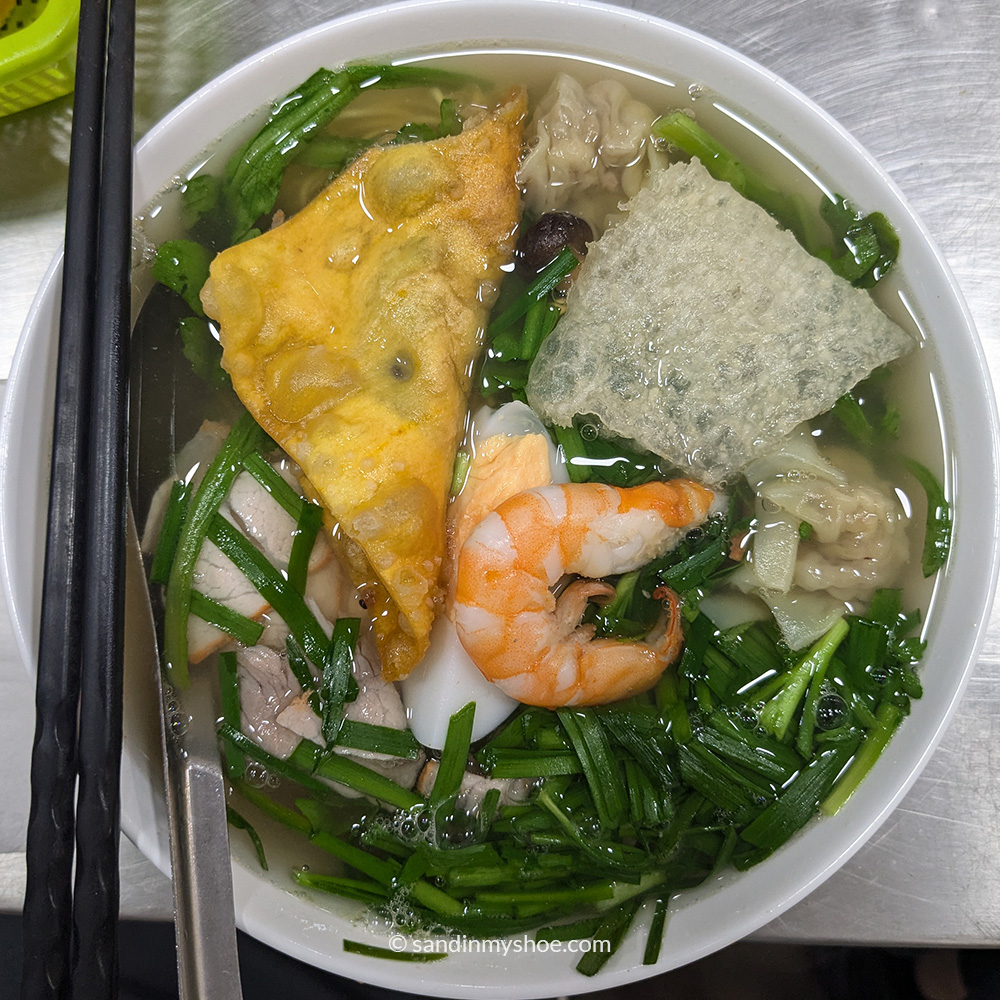
Even with that, it’s hard to try all the classics on your own. I was lucky: a Vietnamese friend of mine happened to be visiting his home city at the same time, and he took me around to sample a whole range of dishes I wouldn’t have found on my own.
Dog meat is still available in some parts of Hanoi, though it’s far less common than it used to be. Many younger locals now see dogs more as pets, and visitors who prefer not to engage with this aspect of local cuisine can easily avoid it. I personally didn’t try it, as dogs are pets for me.
Want to Know More Street Food? Join a Food Tour
If you don’t have a local friend, I genuinely recommend joining a food tour. It’s one of the easiest ways to try multiple dishes in a short time, learn what everything is, and avoid the guesswork. Plus, you get a deeper understanding of how Hanoians eat — which is half the fun of being here.
Hoa Lo Prison
Hỏa Lò Prison — sarcastically nicknamed the Hanoi Hilton by American POWs — is one of Hanoi’s most impactful historical sights. Originally built by the French to hold Vietnamese political prisoners, it later became the place where captured American fighter pilots were kept during the Vietnam War. Senator John McCain was among the prisoners held here.
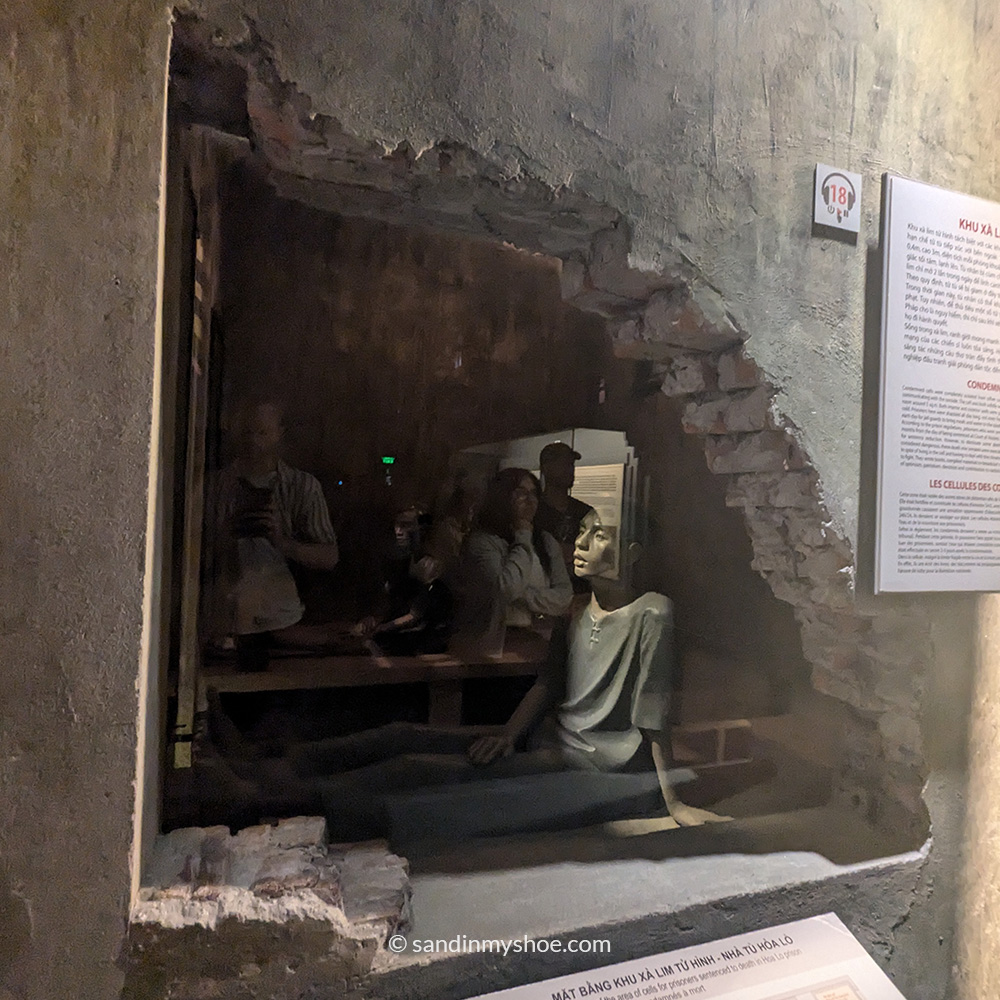
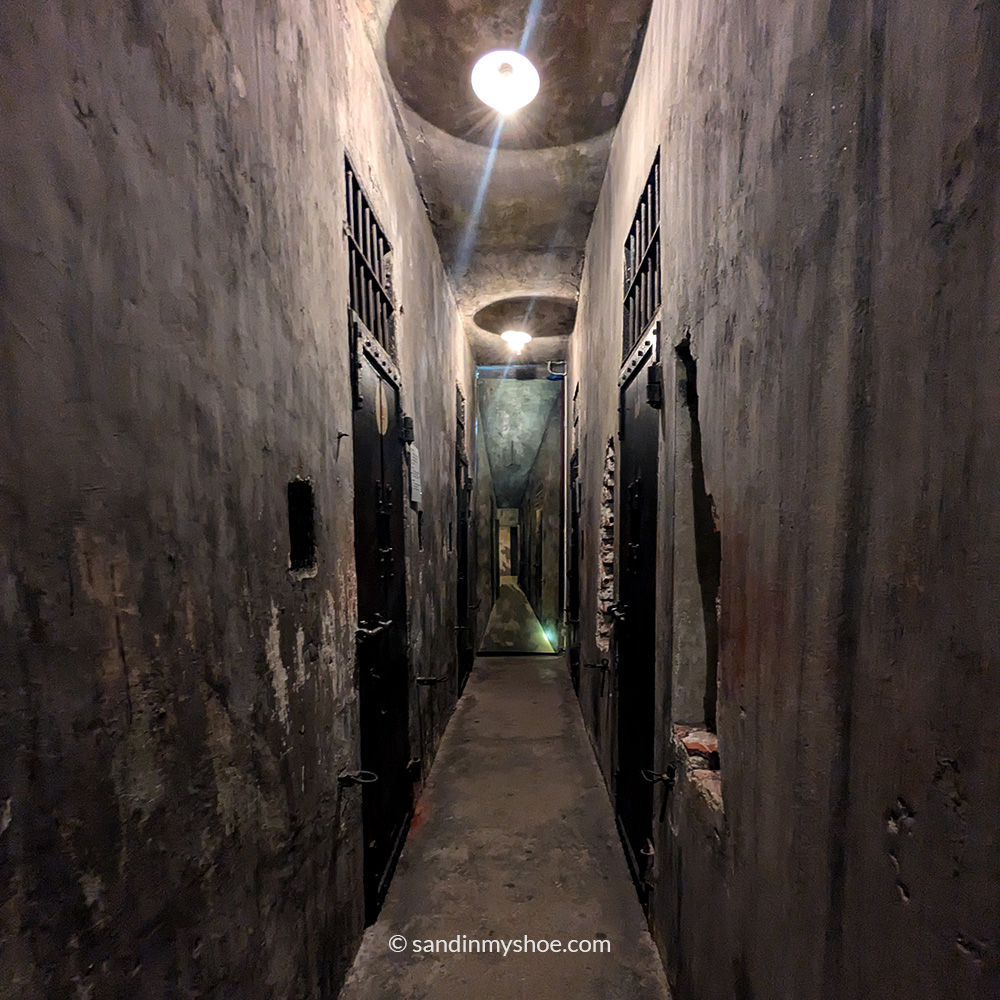
The museum is compact but powerful, offering a mix of colonial‑era history and wartime context. It’s one of the few sights in Hanoi that gives you a deeper understanding of the city’s past, and it’s well worth an hour of your time.
If you want to another war related sight, you can check the remains of a B-52 Bomber located in a small lake in a residential neighborhood. View location.
See a Traditional Water Puppet Show
A something lighter to Hoa Lo Prison is the traditional water puppet show. It’s one of Vietnam’s oldest performing arts, and Hanoi is the best place to experience it. The tradition began nearly a thousand years ago in the rice‑farming villages of the Red River Delta, where farmers used flooded fields as a stage. Today, the puppeteers stand waist‑deep in water behind a screen, guiding brightly painted wooden puppets that glide, splash, and dance across the surface.
It’s popular for a simple reason: you won’t see anything like this anywhere else. The stories are easy to follow even without Vietnamese, the music is live, and the whole performance feels both charming and deeply rooted in local culture. It’s family‑friendly, easy to fit into an itinerary, and one of the few traditional arts still performed daily.
It’s not an absolute must‑see, but if you want a cultural experience that’s uniquely Vietnamese — and a break from Hanoi’s traffic and chaos — a water puppet show is a fun way to spend an hour.
More Sights to See If You Got time
I intentionally left out a few sights that are usually recommended. Not because they aren’t worthwhile, but because they don’t quite fit the idea of “getting” the city the way this guide aims to. Still, they’re good to know about, so here’s a quick look at the ones you’ll see mentioned most often.
Temple of Literature
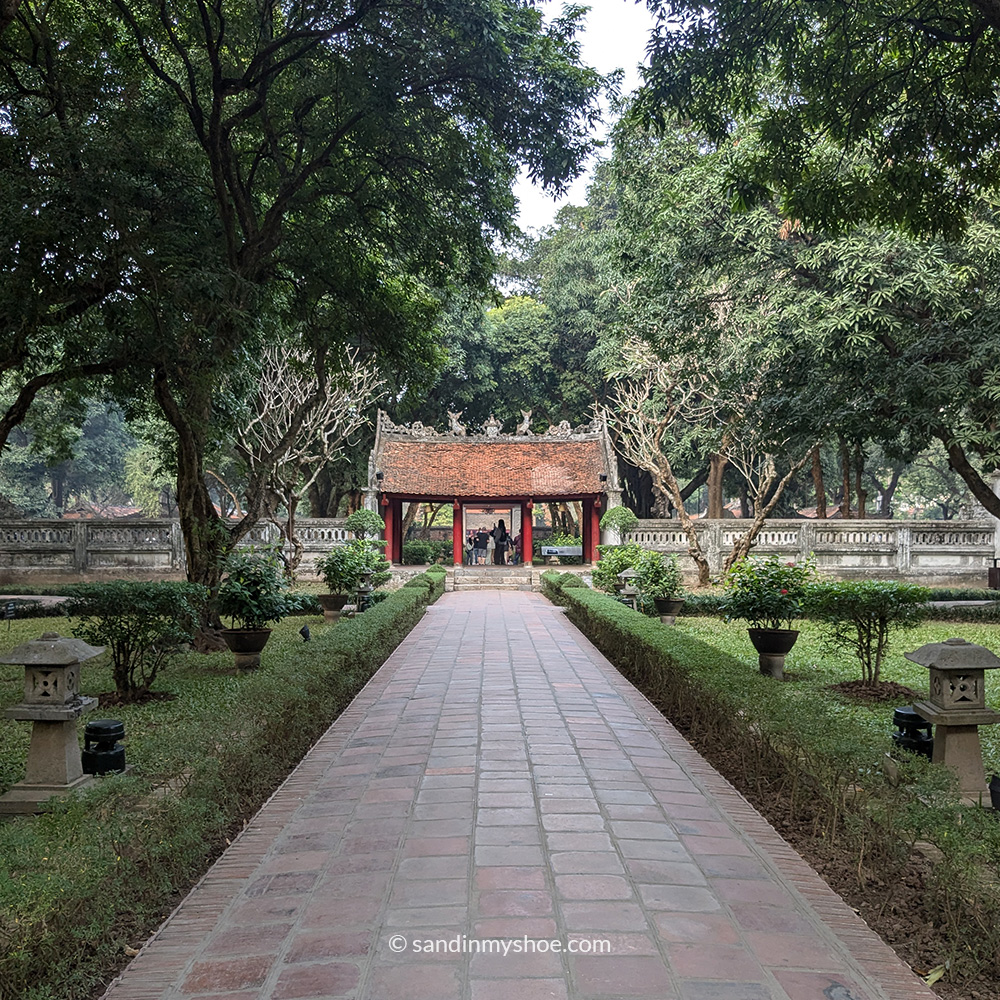
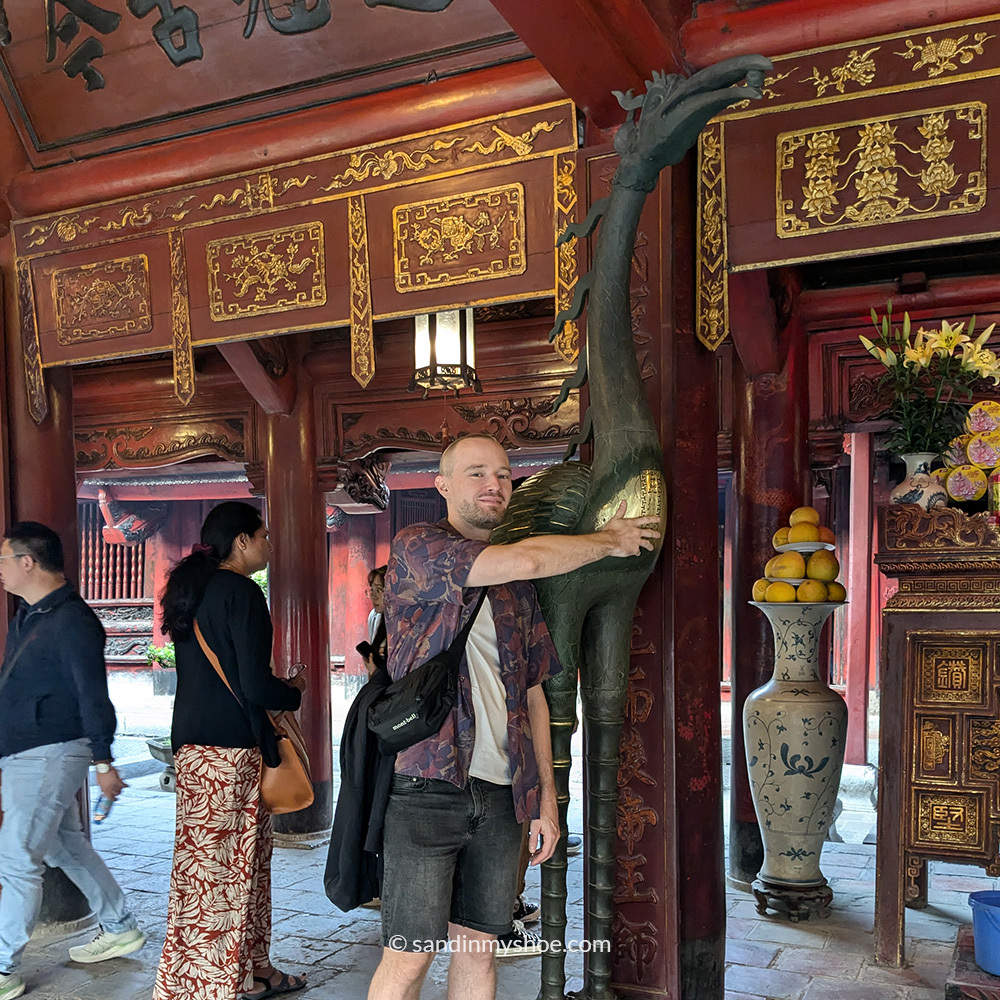
Vietnam’s first university, almost 1,000 years old, and was dedicated to Confucius and its scholars. It’s a calm, elegant complex of courtyards, pavilions, and stone steles, and it’s especially popular with locals who come here for professional photos in traditional clothing. It’s a beautiful place to spend an hour or so.
Ho Chi Minh Mausoleum
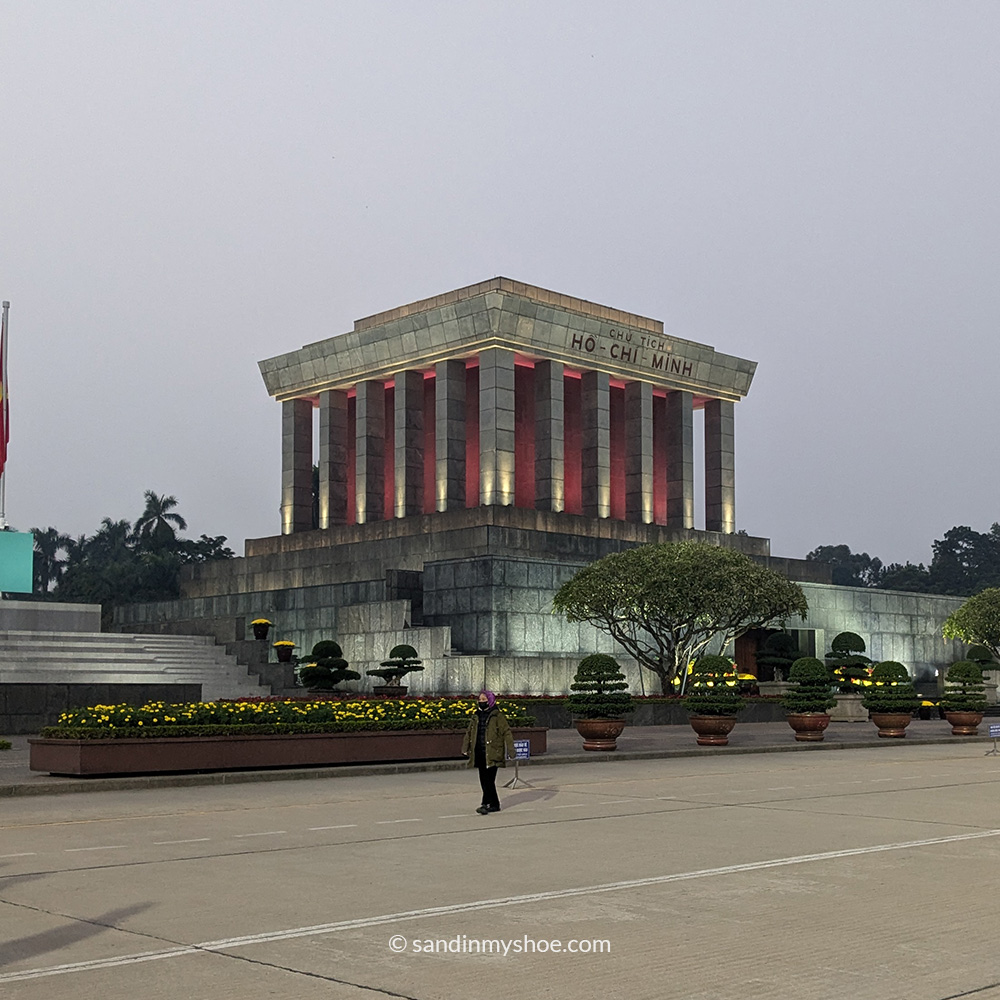
More of an outdoor stroll around one of Vietnam’s most important national landmarks. You don’t need to enter the mausoleum itself — the surrounding grounds, the Presidential Palace area, and the nearby One Pillar Pagoda make for a short and easy visit. I walked around the complex without going inside any of the buildings, and that felt like enough.
Practical Tips When Visiting Hanoi
How Many Days Spend in Hanoi
Many travelers in northern Vietnam are heading onward to Sapa, Ha Long Bay, or the Ha Giang Loop, and Hanoi often becomes a hub between destinations. Even so, the city deserves a bit of time. If you’re traveling for 2–3 weeks, two full days in Hanoi is usually enough to get a good feel for the city. If your trip is longer, adding a third day lets you explore more cafés, street food, and neighborhoods at a relaxed pace.
When to Visit Hanoi
I visited in December, and it was colder than I expected — cool enough that I found myself looking forward to heading south. Hanoi’s winter can be surprisingly chilly, grey, and damp, especially if you’re used to warmer climates.
For most travelers, the best time to visit is October–November and March–April, when temperatures are mild and the air feels more comfortable. Summer (May–August) brings heavy humidity and frequent rain, while winter (December–February) is cool and often overcast.
 20°C
10°C
21°C
13°C
24°C
16°C
28°C
20°C
20°C
10°C
21°C
13°C
24°C
16°C
28°C
20°C
 32°C
22°C
34°C
25°C
32°C
22°C
34°C
25°C
 35°C
26°C
33°C
26°C
32°C
24°C
29°C
21°C
26°C
18°C
22°C
14°C
35°C
26°C
33°C
26°C
32°C
24°C
29°C
21°C
26°C
18°C
22°C
14°C
How to Get Around in Hanoi
Walking is the best option for short distances, especially in the Old Quarter, the French Quarter and around Hoan Kiem Lake. For anything farther, use the Grab app, and it prevents the usual taxi scams. You can choose between a regular car or a motorbike taxi, depending on how comfortable you are with Hanoi’s traffic.
On motorbike taxis, keep your knees tucked in; Hanoi traffic doesn’t leave much personal space.
Where to Stay in Hanoi
Where you stay definitely shapes your experience. The Old Quarter is the most atmospheric and usually the best choice for first‑timers. If you’re looking for more upscale options, the French Quarter might be the better choice. Staying around Hoan Kiem Lake gives you a balanced, central base close to everything, and Truc Bach — located just north of the Old Quarter — offers a quieter, more residential vibe close to both lakes. I stayed in Truc Bach last time I visited, as I’ve been to Hanoi before.
Wrap‑Up of Visiting Hanoi for the First Time
Hanoi can feel like a sensory overload at first — traffic, noise, and constant movement — but give it a little time and the city starts to make sense. With two full days you’ll see the essentials, taste some incredible food, and get a feel for the different neighborhoods. Hanoi works well as both a destination and a hub for exploring northern Vietnam. It’s a city best experienced through moments and encounters rather than by trying to tick off every sight.
Keep Exploring Vietnam
Still deciding on an itinerary for Vietnam? Check out my Vietnam 3‑week itinerary or the shorter 1‑week Vietnam itinerary to help you plan your trip. I’ve also written a how to get around in Vietnam guide, a Vietnam Food Travel Guide so you won’t miss out on any typical dishes, and plenty of destination guides:


No comments yet, be the first one!
I appreciate hearing from you. If you have any suggestions, questions, or feedback, please leave a comment below. Your input helps ensure the information stays relevant and up to date for everyone.
Thank you for sharing your thoughts!